


Naira slides for ninth day in a row, losing N37.85 against dollar

 Quick Read
External reserves are funds held by the country’s central bank to help support the national currency, manage international payments, and maintain stability in the foreign exchange
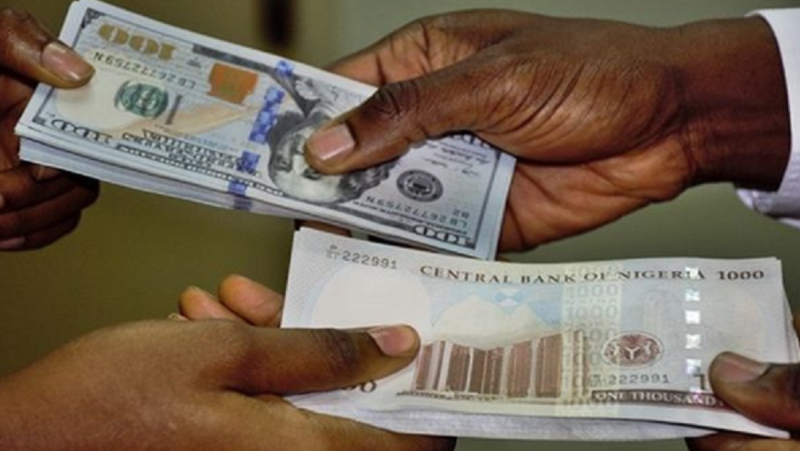
The Nigerian Naira has continued to weaken against the United States dollar at the official foreign exchange market, recording nine consecutive days of depreciation.
Data released by the Central Bank of Nigeria showed that the Naira dropped again on Wednesday, trading at N1,387.09 per dollar, compared to N1,384.29 per dollar on Tuesday.
This indicates that the local currency lost N2.80 in value within one day.
The latest decline means the Naira has now fallen by N37.85 since February 23, 2026, when the currency began its current downward trend at the official foreign exchange market.
The continued drop highlights the ongoing pressure on Nigeria’s currency despite several efforts by monetary authorities to stabilise the foreign exchange market.
At the parallel market, commonly known as the black market, the Naira remained relatively stable. Bureau de Change operators in Abuja said the currency traded at about N1,390 per dollar on Wednesday. This represents a slight increase compared to N1,370 per dollar recorded nine days ago.
Meanwhile, Nigeria’s foreign reserves showed a positive development during the same period. The country’s external reserves increased to $49.88 billion as of March 3, 2026, according to figures from the Central Bank of Nigeria.
External reserves are funds held by the country’s central bank to help support the national currency, manage international payments, and maintain stability in the foreign exchange market.
Economic analysts say movements in the exchange rate and the level of foreign reserves are important indicators of the country’s financial health and its ability to manage pressure on the Naira.
Comments