


U.S. obliterates 90 Iranian Military targets on Strategic Kharg Island

 Quick Read
According to U.S. military officials, the strikes targeted storage sites for naval mines and missiles that American officials said were being used to block international shipping lanes.
By Kazeem Ugbodaga
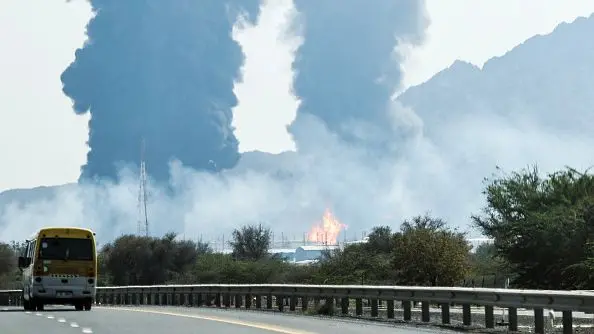
The United States military executed a large-scale precision strike on Iran’s strategic Kharg Island on Friday night, destroying more than 90 military targets including naval mine storage facilities and missile bunkers while deliberately preserving the island’s critical oil infrastructure, U.S. Central Command announced Saturday.
President Donald Trump confirmed the operation on his Truth Social platform, describing it as “one of the most powerful bombing raids in the History of the Middle East” that “totally obliterated every military target in Iran’s crown jewel, Kharg Island.”
The President emphasized that he had chosen “for reasons of decency” not to target the island’s oil facilities, but warned he would “immediately reconsider” if Iran interferes with shipping through the Strait of Hormuz.
Kharg Island, located approximately 30 kilometres off Iran’s mainland in the northern Persian Gulf, handles about 90 percent of Iran’s crude oil exports, processing roughly 1.7 million barrels per day before the conflict. The island’s deep-water terminal has the capacity to load up to 10 supertankers simultaneously, making it the linchpin of Iran’s energy economy and a critical node in global oil markets.
According to U.S. military officials, the strikes targeted storage sites for naval mines and missiles that American officials said were being used to block international shipping lanes.
CENTCOM confirmed that the operation successfully struck more than 90 Iranian military sites while preserving oil infrastructure.
Iranian media offered a contrasting narrative, with Fars news agency reporting that U.S. forces “tried to damage the army’s defences, the Joshan naval base, the airport control tower and the helicopter hangar of the Iranian Continental Shelf Oil Company.”
The agency reported at least 15 explosions following the strikes and confirmed no damage to oil facilities.
A senior official from Iran’s Oil Ministry, speaking anonymously to The New York Times, described the attacks as “enormous and destructive,” with employees reporting nearly two hours of nonstop explosions that shook the island like an earthquake.
Iran’s military issued a stark warning through the Khatam al-Anbiya Central Headquarters spokesperson, declaring that any attack on Iran’s oil, economic or energy assets would trigger the destruction of “all corresponding US facilities in the region.”
The Islamic Revolutionary Guard Corps specifically warned U.S. interests in the United Arab Emirates, including ports and military locations, are now legitimate targets, urging residents to evacuate areas near U.S. facilities.
The strikes mark a significant escalation in the U.S.-Israeli military campaign against Iran, which has seen Tehran launch widespread missile and drone attacks on Israel and neighbouring Gulf states while effectively closing the Strait of Hormuz to most shipping. Approximately 20 percent of global oil supply passes through the strategic waterway .
In response to the expanding conflict, the U.S. is deploying the USS Tripoli amphibious assault ship and 2,500 Marines to the Gulf region.
Israeli Defense Minister Israel Katz described the conflict as entering a “decisive phase,” praising U.S. strikes on Kharg Island.
The humanitarian and economic consequences are already reverberating globally. Japan has formally requested Australia to boost liquefied natural gas output as approximately 20 percent of global LNG supply remains offline due to the closure of QatarEnergy facilities.
Meanwhile, the U.S. Embassy in Baghdad was hit in a missile attack, and oil loading operations in the UAE’s Fujairah port were suspended following a drone attack.
Kharg Island last faced significant military action during the Iran-Iraq War in the 1980s, when Saddam Hussein’s forces conducted heavy bombing raids on its oil infrastructure, causing extensive damage that Iran later rebuilt.
Comments