


63% Poverty Rate: Obi says Tinubu’s reforms hurting Nigerians

 Quick Read
For example, the International Monetary Fund projects Nigeria’s economy will grow by 3.9% in 2025 and 4.2% in 2026. Similarly, the
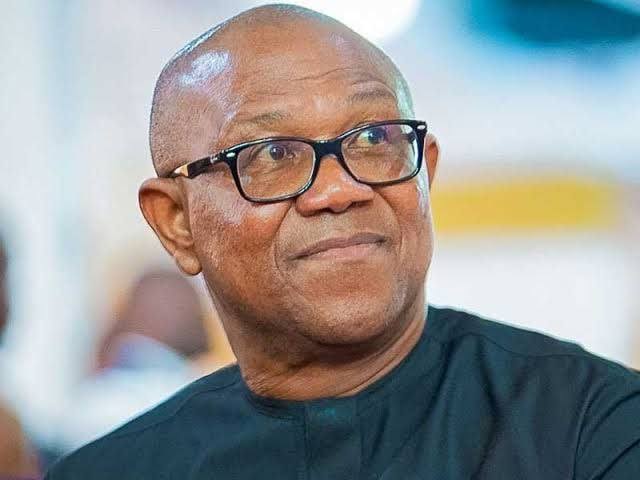
Former Anambra State Governor, Peter Obi, has blamed the rising number of Nigerians living in poverty on the economic reforms introduced by President Bola Ahmed Tinubu’s administration.
Obi made the statement on March 16 in a post on his official X (formerly Twitter) account. He criticized the government’s economic reforms, arguing that they have pushed more Nigerians into poverty.
He referenced a recent policy study by Agora Policy—supported by the Nigeria Economic Stability and Transformation Programme and the UK Foreign, Commonwealth and Development Office—which found that the poverty rate increased sharply from about 49.8% to roughly 63%.
What Peter Obi said
According to Obi, the report shows that poverty has worsened significantly since the introduction of the current administration’s reforms.
He said a new policy study by Agora Policy revealed that the poverty rate rose from about 40% before the reforms to over 63% under the current administration. He argued that this suggests the economic reforms have pushed more Nigerians into poverty than ever before.
Obi noted that with Nigeria’s population estimated at over 220 million people, this means more than 140 million Nigerians are now living in poverty. He added that many families can no longer afford basic necessities such as food, transportation, rent, or healthcare.
He also said households across the country’s six geopolitical zones are adopting difficult coping strategies to survive, including reducing food consumption, trekking instead of paying for transport, and borrowing money. According to him, many small businesses are also shutting down.
Background
The research was presented at a stakeholders’ dialogue organized by Agora Policy in Abuja.
The study found that the national poverty headcount increased from a baseline of about 49.8% to around 63% after the removal of the petrol subsidy, although the rate moderated slightly after the government introduced social protection measures.
Mohammed Shuaibu, a Senior Lecturer in the Department of Economics at the University of Abuja who presented the study, explained that household consumption declined after both the subsidy removal and electricity tariff adjustments. However, he noted that social transfers helped cushion the impact for low-income households.
Despite these challenges, Nigeria’s economy recorded stronger growth toward the end of 2025. According to data from the National Bureau of Statistics, the country’s economy grew by 4.07% year-on-year in real terms in the fourth quarter of 2025, an improvement from the 3.76% growth recorded during the same period in 2024.
However, Obi argued that this economic growth is not translating into improved living conditions for ordinary Nigerians. He said true economic reform should focus on people and protect the most vulnerable while pursuing fiscal stability. According to him, reforms that deepen poverty, widen inequality, and damage small businesses cannot be considered successful.
Additional context
Since taking office in 2023, President Bola Ahmed Tinubu has introduced major economic reforms, including the removal of the petrol subsidy and the unification of Nigeria’s multiple foreign exchange rates.
Several international institutions have praised these measures as necessary steps to stabilize the economy and support long-term growth.
For example, the International Monetary Fund projects Nigeria’s economy will grow by 3.9% in 2025 and 4.2% in 2026. Similarly, the World Bank forecasts that Nigeria’s growth could reach 4.4% by 2027.
However, critics such as Obi argue that while macroeconomic indicators may show improvement, many Nigerians have yet to see real benefits in their daily lives.
Comments