


IRGC threatens to seal Strait of Hormuz if US strikes Iran’s power plants

 Quick Read
The current crisis was ignited earlier in the day when Trump, in a statement from his Florida residence, gave Iran a 48-hour window to ensure freedom of navigation through the strait.
The Islamic Revolutionary Guard Corps (IRGC) has issued a stark ultimatum, declaring that Iran will “completely close” the Strait of Hormuz if the United States follows through on threats to strike Iranian power plants.
The statement, broadcast by Iranian state media at 15:29 GMT on Sunday, represents a dramatic escalation in the tit-for-tat war of words between Tehran and Washington.
It comes in direct response to President Donald Trump’s earlier warning that Iran’s power infrastructure would be “obliterated” unless the strait was immediately reopened to international traffic.
“If the enemies make the mistake of targeting our energy infrastructure, we will respond by imposing a total closure of the Strait of Hormuz,” an IRGC spokesman said in the televised statement.
“The region will not be secure for anyone if our sovereignty is violated.”
The current crisis was ignited earlier in the day when Trump, in a statement from his Florida residence, gave Iran a 48-hour window to ensure freedom of navigation through the strait.
Warning that “there will be severe consequences,” Trump said that failure to comply would result in the “obliteration” of Iranian power generation facilities.
“The Strait of Hormuz must be open, or those power plants will be reduced to rubble,” Trump said. “I’m not talking about a targeted strike; I’m talking about total destruction.”
Iranian officials have long maintained that the strait, through which roughly 20% of the world’s petroleum passes, is a strategic red line.
Tehran has previously threatened closure in response to severe economic sanctions or military action, though it has rarely tied the threat so explicitly to the survival of its domestic civilian infrastructure.
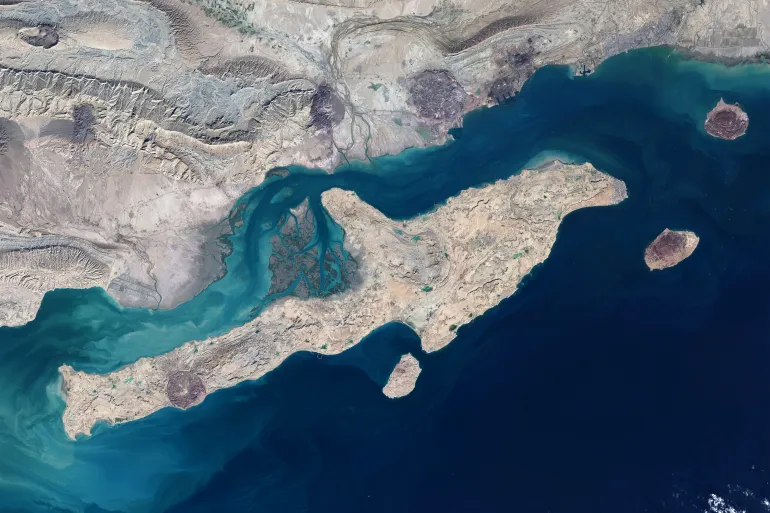
The Strait of Hormuz, a narrow waterway separating Oman and Iran, is the world’s most sensitive maritime chokepoint. A closure, even a temporary one, would likely send oil prices soaring and trigger emergency consultations among the world’s largest economies.
Comments