


On Chatham House’s misreading of Tinubu’s UK State visit

 Quick Read
The first problem with the Chatham House piece is its method. It presents diplomacy and domestic reform as though they are mutually exclusive, when in reality the Tinubu administration has been pursuing both tracks simultaneously: a difficult macroeconomic correction at home and aggressive capital, trade, and security-seeking diplomacy abroad.
By Tosin Olayinka
“He who thinks he has caught a tiger may discover, too late, that he was only clutching his own shadow.”
That is the problem with the Chatham House commentary by Dr Leena Koni Hoffmann: it reads less like rigorous policy analysis and more like a polished brief built on selective pessimism, half-acknowledged progress, and a familiar genre of elite-distance commentary that mistakes caution for depth.
In her poorly researched article on President Tinubu’s State Visit, her core claim is that President Bola Ahmed Tinubu’s high-profile diplomacy, including the March 2026 UK state visit, has produced little for ordinary Nigerians. That argument is not only inaccurate but also incomplete. It underplays measurable improvements in macroeconomic stability, investor confidence, external balances, sovereign creditworthiness, and concrete bilateral outcomes that are now on record. Even institutions not known for political flattery, the IMF, the World Bank, Moody’s, and S&P, have all acknowledged that Nigeria’s reform path has materially improved key fundamentals, even while warning that social pain remains real and reforms must be carried through. That is not propaganda. That is the current evidence.
The first problem with the Chatham House piece is its method. It presents diplomacy and domestic reform as though they are mutually exclusive, when in reality the Tinubu administration has been pursuing both tracks simultaneously: a difficult macroeconomic correction at home and aggressive capital, trade, and security-seeking diplomacy abroad. Serious countries do this. Foreign policy is not a fashion accessory; it is an instrument for attracting finance, deepening security partnerships, improving market access, and repositioning the state. To dismiss visible diplomacy because it has not instantly eliminated poverty is to apply a standard no serious analyst would use on any reforming economy.
Let us start with the Bretton Woods “pass marks” that the commentary tries to glide past.
First pass mark: the IMF’s explicit endorsement of macro-stabilisation gains. In its 2025 Article IV consultation, the IMF said Nigeria had implemented “major reforms” over the previous two years that “improved macroeconomic stability and enhanced resilience.” It specifically pointed to the removal of costly fuel subsidies, the ending of monetary financing of the fiscal deficit, and improvements in the functioning of the foreign exchange market. The IMF also noted that investor confidence had strengthened, that Nigeria successfully returned to the Eurobond market, and that portfolio inflows had resumed. An institution like the IMF does not hand out language like that as charity.
Second pass mark: the World Bank’s acknowledgement of positive economic momentum. In its October 2025 Nigeria Development Update, the World Bank said Nigeria had made “notable progress in stabilising its economy through bold reforms in fiscal, monetary, and trade policy.” It reported that the economy grew 3.9% year-on-year in the first half of 2025, up from 3.5% a year earlier, and that the external position strengthened, with reserves above $42 billion and the current-account surplus at 6.1% of GDP. The Bank added that these gains will soon translate into improved living standards.
Third pass mark: sovereign ratings agencies have moved in Nigeria’s favour. Moody’s upgraded Nigeria in May 2025 from Caa1 to B3, citing better external and fiscal positions and stronger policy credibility. In November 2025, S&P revised Nigeria’s outlook to positive from stable, saying improved confidence and gains in oil production should support stronger medium-term growth. Again, ratings agencies are not sentimental observers; they respond to fiscal metrics, external balances, market liquidity, and reform credibility.
Fourth pass mark: measurable macro indicators have improved. Nigeria’s real GDP grew 4.07% year-on-year in Q4 2025, and full-year 2025 growth rose to 3.87%, up from 3.38% in 2024, according to the National Bureau of Statistics. Net foreign-exchange reserves surged to $34.8 billion by the end of 2025, from just $3.99 billion two years earlier, while gross reserves rose to $50.45 billion by February 2026, according to the Central Bank and Reuters reporting. Inflation, while still painful and a burden on households, eased to 15.06% in February 2026, the eleventh straight month of deceleration, Reuters reported, citing official data. None of this means the hardship is over. It does mean the economy is no longer in the same place it was.
That is the key point the Chatham House article obscures: a reform can be painful and still be necessary; a country can be under strain and still be improving. The choice in 2023 was not between painless prosperity and disciplined reform. It was between continuing a distortion-ridden system, fuel subsidies bleeding public finances, multiple exchange rates encouraging arbitrage, central bank opacity, dwindling confidence, or confronting those distortions and paying the political price. Tinubu chose the latter. The international institutions watching Nigeria most closely have said, in substance, that the correction has begun to repair the macro framework.
The Chatham House commentary also tries to concede good news while draining it of significance. It mentions falling inflation, a stabilising naira, Nigeria’s removal from the FATF grey list, and a positive S&P outlook, then quickly pivots to imply these are somehow cosmetic. That is analytically weak. Falling inflation matters. Improved FX market functioning matters. Better sovereign ratings matter because they affect borrowing costs, investor confidence, and access to capital. Removal from a financial watchlist regime matters because it reduces reputational frictions for banks, investors, and counterparties. These are not decorations. They are the plumbing of economic recovery.
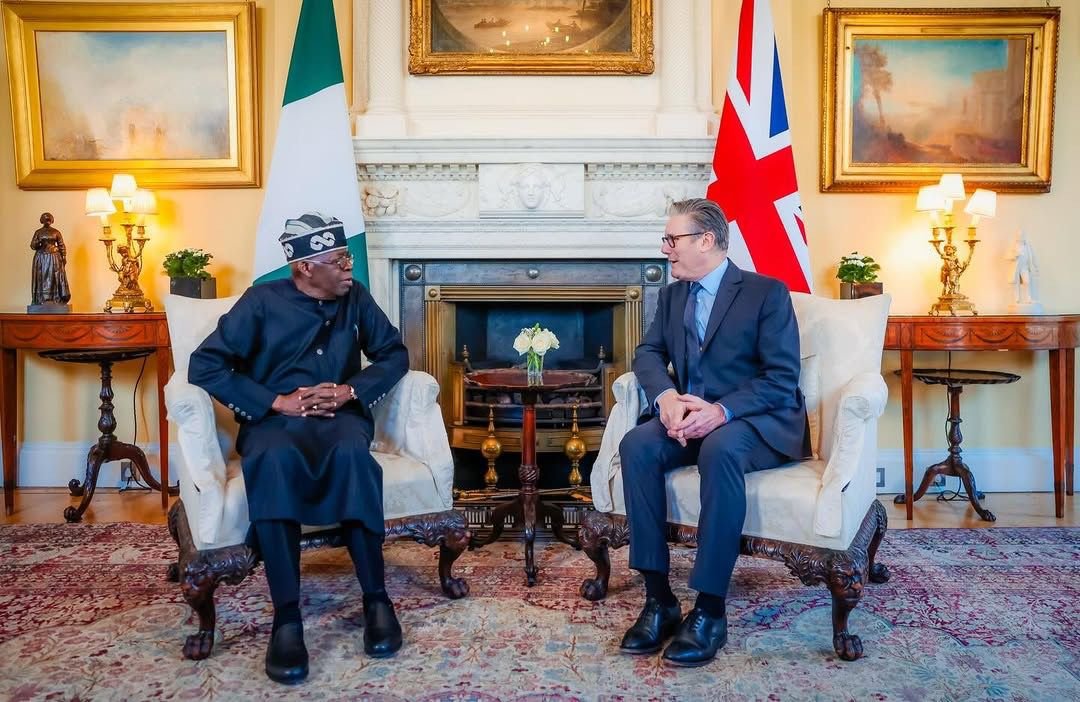
On diplomacy specifically, the argument that Tinubu’s foreign engagements have not produced “concrete benefits” has already been overtaken by events. During the March 2026 UK state visit, Nigeria and the United Kingdom signed a £746 million export finance agreement to refurbish the Lagos Port Complex and Tin Can Island Port Complex. Reuters reported that the deal will be guaranteed by UK Export Finance and coordinated by Citibank. Ports are not ceremonial ornaments. They are logistics arteries. Better port infrastructure reduces delays, improves throughput, lowers trade friction, and strengthens Nigeria’s competitiveness. That is a concrete benefit.
The visit also sat atop a broader architecture already in place: the Enhanced Trade and Investment Partnership and the Nigeria-UK Strategic Partnership. Those frameworks are not magic wands, but they are the kind of structured bilateral instruments through which capital, expertise, procurement, and market opportunities actually move. It is odd for a policy commentator to acknowledge these channels and then write as though diplomacy is merely a photo-op. That reduces statecraft to theatre when the record shows transaction as well as symbolism.
There is another flaw in Lenna’s commentary: it leans heavily on the familiar line that because many Nigerians are still hurting, the reform agenda has not delivered. That sets up a false binary. Nigeria can be undergoing a macroeconomic repair that international institutions recognise, while many households are still suffering from the lagged effects of subsidy removal, exchange-rate adjustment, food inflation, and weak safety nets. In fact, that is exactly what the IMF and World Bank have both said: reforms have improved stability, but the gains must now be brought home more forcefully through lower inflation, stronger social protection, and more inclusive growth. That is a nuanced position. Chatham House, by contrast, packages that nuance into a one-directional indictment.
In the oil sector, there are also signs of recovery that matter. The Financial Times reported this week that Nigeria’s oil production rebounded to about 1.5 million barrels per day in 2025, away from the sub-1-million-barrel levels seen earlier, and that reforms, regulatory changes, and renewed investor interest helped boost momentum. Reported upstream investment commitments of $5.3 billion affirm that this is not simply a diplomatic mirage. The sector still faces a few challenges, such as sabotage, theft, governance, and financing, but the direction of travel is not a flat line as critics imply.
To be fair, the country faces challenges, like every other country. Those are real. But acknowledging those facts does not rescue an analysis that minimises every sign of progress and treats every gain as either delayed, cosmetic, or politically suspect. That style of writing may pass for think-tank severity, but too often it slips into what can only be called gossip journalism in policy clothing: broad atmospherics, selective facts, and conclusions that seem emotionally pre-decided.
That is why the piece feels less like field-grounded analysis and more like a room-temperature recycling of familiar elite talking points: Tinubu travels too much; diplomacy is mostly optics; reforms are IMF-style pain without dividend; ordinary people see nothing. A serious investigator would ask harder questions in both directions. What do the IMF, World Bank, Moody’s, S&P, and market data now show? How do port-finance deals, security agreements, trade frameworks, and improved reserves alter Nigeria’s medium-term capacity? What were the alternatives to the reforms? What would continued subsidy distortion and FX fragmentation have cost by 2026? Those questions are largely absent.
Ultimately, this is perhaps the most significant shortcoming of the Chatham House note: not its critical perspective, but that some sections may lack depth relative to their certainty.
A better-researched appraisal would have said this: Tinubu’s administration has imposed politically costly reforms that are now yielding visible macroeconomic improvements; the benefits are not yet broad enough for ordinary Nigerians; the next test is whether stability can be converted into faster job-rich growth, lower living costs, and better security. That would have been serious. Instead, readers got a commentary that nods at the evidence, then writes as though it barely matters.
So yes, Dr Hoffmann should do more homework, more first-hand reporting, more on-the-ground texture, more respect for contradictory evidence, and less reliance on recycled defeatism. Nigeria’s story under the Renewed Hope administration is not one of a finished victory; no honest person should claim that. But neither is it the barren failure her piece strains to suggest. The record now contains clear and verifiable achievements: stronger growth, softer inflation, rebuilt reserves, improved sovereign ratings, restored investor confidence, resumed market access, oil-sector momentum, and concrete outcomes from diplomacy, including the UK port-finance deal.
President Bola Ahmed Tinubu’s administration is still being tested, but it is not drifting. It is reforming, recalibrating, and reintroducing Nigeria to the world as a serious state willing to take hard decisions. And the evidence increasingly shows that the country’s foreign engagements are not empty travelogues. Like the March 2026 UK state visit, they are yielding results, expanding partnerships, and raising Nigeria’s profile on the global stage. President Tinubu will continue to make Nigeria proud internationally, and the enduring task now is to ensure those global wins translate into prosperity, security, and confidence at home.
Hon. Tosin Olayinka, LL.B (Hons), B.L, LLM (London)Programme Director, Renewed Hope Global
Comments