


What parents should know about chiropractic care for Infant Torticollis

 Quick Read
Torticollis is one of the more common concerns parents bring to pediatric health providers in the early months of a baby's life.
Discovering that your baby has torticollis — that persistent head tilt or difficulty turning to one side — can feel alarming. You’re not alone. Torticollis is one of the more common concerns parents bring to pediatric health providers in the early months of a baby’s life. Understanding what’s actually happening in your baby’s body, and what gentle chiropractic support can offer, may give you the reassurance and direction you’re looking for.
What is Infant Torticollis?
Torticollis in infants is typically characterized by a visible tilt or rotation of the head, a preference for turning to one side, and sometimes flattening of one side of the skull (plagiocephaly) that can develop as a secondary concern. Most parents and providers first notice it in the neck muscles — specifically the sternocleidomastoid (SCM) — which can appear shortened or tight on one side.
While the muscular component is real, many pediatric chiropractors work from a perspective that muscle tightness is often a symptom rather than the sole source of the issue. Understanding the nervous system dimension is an important part of the picture.
The nervous system root cause angle
During the birth process — whether vaginal or cesarean — the cervical spine (the upper neck) can experience compression or subtle misalignment. The uppermost vertebrae in the neck, C1 and C2, sit at the base of the brainstem and play a critical role in how the nervous system regulates muscle tone and movement throughout the body.
When these vertebrae are not moving optimally, the nervous system may respond by creating persistent muscle tension on one side of the neck. This is why many infants with torticollis show improvement not only with muscle stretching but with gentle chiropractic care directed at restoring proper motion to the upper cervical spine — allowing the nervous system to regulate muscle tone more effectively.
This is the framework that CACCP-certified practitioners bring to their approach: looking beyond the tight muscle to the neurological communication patterns that may be sustaining it.
How Chiropractic care for Torticollis in infants works
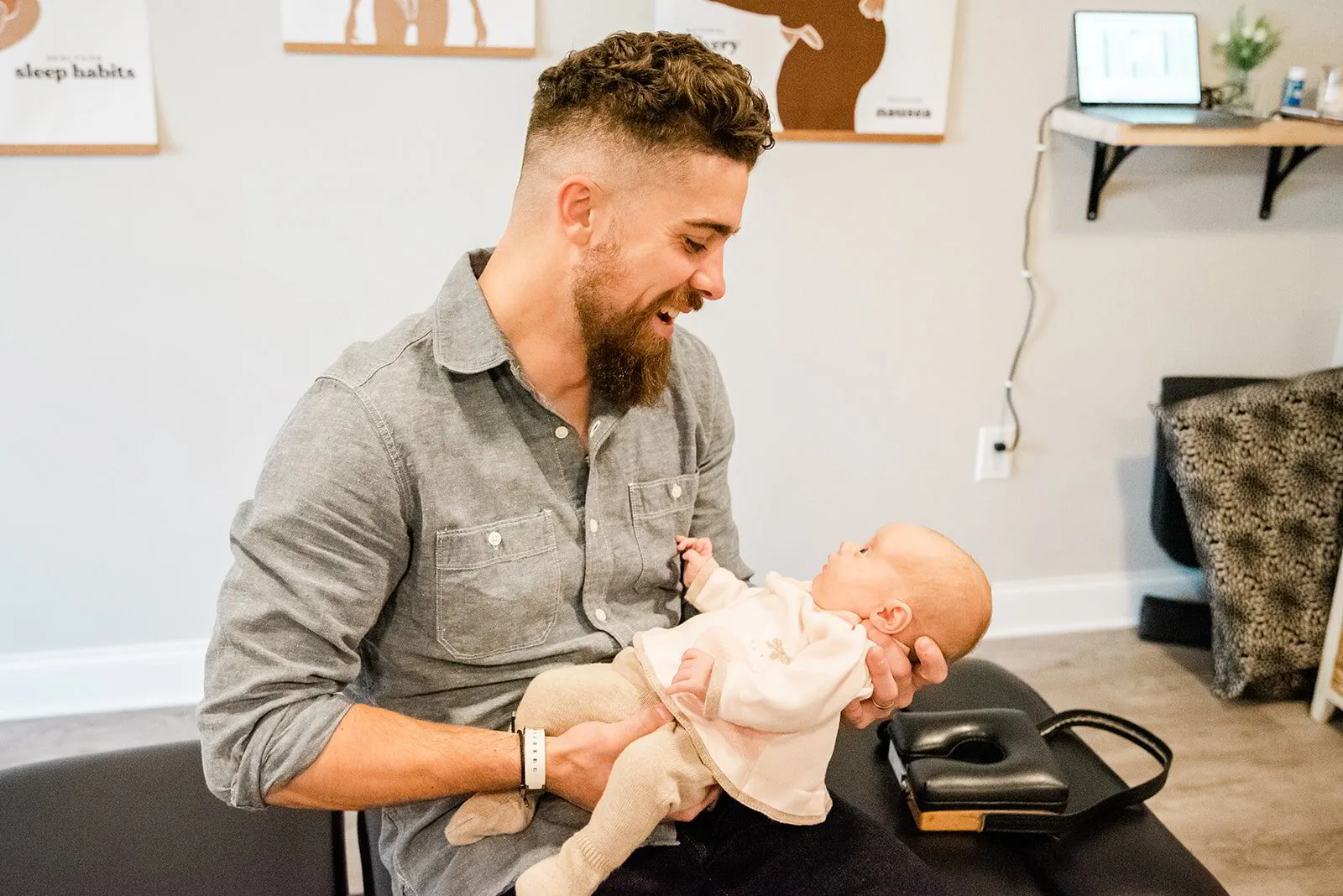
Gentle chiropractic care for torticollis in infants is very different from what most adults imagine when they think of a chiropractic adjustment. There are no twisting or cracking movements involved. A pediatric chiropractor uses extremely light fingertip pressure — often compared to the weight of a coin resting on your palm — to encourage motion and release in specific spinal segments.
Sessions are typically short, calm, and gentle enough that many babies fall asleep during the visit. Most parents are surprised by how subtle the work is, and how positively their infants respond.
Reissing Health in Farragut, TN is a CACCP-certified pediatric chiropractic practice serving families throughout the Knoxville area. Their approach to infant torticollis integrates nervous system-focused assessment with gentle, developmentally appropriate care — supporting babies in restoring natural range of motion in a way that is safe and responsive to each child’s needs.
What to expect when you bring your baby in
An initial visit for infant torticollis typically includes:
● A thorough birth history review, including any labor interventions, vacuum or forceps use, or positioning concerns
● Assessment of your baby’s head position, range of motion, and muscle tone on both sides
● A neurological and postural screen appropriate for your baby’s age
● A clear explanation of what the chiropractor is observing and how they plan to approach care
You should feel comfortable asking questions at every step. A practitioner who specializes in infant care will welcome your curiosity and explain everything in plain language.
When should you seek care?
Earlier is generally better when it comes to infant torticollis. Babies’ nervous systems and connective tissues are highly responsive in the first weeks and months of life, which is when gentle intervention tends to be most effective. If your baby is consistently turning their head to one side, has difficulty nursing symmetrically, or you’ve noticed a head tilt, reaching out to a CACCP-certified pediatric chiropractor sooner rather than later is worth considering.
You don’t need a referral to schedule an initial consultation. Many families come in for an assessment simply to understand what they’re seeing and what their options are — and that’s always a reasonable place to start.
A gentle path forward
Torticollis can feel like a confusing diagnosis, especially when you’re doing everything right and still watching your baby struggle to turn their head comfortably. Chiropractic care for torticollis in infants offers a gentle, nervous system-informed approach that complements other therapies and supports your baby’s natural capacity for healthy development.
If you’re in the Knoxville or Farragut area and looking for a compassionate, CACCP-certified practice to support your infant, a consultation is the best first step. You and your baby deserve a provider who understands both the science and the sensitivity of caring for little ones.
Comments