


Cultural nuance and identity in Hafizat Adegbile’s art

 Quick Read
Hafizat Adegbile uses the camera and photography as tools to construct cultural identity and document its nuances. Trained in her father's photography workshop, Hafizat has emerged as a promising art photographer in the contemporary art scene both in Nigeria and internationally.
By Duniya G. Gambo, Professor of Art History and Art Criticism
Hafizat Adegbile uses the camera and photography as tools to construct cultural identity and document its nuances. Trained in her father’s photography workshop, Hafizat has emerged as a promising art photographer in the contemporary art scene both in Nigeria and internationally. Through a dedicated commitment to the ideals of both traditional photography and technology-inspired modern photography, Hafizat has leveraged on her computer science background to seamlessly utilize these two resources in presenting her view/perspectives of culture and identity.
Hafizat’s works have been exhibited nationally at state of the art galleries such as Oshodi Art Gallery, Lagos and Thought Pyramid Art Centre in Nigeria, as well as internationally at Madeke Art Gallery (2023), Thomson Gallery, Switzerland (2024), Open Gallery, UK (2025), Glasgow Gallery of Photography, UK (2025), and Tayese Academy of Art and Culture, UK (2025) to mention a few. Her practice engages in global conversation on identity and documentation, memory, and representation, marking her as a distinctive voice in contemporary art.
This review examines two of her striking recent works, “Fulani Flair” and “Tiv Flair” highlighting the subtle nuances and rich heritage of Fulani and Tiv cultures, as well as their cultural significance and role in expressing identity. These works were exhibited at the Dark Peak Photo Gallery’s Identity Exhibition February 2026 in Glasgow and the Artlymix Gallery’s SpectrumExhibition March 2026 in Sao Paulo, Brazil, respectively.
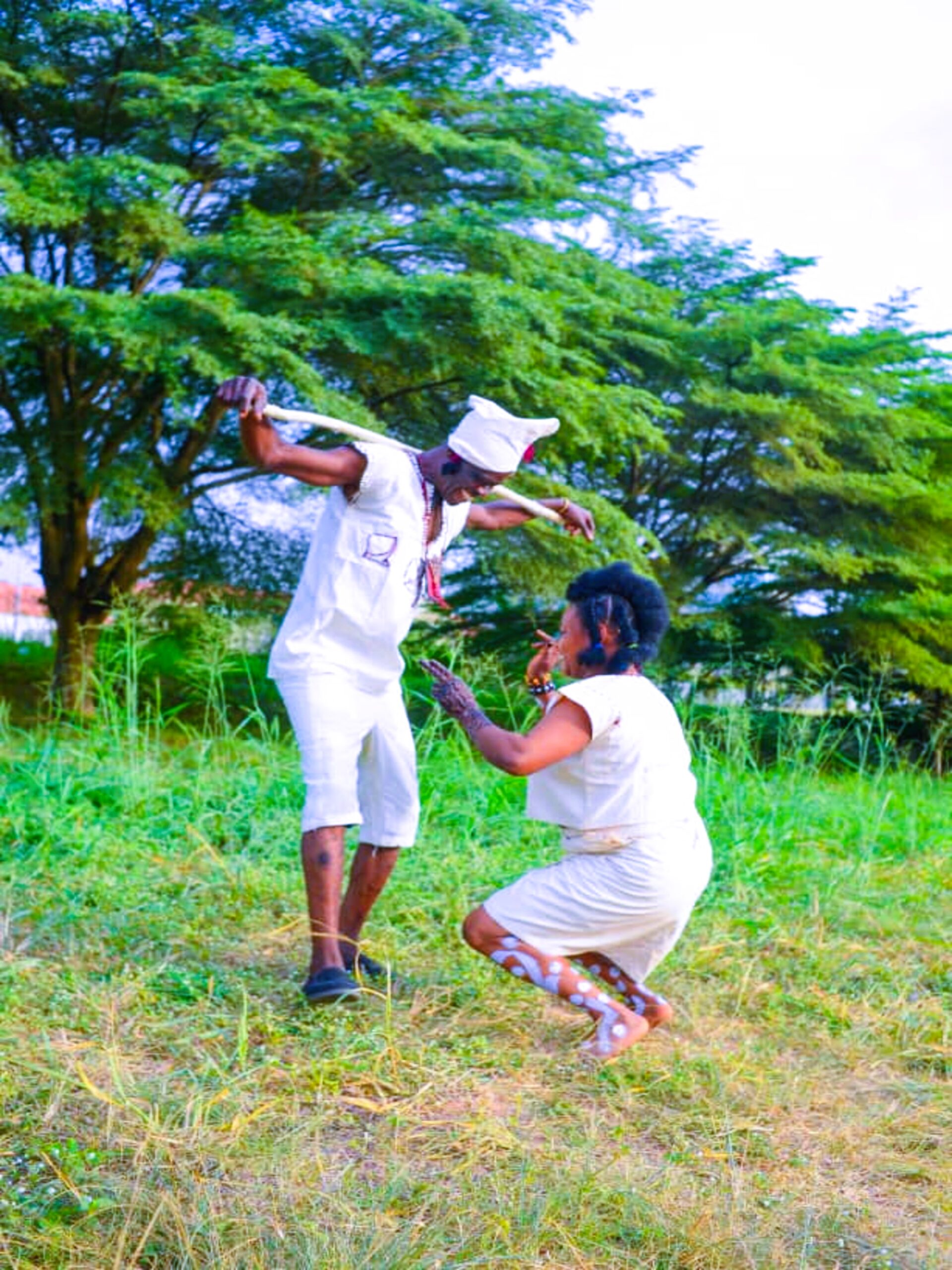
The first work “Fulani Flair” is one of Hafizat’s photographic art. The Fulani or Fulbe, as they are traditionally known, are an ethnic group spread over many countries, predominantly in West Africa. In Nigeria, the Fulani are mostly concentrated in the Northern part of the country.
The work celebrates the sociocultural being of the Fulani people,emphasizing their humane nature. This is particularly important considering recent negative narratives surrounding Fulani communities in Nigeria, often shaped by ongoing conflicts and media representations. “Fulani Flair” showcases the unique culture of the Fulanis, through their colourful traditional attire and props, and captivating traditional dance movements. These elements are represented in the photographic art, through the couple dance posture, which reflects a typical Fulani marriage ceremony popularly called “sharo”. The traditional marriage dance captures the true essence of Fulani cultural aesthetics, expressed through the vibrant attire, the women’s intricate hairstyles and facial makeup, and the symbolic male staff that completes the ceremonial ensemble.” The male staff is symbolic of the male’s willingness to protect what is his, and where necessary, be used as an instrument of aggression. These are some of aspects of Fulani culture captured by Hafizat in this photographic art.
“Fulani Flair” is not just a celebration of cultural attire, it is a celebration of Fulani culture and what makes them human, like everyone. It is the totality of their being, their essence, their identity and consequently their uniqueness. It reflects Hafizat’s worldview of what the Fulani represent, “a beautiful people”.See plate i, for “Fulani Flair”
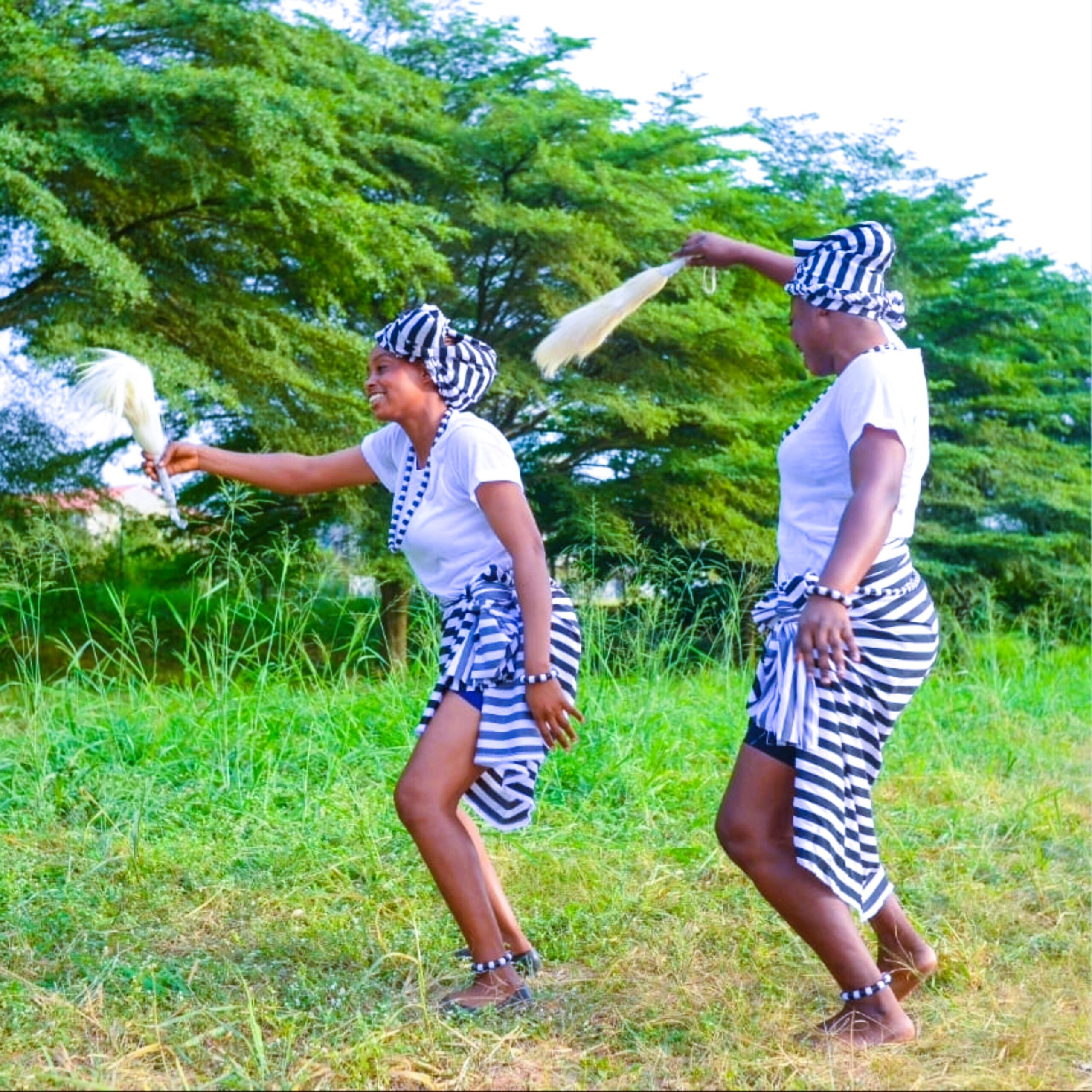
The second work, “Tiv Flair” on its part, conceptualises another unique Nigerian culture, the Tiv. They are found in the central part of Nigeria, specifically in Benue, Nasarawa and Taraba States of Nigeria. They constitute the single largest ethnic group in Benue State. The Tiv are known to have a vibrant and rich cultural tradition that is exhibited through dance, puppetry, clothes and dramatics. Their clothes, particularly the white and black stripes, are classically associated with them more than any other attire. Hafizat’s photographic compositions celebrate this unique culture and its traditional nuances.
Beyond the aesthetics of the Tiv white and black striped attire,that Hafizat’s work celebrates, lies a deeper meaning, the Tiv’sacceptance of life’s duality. Thus, it is a cultural celebration of the reality of life, being either “white or black”, “birth or death”,”day or night”, “good or bad” and “young or old”, just to mention a few. The work captures the famous Tiv traditional dance, showing how life can be flexible even during hard times. The dance is difficult to perform, but its beauty shines through, symbolizing strength and grace.
Overall, Hafizat uses the camera as a tool for visual storytelling, constructing visual narratives, and shaping representation, as seen in her works ‘Fulani Flair’ and “Tiv Flair.” Hafizat’s photographic art is not just celebrating cultures, it is documenting it, in a manner that embodies the totality of what constitutes the nuances of such cultures. Her works are also anadvocacy for the projection of the elements that lead to cultural beauty and the positive vibes that they engender, rather than the negative narratives that populate contemporary society generally. Incidentally, the Fulani and Tiv are “best cultural friends” but have of recent been presented as antagonists against each other, due to certain unnecessary avoidable conflicts between them.
These two works show that they both have unique cultural traits, that both can leverage on for a more enduring mutually beneficial partnerships and relationship.
Comments