


High Cost of Housing could hinder inclusivity, economic growth – NESG Boss Warns

 Quick Read
The Lagos State government has been urged to weigh in on the current high rise housing cost particularly for low-income residents in the state to ensure inclusiveness and a sustainable economic growth.
…As LASG unveils LEDU 2026, reaffirms commitment to sustainable development
The Lagos State government has been urged to weigh in on the current high rise housing cost particularly for low-income residents in the state to ensure inclusiveness and a sustainable economic growth.
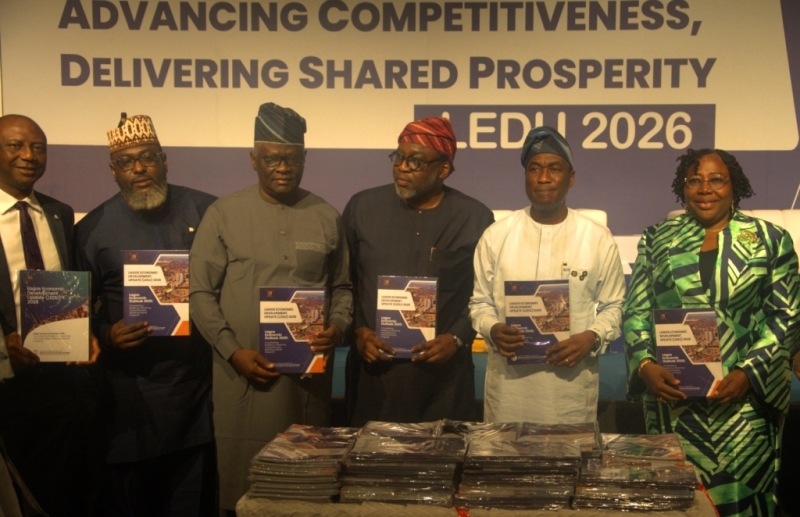
The Chief Executive Officer of the Nigerian Economic Summit Group, NESG, Dr Tayo Aduloju made the call at the official launch of the third edition of Lagos Economic Development Update (LEDU 2026) with theme: “Consolidating Resilience, Advancing Competitiveness, Delivering Shared Prosperity,” held at the Marriott Hotel in Lagos.
The launch was organized by the Lagos State Ministry of Economic Planning and Budget with a convergence of policymakers, private sector leaders, development partners, and key stakeholders to assess the State’s economic trajectory and outline forward-looking strategies.
In his lecture titled “Optimizing Reforms, Resilience and Renewal: Repositioning Lagos for Shared Prosperity and the Next Phase of Growth,” Dr Aduloju highlighted key drivers of shared prosperity in successful city-states to include housing affordability, efficient transport systems, continuous skills development, productivity-led growth anchored in tradable sectors, strong policy credibility, and effective wage systems.
The NESG Chairman stressed that housing and transport play a central role in inclusive growth, warning that high housing costs and poor mobility could limit opportunities for lower-income residents.
“Growth must translate into improved living standards. If housing absorbs most household income, prosperity becomes concentrated,” he said.
Describing LEDU as a strategic instrument for transparency, investor confidence and evidence-based policymaking, Dr Adeloju stated that Lagos has demonstrated resilience in macroeconomic management; infrastructure expansion and institutional reforms; real income pressures and structural cost challenges remain significant.
He said the government must focus on the next phase of growth on execution discipline and productivity optimisation rather than mere expansion. He added that Lagos must institutionalise reforms that improve service delivery, strengthen fiscal discipline and expand economic opportunities.
“The decisive question is no longer whether Lagos can grow, but whether it can make growth durable, productive, fiscally prudent and socially inclusive,” he said.
Reassuring on the Lagos State government’s thoughtful actions, the Commissioner for Economic Planning and Budget, Mr Ope George, said that through deliberate policies, disciplined fiscal management, and strategic investments, the state has strengthened its economic foundation and reinforced its position as a leading subnational economy in Africa.
“From post-pandemic recovery pressures to inflationary challenges and structural adjustments, Lagos has remained steady and forward-looking. Lagos is not just responding to economic shocks—we are building systems that make us stronger because of them,” George said.
The Permanent Secretary, Ministry of Economic Planning and Budget, Mrs. Olayinka Ojo, in her welcome address reaffirmed that Lagos remains committed to promoting transparency, accountability, and inclusive growth that delivers tangible benefits for all residents. She underscored the importance of evidence-based policymaking in achieving sustainable development outcomes.
Comments