


Tsediso Makoelle and the Work of Inclusion in Education

 Quick Read
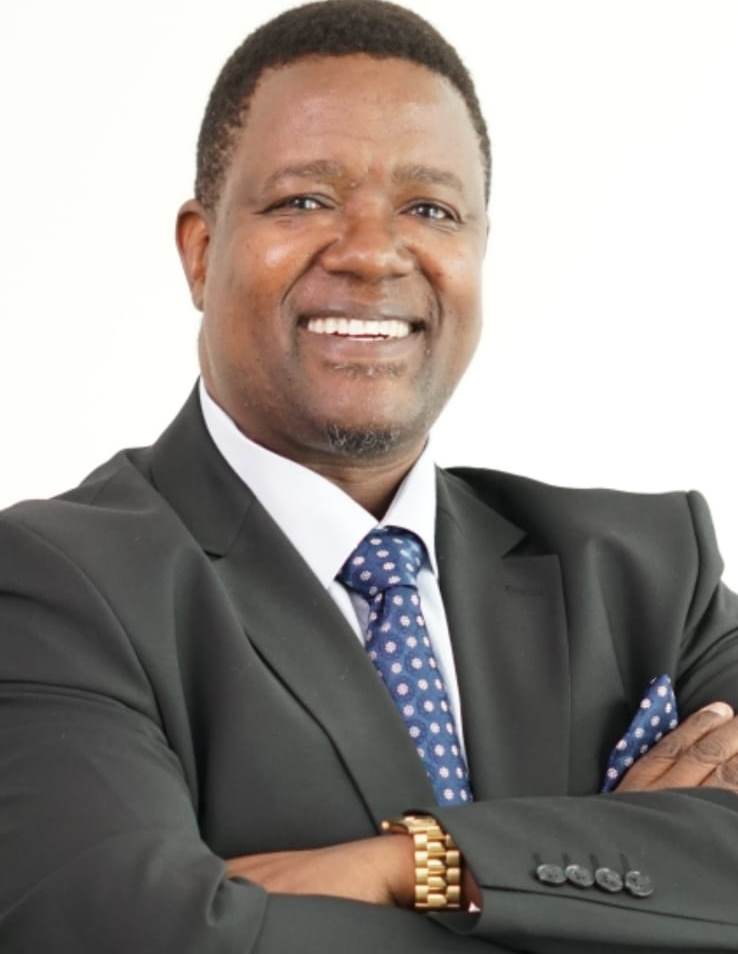
Prof. Tsediso Michael Makoelle’s career has been shaped by a steady focus on how education systems respond to learners who fall outside the mainstream.
By Amos John
Prof. Tsediso Michael Makoelle’s career has been shaped by a steady focus on how education systems respond to learners who fall outside the mainstream. Over more than three decades, his work has examined the structures, policies and classroom practices that determine whether inclusion is realised or remains a policy statement.
He is currently Dean of the Faculty of Education at University of Fort Hare, following a period at Nazarbayev University where he served as Vice Dean for Research and Full Professor in the Graduate School of Education. His academic engagements have moved across different regions, but his research interests have remained largely consistent.
Makoelle holds a PhD in Inclusive Education from University of Manchester, obtained through a Nelson Mandela Scholarship, and a Doctor of Education degree in Education Management and Leadership from University of South Africa. His academic training combined questions of leadership with concerns about access and participation in schooling.
His research has addressed inclusive education policy, teacher leadership and curriculum development, with particular attention to conditions in the Global South. Some of his work has also drawn on experiences outside Africa, including studies of education systems in Kazakhstan and other post-Soviet contexts. In these settings, he has examined how inclusion is interpreted within systems undergoing institutional and policy transitions.
Publications by Makoelle include journal articles and edited volumes that look at inclusive pedagogy, mentoring and teacher preparation. In his writing on teacher leadership in South African schools, he considers how decisions made at classroom level influence the success or failure of inclusive practices. Other studies focus on the mentoring of pre-service teachers as part of efforts to strengthen inclusive teaching.
He has also been affiliated with the International Laboratory for Social Integration Research at the Higher School of Economics as a visiting research fellow, contributing to comparative work on social integration and education.
His professional activities extend to editorial and review work. He has served on editorial boards, acted as a reviewer for academic journals and participated in the assessment of research grant applications for South Africa’s National Research Foundation.
Recognition for his work includes a global education leadership award presented in Dubai, a service medal from Kazakhstan’s Ministry of Education and Science, and a letter of recognition from the President of Kazakhstan.
Across his research, a recurring concern is the gap between policy and practice. His studies point to the ways in which inclusion is shaped not only by national frameworks but also by the everyday decisions of teachers and school leaders, particularly in contexts where resources are limited.
Comments