


How a churchyard in Ibadan hides deep World War II secrets

 Quick Read
A quiet churchyard in Ibadan holds traces of a global conflict, where the graves of two young soldiers from World War II sit alongside those of local families, quietly connecting Nigeria to the wider history of the war.
By Tolulope Oke
A quiet churchyard in Ibadan holds traces of a global conflict, where the graves of two young soldiers from World War II sit alongside those of local families, quietly connecting Nigeria to the wider history of the war.
What started as a routine visit to his mother’s grave became an unexpected journey through history for educationist Gbénró Adégbolá. While paying respects to his late mother, Honourable Justice Atinuke Omobonike Ige, JCA, OFR, Adégbolá noticed something unusual in the nearby churchyard, three graves that bore the markings of Commonwealth soldiers from World War II.
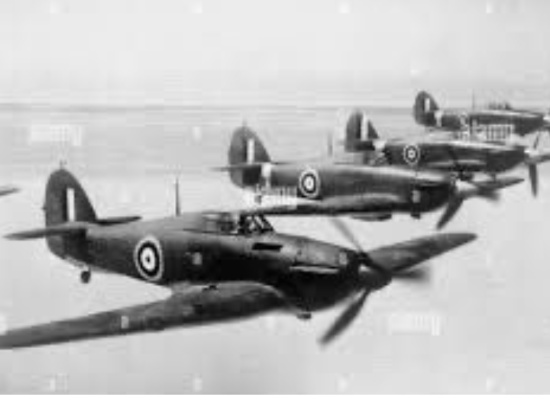
On May 7, 1941, Lieutenant Pieter “Fritz” De J. Fritz and his comrade Lieutenant B.R. Dimmock, flying their Tomahawk planes in large formation, ran into a violent tropical storm near Ibadan. Both aircraft crashed, killing the pilots.
While they died in the same storm, they were buried in different parts of the city according to their faiths, Fritz in the Anglican CMS yard, and Dimmock at the Catholic Seminary in Oke Are.
“Every time I visit my mother-in-law, I’m reminded that our local churchyard is also a small part of global history,” Adégbolá shared on X. His observation highlights the unusual presence of World War II soldiers in a city far removed from the European theaters of war.
He also noted the care taken to preserve these graves. One had fallen in recent years, but it has now been re-erected and re-engraved in granite, ensuring that the inscriptions remain legible for decades. “Once you couldn’t read the lettering. Now it’s guaranteed to last at least 50 years,” Adégbolá said.
For the educationist, the churchyard offered a striking juxtaposition of global and personal history.
The young soldiers, who died in another era and another world, now lie almost side by side with his mother-in-law, who passed away 23 years ago. “A young man from a different world, resting almost side by side with our family, makes the vast world of World War II feel very small,” he observed.
Adégbolá said the churchyard demonstrates how history can be found in the most ordinary places. “It is a space where memory and history intersect,” he tweeted. “These graves show that local communities can hold pieces of the world’s history quietly, almost unnoticed, but profoundly significant.”
Comments