



How Startups Use Virtual Numbers to Test New Markets Before Committing

 Quick Read
The virtual number is your beachhead. It gives you a local presence that customers can interact with, a channel for measuring real demand, and a platform for gathering the qualitative insights you need to make smart expansion decisions.
There’s a moment every startup founder recognizes. You’ve built something that works in your home market, the revenue is growing, and someone on your team says: “What about Mexico?” or “What about Southeast Asia?” The opportunity looks real. The market data looks promising. But between where you are now and a full-blown international launch sits a mountain of unknowns — and a pile of cash you’d need to spend before you know if any of it will work. Getting a Mexico virtual number and running ads with a local callback line is a dramatically cheaper way to find out.
This is the lean approach to international expansion, and virtual phone numbers are one of its most underrated tools. They let you establish local presence, run real-world experiments, and measure demand in a new market — all without incorporating a foreign entity, hiring local staff, or signing a lease. In this article, we’ll walk through exactly how startups use virtual numbers to test markets, what the playbook looks like in practice, and when to know it’s time to go from testing to committing.
The Expensive Way vs. the Smart Way
Let’s start with what international market entry traditionally looks like. A company decides to enter a new country. They hire a law firm to handle incorporation. They engage a local accountant. They rent office space (even if it’s just a virtual office). They hire at least one local employee to manage operations. They set up a local bank account. They get local phone lines and internet.
All of this happens before a single customer has been acquired. The upfront investment easily reaches fifty to a hundred thousand dollars or more, depending on the country. And if the market doesn’t work out? That money is gone. The entity needs to be wound down, contracts need to be terminated, and the whole effort becomes an expensive lesson in humility.
The smart way flips the sequence. Instead of building infrastructure first and hoping customers show up, you prove demand first and build infrastructure only after you have evidence it’s worth it. Virtual phone numbers are central to this approach because they give you the single most important thing for market testing: a local presence that customers can interact with.
The Market Test Framework
Here’s the basic framework that lean startups use to test a new market with minimal investment. It works across industries and geographies, and it can be set up in a matter of days.
Step 1: Pick Your Test Market
Choose one market to test first. Don’t try to enter five countries simultaneously. Pick the one where you have the strongest hypothesis about demand — maybe you’re already getting inbound inquiries from there, maybe a competitor is doing well there, or maybe the market demographics align closely with your existing customer profile.
Step 2: Get a Local Number
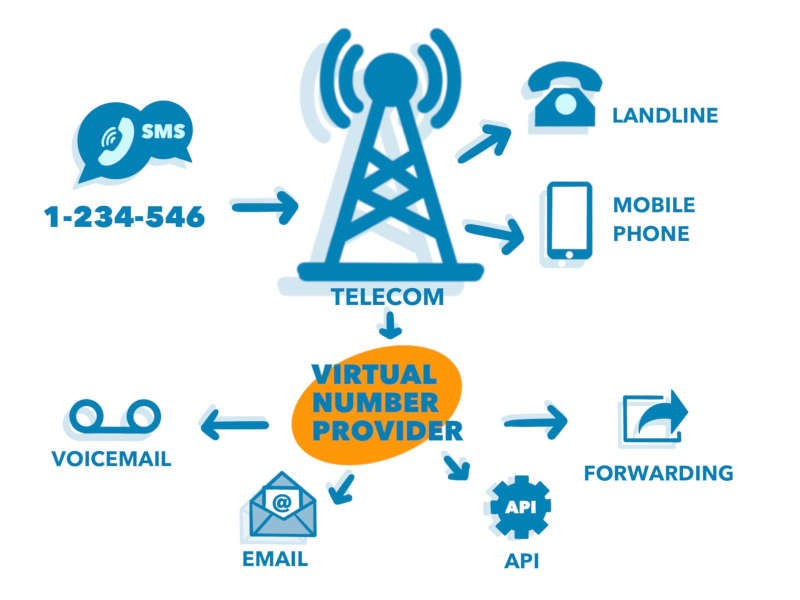
This is where virtual numbers come in. Get a phone number in the target country. If you’re testing Mexico, get a +52 number. If you’re testing Poland, get a +48 number. If you’re testing Singapore, get a +65 number. Set it up to forward calls to your existing team and route SMS to your email or a shared dashboard.
Step 3: Build a Minimal Local Presence
Create a localized landing page (translated content, local currency, local phone number prominently displayed). List your local number on the page as the contact. If you’re selling on a marketplace, register as a seller using the local number. If you’re B2B, add the local number to your outreach materials.
Step 4: Drive Traffic and Measure
Run targeted ads (Google Ads, Facebook/Meta Ads, local platforms) aimed at your target market. Direct prospects to the localized landing page or marketplace listing. Track everything: ad clicks, page visits, form submissions, and — critically — phone calls and SMS to your local number.
Step 5: Evaluate and Decide
After four to eight weeks of testing, look at the data. Are people calling the local number? Are you getting inbound inquiries? Are ad conversion rates comparable to your home market? Is there genuine demand, or was the opportunity smaller than the data suggested?
If the signals are strong, you now have real evidence to justify a larger investment. If they’re weak, you’ve spent a few hundred dollars instead of a hundred thousand.
Why Phone Calls Are the Best Market Signal
There’s a reason seasoned operators pay close attention to phone calls during market tests. Phone calls are a higher-intent signal than almost any other metric.
Someone who clicks an ad is mildly interested. Someone who fills out a form is more interested. But someone who picks up the phone and calls you? They’re serious. They have a problem they want solved now, and they’re willing to invest their time to talk to a human being about it.
In many markets — particularly in Latin America, parts of Europe, and Southeast Asia — phone calls are the preferred first contact method for business inquiries. A potential customer in Mexico is more likely to call than to fill out a web form. A business partner in Poland might prefer a quick phone conversation over a back-and-forth email thread.
By putting a local number on your test landing page and tracking the calls that come in, you’re measuring the highest-quality demand signal available. Ten inbound calls per week to your Mexican number tells you more about market viability than a thousand ad impressions.
This is also why having a local number (rather than an international one) matters so much for market testing. People are far more likely to call a number they recognize. A +52 number gets called. A +1 number displayed on a Mexican-facing page creates hesitation. The local number removes that friction and gives you a cleaner demand signal.
Real-World Market Testing Scenarios
SaaS Company Testing Latin America
A U.S.-based SaaS startup offering project management tools wanted to test demand in Mexico and Colombia. They translated their landing page into Spanish, got virtual numbers in both countries, and ran Google Ads targeting small business owners.
Within three weeks, their Mexican number was receiving four to five calls per day from business owners asking about pricing and features. The Colombian number received about two calls per day. The calls themselves were invaluable — they revealed that Mexican prospects were most interested in WhatsApp integration (which the product didn’t have yet) and billing in pesos (which was easy to add).
Based on the call volume and the qualitative insights from conversations, they decided to prioritize Mexico, build WhatsApp integration, and add peso billing. The total cost of the market test (virtual numbers, ad spend, landing page translation) was under two thousand dollars.
E-Commerce Brand Testing Eastern Europe
A UK-based e-commerce brand selling sustainable home goods wanted to expand into Poland. They listed products on Allegro (Poland’s largest marketplace), used a +48 virtual number for seller registration and customer communication, and ran Facebook Ads targeting Polish consumers.
The phone calls were sparse (Polish e-commerce consumers tend to prefer messaging), but the WhatsApp messages to their +48 number were steady. Customers asked about shipping times, material sourcing, and whether they could return items. The messaging volume gave the company confidence that demand existed, and the content of the messages helped them refine their Polish product descriptions and FAQ page.
Fintech Startup Testing Singapore
A European fintech startup offering invoice financing wanted to test the Singapore market. They got a +65 landline number for credibility, listed it on a Singapore-focused landing page, and attended a virtual fintech conference where they shared their Singapore contact.
Over six weeks, they received around twenty inbound calls from Singaporean SME owners interested in the product. Several of those conversations progressed to serious discussions about onboarding. The startup used this evidence to raise a seed extension that included budget for a proper Singapore launch.
The Virtual Number as a Swiss Army Knife for Market Entry
What makes virtual numbers so valuable for market testing isn’t just the ability to receive calls. It’s the sheer number of functions a single local number can serve during the test phase.
It’s your contact number on landing pages and ads. It’s your seller registration number on marketplaces. It’s your WhatsApp Business number for messaging with prospects. It’s your verification number for signing up for local services and platforms you need to research the market. It’s your callback number when you cold-call local prospects or partners.
One number, rented for a few dollars per month from a sms for registration number provider, replaces what used to require a local office with a landline. That’s a profound shift in how market entry economics work.
Tracking and Analytics: Getting the Most from Your Test
To make your market test meaningful, you need to track what’s happening with your virtual number systematically.
Count every inbound call. Log the date, time, duration, and a brief note about what the caller wanted. This gives you quantitative data (call volume over time) and qualitative data (what are prospects actually asking about?).
Track SMS messages separately. If you’re using the number for WhatsApp Business, log message volume and content themes. Are people asking about pricing? Features? Shipping? Availability?
Cross-reference phone activity with your ad campaigns. If you’re running ads with the local number as the call-to-action, you can calculate your cost per call — a much more meaningful metric than cost per click for markets where phone calls drive business.
Compare your test market metrics to your home market. If your home market cost per acquisition is thirty dollars and your test market is showing fifty dollars at the same call volume, you can make an informed decision about whether the economics work.
When to Stop Testing and Start Committing
The test phase shouldn’t last forever. At some point, you need to decide: go or no-go. Here are the signals that suggest it’s time to move from testing to real market entry.
Consistent inbound demand. If your local number is receiving regular calls or messages from genuine prospects week after week, and the volume is steady or growing, there’s real demand.
Revenue from the test. If prospects from the test market are actually buying your product or signing up for your service, even at modest volumes, you’ve validated the most important hypothesis: people in this market will pay for what you offer.
Qualitative insights that suggest a large addressable market. If every conversation with a prospect reveals more unmet need, more potential customers they can refer you to, or more use cases you hadn’t considered, the market might be bigger than your initial estimate.
Competitive activity. If competitors are entering the market or increasing their presence there, it confirms that others see the same opportunity. Being second or third into a validated market is fine. Being sixth or seventh is much harder.
On the other hand, signals to walk away include: low call volume despite meaningful ad spend, conversations that consistently reveal deal-breaking objections (regulatory, cultural, economic), and unit economics that don’t improve over the test period.
Scaling Up: From Test Number to Full Communication Infrastructure
When the market test is positive and you decide to commit, your virtual number evolves from a testing tool into a permanent piece of your business infrastructure.
Upgrade to a more robust setup. Add an IVR menu so callers can reach the right team member. Set up voicemail with a professional greeting in the local language. If call volume justifies it, route calls to a dedicated local-market support person or a team with language capabilities.
Add more numbers if needed. You might need separate numbers for sales, support, and operations. Some companies get toll-free numbers for customer service alongside a standard number for business inquiries.
Integrate your numbers with your CRM and helpdesk. Calls and messages should flow into your existing systems so nothing falls through the cracks. This is where the difference between a test-phase setup and a production setup becomes clear: production means every interaction is logged, tracked, and followed up on.
Consider adding numbers in adjacent markets. If Mexico worked, test Colombia and Brazil next. If Singapore worked, look at Indonesia and Thailand. Each new market gets the same lean testing process, and your virtual number provider makes adding new countries trivially easy.
The Cost of Market Testing with Virtual Numbers
Let’s put real numbers on this. A typical lean market test using virtual numbers costs the following.
Virtual number subscription: five to twenty dollars per month, depending on the country and number type. Landing page creation or localization: free to five hundred dollars, depending on whether you do it in-house or hire a translator. Ad spend for the test period: five hundred to two thousand dollars over four to eight weeks, depending on the market and your targeting strategy. Miscellaneous (local marketplace registration, tools, etc.): fifty to two hundred dollars.
Total: roughly six hundred to three thousand dollars for a complete market test with real demand data.
Compare that to the traditional approach of incorporating, renting space, hiring, and launching without demand validation. The lean approach costs one to three percent of the traditional approach, and it delivers actionable data before any major commitment is made.
Mistakes Startups Make When Testing New Markets
Testing too many markets at once. Focus beats breadth in market testing. One well-executed test in one market gives you far better data than five simultaneous half-hearted tests. Pick your strongest hypothesis and test it properly.
Using their home country number on foreign-facing pages. This is the most common mistake and the easiest to fix. If you’re testing Mexico, get a Mexican number. A U.S. number on a Spanish-language landing page kills trust instantly.
Not answering the phone. Getting a local number and not responding to inbound calls defeats the entire purpose. During the test period, make sure someone on your team is responsible for answering calls or returning them within a few hours. If you can’t answer live, set up voicemail with a professional local-language greeting and call back promptly.
Drawing conclusions from too little data. Two weeks of low call volume doesn’t mean the market is dead. Maybe your ads need optimization, your landing page needs work, or you’re targeting the wrong segment. Give the test at least four weeks before evaluating, and iterate on your approach during that time.
Forgetting to track qualitative data. The number of calls matters, but what callers say matters more. A market where you get ten calls a week but every caller objects to your pricing is a very different situation from a market where you get five calls a week and two of them convert.
Virtual Numbers as a Competitive Advantage
Here’s an underappreciated angle. The lean market testing approach using virtual numbers isn’t just cheaper — it’s faster. And speed is a competitive advantage.
While a competitor spends three months setting up a legal entity in Mexico, you’ve already been running ads, taking calls, and gathering market intelligence for ten weeks. By the time they’re operational, you’ve already iterated on your product based on real customer feedback from the market.
This speed advantage compounds across multiple markets. A startup that can test a market in six weeks and decide whether to commit or move on can evaluate four or five markets in the time it takes a traditional company to enter one. Over a year, that’s a massive informational advantage.
The startups that win international expansion aren’t always the best-funded ones. They’re the ones that learn the fastest. Virtual numbers are a learning tool as much as a communication tool.
The Bottom Line for Startup Founders
If you’re considering international expansion, don’t start by incorporating a foreign entity. Start by getting a local phone number, building a simple landing page, running some ads, and seeing what happens.
The virtual number is your beachhead. It gives you a local presence that customers can interact with, a channel for measuring real demand, and a platform for gathering the qualitative insights you need to make smart expansion decisions.
The cost is negligible. The speed is unmatched. And the data you gather is worth more than any market research report, because it comes from real prospects in the real market, responding to your real product.
Test first. Commit when the evidence supports it. And let a five-dollar-a-month virtual number do the heavy lifting of market validation that used to cost fifty thousand dollars.
Comments