



Sanusi hits FG over borrowing spree despite ending costly subsidy regime

 Quick Read
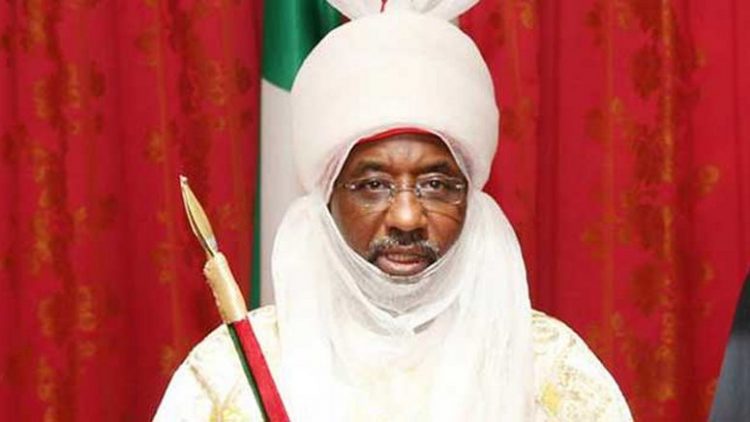
The Emir of Kano, Muhammadu Sanusi II, has raised fresh concerns over Nigeria’s fiscal direction, questioning the Federal Government’s continued reliance on borrowing despite the removal of petrol subsidy.
The Emir of Kano, Muhammadu Sanusi II, has raised fresh concerns over Nigeria’s fiscal direction, questioning the Federal Government’s continued reliance on borrowing despite the removal of petrol subsidy.
Speaking in an interview aired by News Central TV on Friday, the former Governor of the Central Bank of Nigeria said while key reforms such as subsidy removal and exchange rate liberalisation were necessary, their sequencing and implementation have weakened the expected gains.
Sanusi reiterated his long-standing position that the petrol subsidy regime was unsustainable, noting that Nigeria had for years effectively supported foreign refineries while its domestic refining capacity remained underutilised.
He described the situation as a structural flaw that undermined the country’s economic potential.
According to him, recent developments in local refining mark a positive shift. He pointed out that Nigeria has moved from being heavily dependent on imported petroleum products to a position where domestic refining is expanding, with export opportunities emerging, an outcome he said holds promise for the economy.
However, the monarch cautioned that policy reforms must be matched with disciplined fiscal management to deliver real benefits.
He argued that although subsidy removal and exchange rate liberalisation were inevitable, questions remain about whether they were implemented at the right time and under the right economic conditions.
Sanusi warned that liberalising the exchange rate in what he described as a loose monetary environment contributed to the sharp depreciation of the naira, stressing that tightening money supply should have preceded such a move to stabilise the currency.
He further noted that Nigeria had reached a critical point where debt service obligations were consuming a substantial portion of government revenue, making subsidy removal unavoidable.
Yet, he insisted that the removal of such a major fiscal burden should translate into reduced borrowing and improved public finances.
The Emir questioned why borrowing persists despite the apparent savings from subsidy removal, arguing that Nigerians should see clear evidence of fiscal consolidation and improved resource management.
His remarks come amid rising debt concerns, following the Federal Government’s decision to increase its 2026 borrowing plan by ₦11.31 trillion, pushing the total projected borrowing to ₦29.20 trillion. In addition, President Bola Ahmed Tinubu has sought Senate approval for a fresh $516 million external loan to finance the Sokoto–Badagry Superhighway.
Sanusi maintained that borrowing is not inherently problematic if it is tied to productive investments capable of driving growth and generating returns.
However, he stressed that continued borrowing without visible improvements in fiscal outcomes raises legitimate concerns about transparency, efficiency, and long-term sustainability.
Comments