



Headlines
Conflicts in Africa: Our mediation efforts – Tunde Afolabi

Published By
Isa Isawade
Date
15th May, 2026
 Quick Read
There is still a place for the role of organizations such as the African Union and ECOWAS, the RECs, regional communities, and the UN.
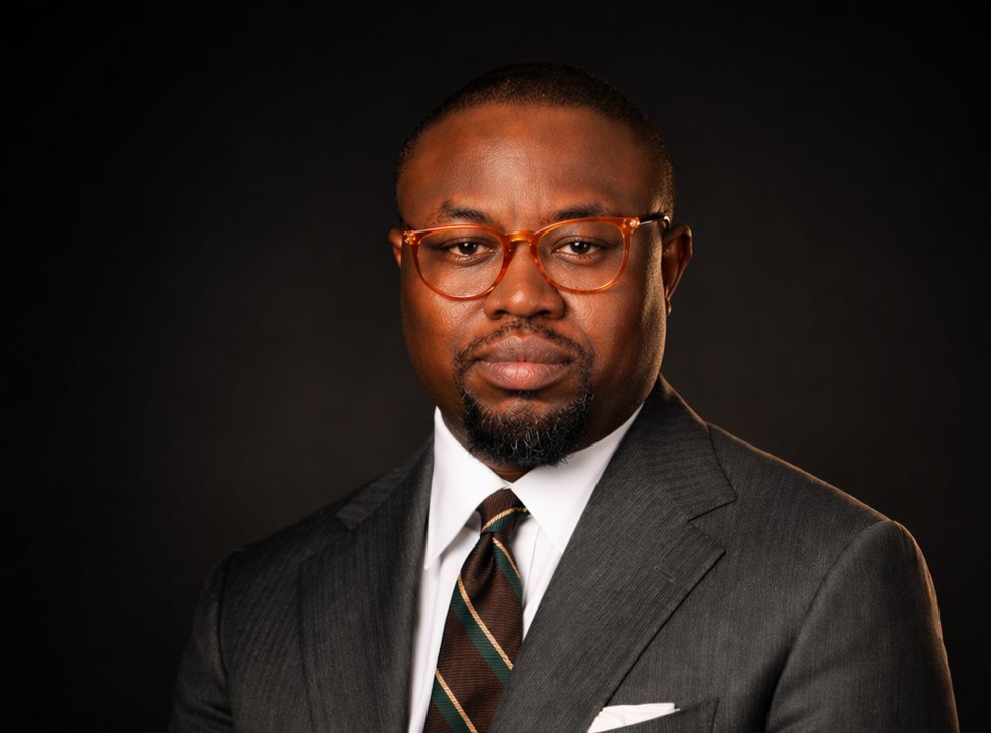
Dr. Babatunde Tolu Afolabi is the Director of Political Affairs at the Economic Community of West African States (ECOWAS) Commission. A Political Scientist by training, he is a seasoned expert in peace and security matters with broad experience garnered across Africa. In this Interview with NEHRU ODEH, he speaks about his time at the Centre for Humanitarian Dialogue, HD, where he worked for 10 years, what he plans to do at ECOWAS, the special commendation he received from Obasanjo in late November 2022, how to solve insecurity in Nigeria and sundry issues.
Q: Could you speak a bit about what you do?
A: In terms of what I do, I’m a trained political scientist. I studied political science, international relations, and peace studies. I pride myself on being a political scientist, but with a particular interest in international relations, especially around the issues of war, war prevention, geopolitics, geostrategy and peacemaking. I have, for the past ten years, focused almost exclusively on peacemaking. Until very recently, I had worked with the Center for Humanitarian Dialogue, HD, which is a Swiss private diplomacy foundation, for ten years. Some people call it an NGO. And before becoming the regional director for Africa, I had served as the HD’s country manager for Nigeria. I did that for three years, and then went on to become the Regional Director, Africa for seven years. And of course, HD’s work revolves around the prevention, mitigation, and resolution of armed conflict. HD also specialises in engaging hard-to-reach groups, entities that a lot of people refer to as terrorists. We refer to them as armed insurgents because we pride ourselves on our neutrality, as well. We feel that if you’re going to be impartial and engage these conflict actors, we have to be impartial. If you’ve made a judgment of who they are, it becomes difficult to engage.
So, it’s part of what we do, just maintain our impartiality, and that helps us to engage. We also pride ourselves on our discreetness, our discretion. We’re quite careful with the information we share because to engage some of the most difficult, hard-to-reach groups in the world, you have to build a measure of trust. And HD has been able to talk to and engage actively for political processes, some of these, if not most of these entities that make the headlines – al-Shabaab, Boko Haram, the Taliban, ETA in Spain, etc. Of course, one way to build and maintain trust is to be measured in how you say things, and what you say when you engage these parties. So, that has been my journey so far.
Apart from having been a regional director for HD and now, very recently, becoming the ECOWAS Director of Political Affairs, I also have undertaken some research. I still engage in research. I am currently an Adjunct Senior Research Fellow at the Center for Peace and Strategic Studies at the University of Ilorin. I am also an Associate Fellow at the Nigerian Institute of International Affairs, the NIIA, in Lagos. From time to time, I write and publish in academic journals. Once in a while, I write op-eds on issues that I find topical and important. I have also authored a book on mediation and peace processes in Africa.
Q: You just returned to ECOWAS as the Director of Political Affairs. How does that make you feel? Looking ahead, how do you see yourself working as ECOWAS Director of Political Affairs in a sub-region marked by political instability, conflicts, terrorism and banditry?
A: I think it’s a huge responsibility. I see it as a position that requires a lot of service to the West African community. It’s immense because it has different layers of engagement. There are elements of democracy, good governance, human rights, and the rule of law on the one hand. There are elements of helping to prevent conflicts, mitigate conflicts, resolve armed conflicts, and political disputes between political actors, leaders, and the opposition, for example. There are also elements of helping to deepen democracy and the rule of law, supporting electoral processes across West Africa. So, it’s a multi-layered engagement. The good thing, perhaps, is that I’m not new to ECOWAS.
I had previously served the Commission for six years in a less senior capacity, but of course, I was able to work on different things. I was part of the team that helped conceptualise and operationalise the ECOWAS Conflict Prevention Framework, which is ECOWAS’ normative instrument that seeks to help with the structural and operational elements of conflict prevention. I had, in the past, worked as a secretary to the ECOWAS Council of the Wise, a body of eminent statesmen and stateswomen from various walks of life mandated by ECOWAS to help in mediating conflicts across the sub-region.
I have been involved in a good number of peace processes, political dialogue processes at ECOWAS. Of course, at HD, I did a lot of work on mediation beyond West Africa. I did work in various places on various conflict issues, especially in the volatile Horn of Africa, Ethiopia, Somalia, Sudan, South Sudan, and Eritrea to some extent.
I had done some work in Southern Africa, Mozambique, to be precise. I had done some work in Liberia and in Nigeria as well. So, I hope that the experience and the lessons I have drawn and learned over the years will help me contribute my quota to our sub-region, where West Africa is in a particularly difficult place right now in terms of instability. You have the scourge of coup d’etats, democratic regression almost across board in terms of the reduction in the quality of the democratic order. It is not just enough to conduct elections every four or five years and say this is a democracy. The dividends of democracy have to be felt by the people. And if they don’t feel it, then it could take over democracy and encourage those with authoritarian tendencies to take over, under the guise of safeguarding the country and protecting the integrity of the state, etc.
So, it’s an interesting time to return to ECOWAS. It’s an interesting time to help with the efforts already existing. I, of course, must admit that a lot of work is ongoing. You know about the Alliance of Sahel States, AES, those Sahelian states that have left the fold. I think it is important to try to get them back, if not immediately, at least in the short to mid-term, to help them forge a working arrangement. Because not only do we still share borders with them, but they are our brothers and sisters. We are a sub-region, have a shared history and community, and whatever affects them affects us and vice versa. There has to be a way to find a working formula for us to engage.
There is also, of course, the issue of geopolitics, which is becoming quite a feature in this part also. It’s more prevalent in the Horn of Africa, where you have countries with interests in strategic rare earth minerals, natural resources, and control of territory or a region. That is prevalent in those parts, but it’s also increasingly becoming an issue in West Africa. So, it would be good to have a sophisticated understanding of what these issues are and what they mean for the ECOWAS agenda, which, of course, is to foster prosperity for the people of West Africa, to create an environment for regional integration, to bring home the dividends, if you like. So, being the Director of Political Affairs is a part of the various elements that need to come together in order for us to have a peaceful and prosperous West Africa.
Q: Do you think there is a common ground between those countries in the Alliance of Sahel States and ECOWAS, considering the differences?
A: There are differences, but there are also similarities. As I said, we share borders with them. Burkina Faso shares a border with Ghana. Nigeria shares a border with Niger. Mali shares borders with many ECOWAS States, even beyond West Africa to parts of North Africa. We have to work together. We face the same challenges, extremism, or if you like, terrorism. We have the same issues of desertification, the negative effects of climate change on agriculture, whether it’s in terms of farming or in terms of pastoralism. These are shared challenges. The Sahel, as you know, is a difficult terrain. Some of these countries are part of the Sahel, whether they are AES or ECOWAS today. A lot of the criminality, a lot of the illegality that is being perpetrated is also done across borders. Some criminals operate and run from Niger or Chad into Nigeria, into Cameroon. When they are attacked and feel threatened, they run across borders. There has to be collaboration. There has to be a working formula for the countries to work together to safeguard their territory and think about prosperity.
Q: You have a lot of experience and are widely travelled. What has been your experience going into such very difficult terrains to support mediation efforts in conflict situations? How have you been able to navigate your way through those terrains?
A: It depends. I think it’s a function of many things. Of course, there are rules of engagement when it comes to these things. You cannot, for example, say that because you want to mediate with a proscribed group in Somalia you just walk in without taking certain steps. You can, for example, decide to engage them in dialogue in a neutral country, or in a third country. Of course, they have to agree to those things. Sometimes you break the odds, and you take the risk. That has happened a few times. I remember the last two times that I was in Mogadishu last year, I think, middle or toward end of last year. There were two mortar attacks, interestingly. I recall that on one occasion, I couldn’t even make it to the bunker on time, so I had to hide in my room and follow the protocols and ensure that I kept my head low, etc.
There are times when you also have to work with countries that are to host such talks in the event of a peace talk, even with really dangerous proscribed groups. Some countries are usually willing to just host the talks. Of course, it confers a lot of prestige on them to say, well, we signed a peace agreement, and it is therefore called, for example, the Zanzibar Agreement or the Zanzibar Accord. It portrays those countries that have hosted the talks in a positive light. You host the talks, the Zanzibar Accord, you have the Nairobi Agreement, and more often than not, beyond the prestige, they also benefit. If there is an agreement to be signed between insurgent groups in East Africa, and Kenya, for example, hosts them, helps provide the atmosphere, the right conditions for peace talks, and even serves as a guarantor to the peace processes, the economy benefits from it.
A more peaceful sub-region means more prosperity, more cross-border trade, more cultural intercourse across borders between peoples, and these things usually lead to more opportunities. Again, it depends on what conflict issues we are talking about, what specific actors we are dealing with, what the interests are, and also the conditions, the rightness or the lack of it for such interventions. There are no two cases that are the same. It’ s different dynamics, different dimensions. Sometimes you know that certain armed groups have confidence or, for example, they may want to internationalise the conflict. I’ve seen that a few times, whereby the armed insurgent group wants to put itself out there on the map, and they therefore, as a precondition for talks, insist on getting either a middle power or a global power to mediate or serve as a guarantor or as an observer in such processes.
Of course, beyond the international conflicts, there have also been several conflicts that are sub-state in nature. For example, in parts of the Middle Belt of Nigeria, where as much as those conflicts do not attract the UN or the African Union or ECOWAS, they still impact millions of people, on the livelihoods of millions of people across the world, across borders, etc. So, it’s different methods, different approaches, different mediators for different conflict situations.
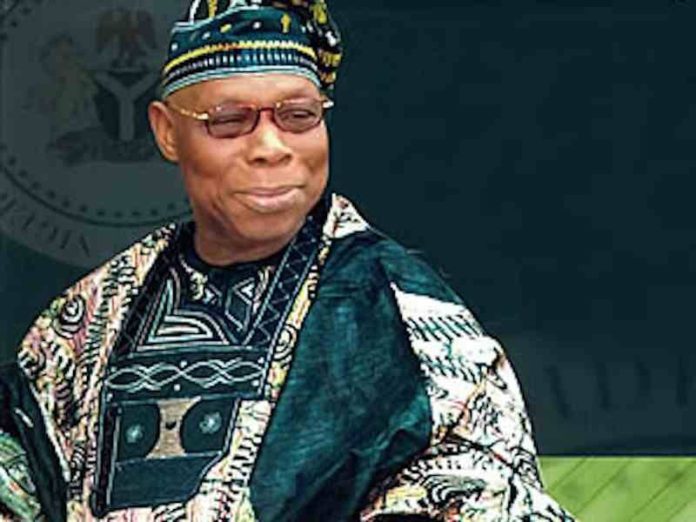
Q: What was your experience like working with President Olusegun Obasanjo when he led the mediation efforts that put an end to the Tigray conflict?
A: President Obasanjo as a mediator, is, I’m sure, different from President Obasanjo as a politician. As a mediator you have to have certain attributes. Of course, his clout, his persona, his gravitas, his convening authority, his respectability as arguably the foremost statesman on the continent today confers certain attributes, certain advantages on him. He’s able to convene, he’s able to convince, he’s able to attract resources, he’s able to actually also propose carrots and sticks, which can be required in mediation processes.
President Obasanjo is, at least, 90 years old. He still has unbelievable energy and strength. He has a lot of experience. This is a former president, a leader who had served as head of state in his late 30s, as far back as the late 70s. He then came back in 1999 and was the president for eight years. As far back as when he retired as head of state, he was a member of the Eminent Persons Group alongside the likes of Margaret Thatcher, etc. So, he has unbelievable experience. He was at the forefront of the anti-apartheid struggle, the efforts to help certain African countries emerge from colonial rule, had led several economic negotiation processes as a president, had been mediator, special envoy for the UN, for the African Union, had chaired the African Union and, of course ECOWAS, of course you all remember what role he played when he was president, what that meant for ECOWAS, for example, at that point. So, working with him later on in life, with all that experience and the energy that he still has, and the experience, and the other attributes, the clout, was a wonderful experience. It was a life-changing experience because it showed you a side of President Obasanjo that you don’t find much written about. In Nigeria, a lot of reporting is on his politics, whether as head of state or president, and his position on key national issues. For me, I have been able to learn a lot and support his efforts as a mediator, and it’s just a huge source of pride. He should inspire a lot of pride in Africa as one of the foremost mediators that we have seen.
I’m not able to comment much on his politics, I’m afraid. But as a mediator, as a facilitator, as the African Union High Representative, it’s just been phenomenal. And this is why it wasn’t surprising that he was able to lead the mediation process in Pretoria, which eventually ended the Tigray conflict. The Tigray conflict is easily the worst in recent history, in human history. Over 600,000 people were killed, according to official figures. You can imagine that, within the spate of three years. And for us to have President Obasanjo, and of course, ably supported by former President Uhuru Kenyatta of Kenya, former Deputy President of South Africa, Phumzile Mlambo-Ngcuka, to welcome that effort and to achieve the results, even though we know that Tigray is also tipping towards war again. There is the possibility, we hope not, but there is the possibility that there may be a resurgence of conflict. But to stop that spate of killings, to end that conflict at the time that it did, is a testament to his experience, his belief, and his vision when people did not see that there was an end in sight to the Tigray conflict.
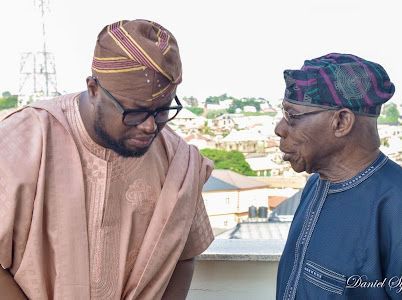
Q: President Obasanjo commended you specially for supporting the peace processes that led to the end of the Tigray conflict. Could you speak briefly about that letter?
A: It was heartwarming to receive a letter from someone of such stature, commending our effort, because it was a collective effort actually; not just by me but by my colleagues, the team that I worked with in supporting President Obasanjo’s efforts. We were a team of about four to five people, although he mentioned only three of us- me, Ambassador Haile Menkerios, and Ambassador Jens-Petter Kjemprud. We were like the core team, yes, but we also had a few colleagues who used to pitch in now and again. It was indeed heartwarming to receive a letter basically putting it out there that we also had a role to play. HD had a role to play in ending that conflict. I recall that when that conflict broke out in November 2020, I believe, shortly after that, I went to see him – I flew in from Nairobi, which was my base -and asked him to help in ending that war as quickly as possible because we could see the implications of the war, especially if it got prolonged. And we therefore sought his wisdom, his experience. And again, of course, Baba has goodwill in Ethiopia, the Horn of Africa. We felt that he was the right person. We also felt that the similarities between Nigeria and Ethiopia warranted someone of his experience and competence. Both countries are multi-ethnic. Nigeria is the most populous country on the continent. Ethiopia is the second most populous. We both say that we operate a federal system in both countries. Both countries are also giants in their own right. Nigeria is, of course, the undisputed regional hegemon for West Africa. Ethiopia is, arguably, the regional hegemon for East Africa. Both have had strong leadership since they evolved. So we felt that a man like President Obasanjo would command the respect of the conflicting parties. Both have had strong leadership since they evolved. He also, of course, was a friend of the late Prime Minister Meles Zenawi of Ethiopia, who came from the Tigray region. And, of course, the Tigray region is a minority in the scheme of things in Ethiopia. They are probably less than 8% of the entire population, but they were in power for a long time. So we felt that with those attributes, Baba would be able to convince the parties to sheathe their swords. So, it was easy to identify who could help. And we, therefore, for a period, close to a year, backstop his efforts. That entailed several shuttle diplomacy efforts across the continent, beyond the continent, parts of Europe, engaging the various special envoys, the mediators appointed by the UN, by the U.S.
At that time, there wasn’t a designated African Union mediator. In fact, we in the HD team thought that it would be a masterstroke if President Obasanjo was given a joint UN-African Union mandate, sort of joint acting, whereby he would be the envoy for the UN and the African Union. So we felt that was something to pursue. We took several trips with him, helped him with a lot of the analysis, and helped him to engage with the Tigray People’s Liberation Front, TPLF, which, of course, was the protagonist from Tigray in the north of Ethiopia. The Prime Minister of Ethiopia also knew and respected President Obasanjo. And, again, we shouldn’t forget that Nigeria had also experienced a civil war in which President Obasanjo had received the instrument of surrender. So these were things that made it easy for us to identify him as someone that we could work with.
For the most part, within the first year of the conflict, that is, for 10, 11 months, we had engaged with him. I think our collective efforts laid the foundation upon which the efforts that culminated in the signing of the Pretoria agreement was built. We provided all of those forms of support to Baba, which included the following: analysis, access to parties, provision of logistics and resources, engagement with the partners and the international community, as well as other mediators, advice, strategy on process design, etc. Those are the forms of support. And I think it was in recognition of that that he then wrote a letter to commend our efforts as an organization and made mention of certain names.
Q: Over the years, in the course of supporting mediation efforts in conflicts across the continent, what have been your high and low moments?
A: The high moments have been when the efforts could culminate into ending human suffering, war, conflict, political disputes, violence, whether in my previous life at ECOWAS, helping to mediate between political actors, for example, post-election crisis in different countries across West Africa, whether it’s the Tigray efforts which we played a forerunner role to bring about, or preventing conflict from occurring in the first place. Of course, when you prevent conflicts from occurring in the first place, people do not appreciate the efforts you put in because they don’t even know what was done. More often than not, you do it discreetly, quietly, whether it’s even about the several commendable efforts that have been undertaken in places like the Middle Belt of Nigeria. These efforts don’t always make the headlines. The Agatu efforts that led to the Agatu peace agreement that we helped bring about, the Konshisha in Benue, the Jos agreement, the Kafanchan initiative, Southern Plateau, or, as I mentioned, the more high-profile peace mediation efforts. The high moments are when you’re able to help, and when you’re able to see people emerge from being sworn enemies, killing each other, destroying livelihoods, to actually come together to collaborate. I recall in Nigeria, for example, our efforts in Agatu ended a 50-year conflict. For a very long time, there was no Agatu fishing festival. But the moment HD was able to broker a peace agreement, the fishing festival took place. Communities that hadn’t engaged for decades became friends. Whenever one can help prevent or resolve a conflict is a high moment.
The low moments are when you’re unable to, you’re just helpless. Or when you feel frustrated because there is lack of political will by actors who should actually be at the forefront of dealing with this conflict. It is personally frustrating, and you have to remind yourself that you must give your best. But you also have to remind yourself that certain things are beyond you, so that you do not internalise to the extent that it affects you as a human being. Many mediators go through this. And I think it’s important for mediators to remember that their well-being and state of mind are critical or essential to resolving conflict. A lot of the time, mediators get too engrossed, and personally vested, to the point that these conflict issues impact them negatively and lead to various outcomes. So, those are the highs and the lows in a nutshell.
Q: Africa is plagued by unending conflicts. What do you think are the causes of those conflicts? Why do they seem unending?
A: There are several factors that can cause conflicts, and there are, of course, various types of conflicts. It’s hard to say that there is one cause and one solution to a conflict. There are conflicts that are structural in nature. There are conflicts that emerge as a result of state formation; when countries, states or societies are evolving and are undergoing formation processes like you have in the Horn of Africa, where, for example you have two states representing the nascent states on the continent. The two newest states on the continent are in the Horn of Africa or in East Africa. You have South Sudan and Eritrea. You cannot delink the reality of their formation from the conflicts that are occurring. Societies have to go through certain strains to emerge. If you look at the history of Europe, it’s replete with wars, all sorts of wars, wars that were on for several years, – the Thirty-Year War, the World Wars, the wars between city-states that led to the formation of new countries, empires, etc. So, the history of the world is also the history of wars, in a sense. New states may, not necessarily always have to go through some form of political upheaval or the other. There are also other factors. Particularly in Africa, conflicts result from inequality, social inequality, lack of justice, lack of fairness in communities or in societies.
There are also conflicts that result from climate change. Climate change, in some instances, means that there is increased desertification, reduced water bodies, etc. There is also the issue of geopolitics, certain interests, and certain powers; especially now the emergent new powers, who want to expand or extend the sphere of influence, foment conflicts. Some of those countries, for example, want to maintain control of certain territories, as you find in the Horn of Africa, where access to the Red Sea is premium. Because the Red Sea is a major access route for global sea freight. 14 per cent of global sea freight goes through the Red Sea. So, it is natural that some countries, who are considering themselves to be powers, want to control it. That can lead to conflict. They may want to dictate who leads certain countries that are littoral states, that also have links, direct access to parts of the sea, for example. There is also the issue of, more increasingly, more recently, strategic rare earth minerals. The global powers, the developed countries, need this strategic rare earth minerals to develop and service technology. And, in their analysis, it probably would be easier to exploit resources in an environment or atmosphere where there is instability. I don’t want to mention names, but certain countries are behind the illegal mining of rare earth minerals and gold. And unfortunately, or fortunately, hopefully fortunately, a lot of these resources are on the African continent in abundance. So, it therefore attracts the wrong type of people. Sometimes they just arm various factions, various ethnic groups, and while there are at each other’s throat, they keep exploiting these minerals.
There is also the historical exploitation of certain African countries by certain powers that we know. When deprivation, scarcity, inequalities prolong, usually it can lead to protests. It can lead to discontent. And people can say, “Enough is enough. We’re going to take our destiny in our hands.” And this is why, perhaps in some parts of Africa, you have military coups emerging, and they become quite popular, because the people have given up on what we refer to as democracy, which is more civilian rule than democracy, really. So, there are many facets of conflict, many dimensions to it.
Q: Coming back to Nigeria, what do you think is the solution to the upsurge of violence in different parts of the country, insurgency as well as banditry?
A: I think Nigeria is a bit peculiar because it’s a multi-ethnic society. There are several nationalities in Nigeria, and there is a lot of competition for space, for expression, for access to resources, and all of that. I think Nigeria has to further develop mechanisms that accommodate as many nationalities as possible. I think Nigeria has to look at its constitution again, with a view to seeing how to cater to the rights of minority groups, for example, marginalized groups. They have to have some rights conferred on them by the constitution. A lot of the work that we do, have done, or that I used to do in my previous capacity at HD, was more of a stopgap than a long-term solution. If you do not address inequality, if you do not address the rights of minorities, even if you sign a peace agreement and they are peaceful for five, ten years, it will unravel again. So, there is the role of constitutionalism. There is the role of community-driven efforts, homegrown initiatives, traditional approaches to conflict resolution, that must be at play. And, of course, there is the issue of the state also providing what’s required for the citizenry. A lot of people say that some of the manifestations of the conflict that we see are as a result of the failure of governance over the years. And it is true. Where people are being deprived, and the young ones do not have the opportunity to express themselves, be creative or have opportunities, there is bound to be a kind of restlessness that can be expressed through conflict. And we have to tackle these things. It’s a multi-dimensional approach from the grassroots, local community efforts to state-level interventions, to the delivery of the dividends of democracy to the people, and to the more state-level, systems-level, to helping find ways through which countries can also live at peace with each other, where multilateral efforts can help to prevent or resolve conflict.
There is still a place for the role of organizations such as the African Union and ECOWAS, the RECs, regional communities, and the UN. Unfortunately, we have fallen short of multilateralism in recent years. But there is still no viable option to those interventions. And a lot of these things have to do with political will. Once there is political will, then there will be interventions that can help resolve conflict issues or respond to them.
Comments