



Nigeria faces deepening moral crisis despite widespread religious belief — Prof Kunle Macaulay warns

 Quick Read
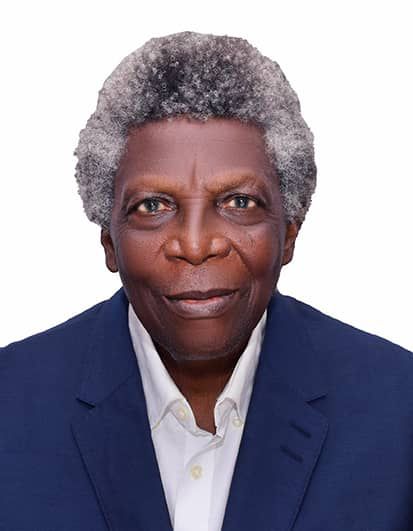
Professor Kunle Macaulay, a Nigerian theologian and Christian leader, has raised concern over what he describes as a widening moral and spiritual decline in Nigeria, despite the country’s strong religious identity and widespread profession of faith in God.
Professor Kunle Macaulay, a Nigerian theologian and Christian leader, has raised concern over what he describes as a widening moral and spiritual decline in Nigeria, despite the country’s strong religious identity and widespread profession of faith in God.
Drawing from reports attributed to the Bible Research Institute, he noted that over 80 percent of Nigerians profess belief in God and regularly attend worship in either churches or mosques. However, he expressed concern that many of these religious practices, according to the report, do not translate into consistent obedience to the moral injunctions of the Bible or the Quran.
“It is unfortunate that religion has very little influence in the lives of the majority of Nigerians,” the report stated, adding that religious leaders across Christian and Muslim traditions have not been effective in shaping the moral direction of their followers.
Nigeria, often described as a nation richly blessed with natural resources, was also portrayed as one whose moral and spiritual foundation has weakened over time. The commentary argues that the country’s “inner and spiritual strength” has not matched its material endowments, resulting in growing ethical concerns within society.
Reflecting on the vision of Nigeria’s founding fathers, the report recalled their aspiration for a nation that is “just, peaceful, and humane,” built on humility before God. It, however, lamented that over six decades after independence, the nation is still grappling with what it describes as moral and ethical decline marked by abuse of power, hypocrisy, and spiritual inconsistency.
The statement further noted that while Nigerians remain hardworking and family-oriented, they are burdened by challenges such as insecurity, economic instability, overcrowding, traffic congestion, and political dysfunction. It also accused both political and religious leaders of failing to provide adequate direction for the nation.
“It is true that Nigeria is blessed by God with natural wealth, but the inner and spiritual strength of Nigerians has failed the nation,” the report noted.
Citing concerns around governance and democracy, it argued that political power, though theoretically belonging to the people, is in practice concentrated in the hands of a few, resulting in oppression and disenfranchisement. It also raised concerns about perceived religious imbalance in the application of secularism in the country.
The commentary linked Nigeria’s moral challenges to rising social ills, including murder, kidnapping for ransom, banditry, illegitimate births, increasing cases of single parenthood, and unsupervised children. It stressed that these developments reflect what it described as a departure from spiritual and ethical standards.
Quoting Hosea 4:1–2, it stated: “There is no truth or mercy or knowledge of God in the land. By swearing and lying, killing and stealing and committing adultery…” using the passage to underscore what it called widespread moral decay.
The report also criticised both political and religious leadership, alleging that many leaders fail to practice what they preach. It further stated that religious leadership in particular has not provided a unified moral voice, with many clerics focusing instead on denominational or institutional interests.
Speaking on political matters, it asserted that God has not chosen any individual as President of Nigeria and rejected claims of divine endorsement of political candidates, including ahead of the 2027 elections, describing such claims as misleading spiritual manipulation.
It added that while divine authority governs creation, human beings are expected to apply wisdom and responsibility in leadership and governance. It also cautioned against political actors seeking legitimacy primarily through religious platforms rather than through demonstrable governance capacity.
The statement called on Nigerians to demand honesty and accountability from political, business, and religious leaders, warning against outward displays of religiosity without genuine moral substance. It concluded that Nigeria is currently overwhelmed by division, insecurity, and uncertainty.
The theologian further urged patriotic Nigerians and faith leaders to speak boldly against what he described as societal and governmental transgressions, calling for a renewed ethical awakening in national life.
Comments