



Nigeria redeemed from reputation of ‘permanent lying – Soyinka

 Quick Read
“If we started telling the full story of that struggle, we would be here for a whole day, week, year. It would be an epic performance that never ends,” he said.
By Nehru Odeh
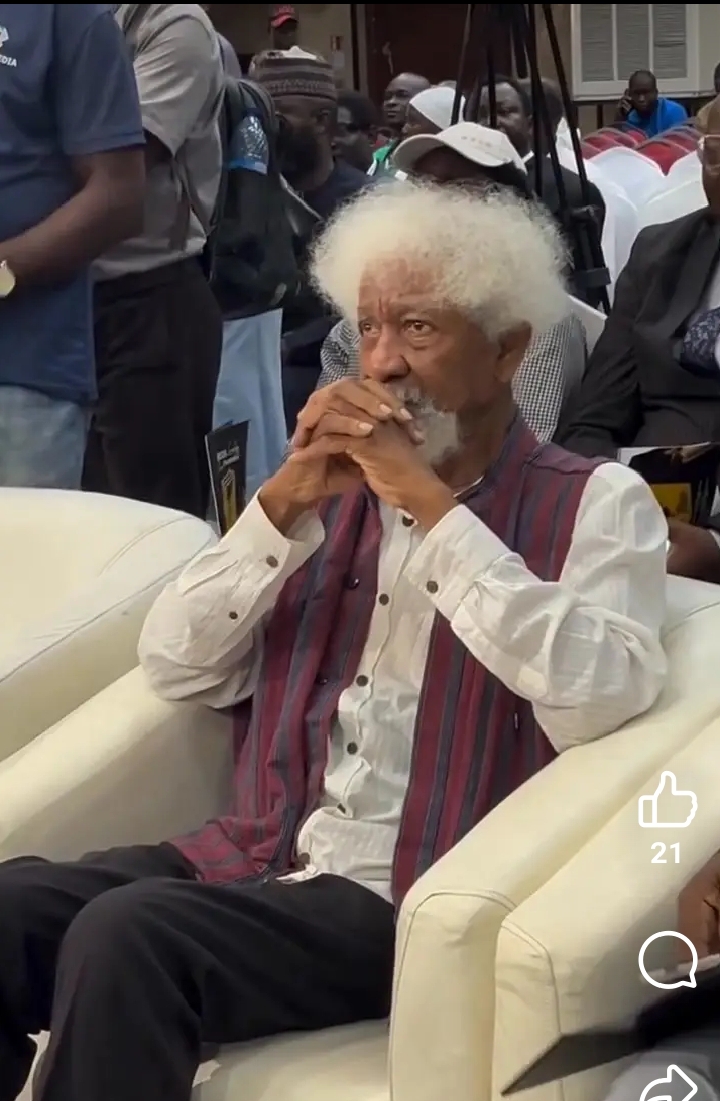
Nobel Laureate Wole Soyinka has praised Chief Ayo Opadokun’s new book, The NADECO Story, describing it as a rare work that restores confidence in the credibility of Nigerian historical narration.
He said the book stands out for its authenticity and detailed documentation, adding that it offers a counterpoint to what he called Nigeria’s reputation for “permanent lying”. He strongly recommended the publication.
Soyinka spoke at the public presentation of the book on Wednesday at the MUSON Centre, Lagos.
“I must congratulate Ayo for doing an unbelievably invaluable job, giving this gift to the community and to the world at large. I have had occasion to describe Nigeria as a republic of liars,” he said.
“This is one instance where I would say the nation is redeemed from that reputation of permanent lying. Every page of this book, which I read carefully, rings of truth, which one can testify to personally and which carries an aura of authenticity because of the way it is narrated.
“It is spoken, written and documented not just from physical participation, but from research and records. Every page of it rings true. Ayo does not claim this is the whole story, but he presents his perspective based on investigation and documented events.”
Soyinka added that the Nigerian pro-democracy struggle could generate multiple volumes if fully recorded.
“If we started telling the full story of that struggle, we would be here for a whole day, week, year. It would be an epic performance that never ends,” he said.
He described the book as a model for historical writing and encouraged others to document similar experiences.
The Nobel Laureate also used the occasion to pay tribute to pro-democracy activists, including Olisa Agbakoba and the late Beko Ransome-Kuti, for their sacrifices during Nigeria’s struggle against military rule.
He recalled Agbakoba’s activism and the injuries he reportedly sustained during protests, and praised Beko Ransome-Kuti’s commitment to democracy.
According to him, Beko Ransome-Kuti “was prepared, knowingly and willingly, to give his life just to get rid of that monster”.
The event drew political leaders, journalists, civil society actors, academics, and members of Nigeria’s pro-democracy movement. Awards were presented to individuals and organisations recognised for their roles in the struggle for democratic governance.
Speakers reflected on the sacrifices made during the military era, including exile, detention and harassment.
President Bola Ahmed Tinubu was represented by Aremo Olusegun Osoba, who acknowledged the contributions of NADECO members and other activists.
Osoba said the present administration recognises the sacrifices of those who resisted military rule, noting that their efforts helped secure Nigeria’s current democratic system.
He added that the struggle came with severe risks, including loss of livelihood and forced exile, but stressed that it laid the foundation for today’s democracy.
He also spoke about internal dynamics within NADECO, describing it as a coalition of politicians, activists, labour leaders and intellectuals united by the goal of restoring democratic governance.
Osoba urged younger Nigerians to study the history of the pro-democracy movement to better understand the country’s political development.
On security concerns, Osoba said the President is aware of attempts to destabilise the country and accused some actors of opposing reforms such as changes to the exchange rate system and fuel subsidy removal.
He said the administration remained determined to continue its reforms despite resistance.
Oba Rashidi Ladoja, the Rashidi Ladoja, said democracy was preserved not only by visible street protests but also by those who contributed quietly behind the scenes.
He described himself as a committed democrat and reflected on his experiences during the military era, including political participation and engagement with key figures in the pro-democracy movement.
Ladoja said the June 12 struggle extended beyond national politics and also involved local political realities and survival under military rule.
Chief Ayo Opadokun, the author, said the book documents resistance to military dictatorship between 1994 and 1998 and highlights the sacrifices of those involved.
He said the launch was aimed at historical correction, national healing and civic education, adding that many contributors to the struggle had not been properly recognised.
Professor Sylvester Akhaine said the book provides an important correction to existing narratives about Nigeria’s political transition, particularly the June 12 crisis and military era governance.
He noted that the annulment of the 1993 election remains a defining moment in Nigeria’s democratic history.
The event also featured reflections from participants including Olusegun Osoba, Dr Joe Okei-Odumakin, Dr Labaran Maku, Prof Anthony Kila, Wahab Shittu (SAN), Kunle Ajibade, Dare Babarinsa, Ogaga Ifowodo, Sam Omatseye, Tokunbo Ajasin, Moshood Erubami and Laolu Akande, among others.
Comments