



Why SERAP wants the world’s most powerful security body to focus on Nigeria

 Quick Read
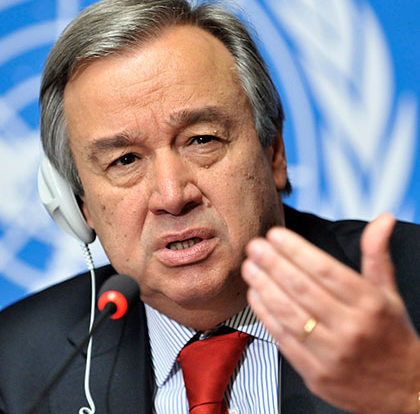
The Socio-Economic Rights and Accountability Project (SERAP) has called on United Nations Secretary-General António Guterres to invoke Article 99 of the UN Charter and formally bring Nigeria's worsening security crisis before the UN Security Council.
The Socio-Economic Rights and Accountability Project (SERAP) has called on United Nations Secretary-General António Guterres to invoke Article 99 of the UN Charter and formally bring Nigeria’s worsening security crisis before the UN Security Council.
SERAP said the escalating wave of killings, abductions, attacks on civilians and mass displacement across several parts of Nigeria now poses a threat not only to the country but also to regional peace and stability in West Africa.
In an open letter dated May 30, 2026, and signed by its Deputy Director, Kolawole Oluwadare, the organisation argued that the scale and persistence of insecurity in Nigeria have reached a level that warrants urgent international attention and coordinated action.
The rights group cited recurring attacks in states including Oyo, Benue, Borno, Plateau, Kaduna and Zamfara, warning that the humanitarian consequences of the violence continue to deepen.
According to SERAP, Article 99 of the UN Charter empowers the Secretary-General to bring to the Security Council’s attention any matter that could threaten the maintenance of international peace and security.
The organisation maintained that placing Nigeria’s security situation on the Council’s formal agenda would help sustain international scrutiny of attacks on civilians and strengthen efforts to address the crisis.
SERAP pointed to a series of recent incidents to underscore the gravity of the situation, including the abduction of at least 25 pupils and seven teachers during coordinated attacks on schools in Ahoro Esinele community, Oriire Local Government Area of Oyo State.
The organisation said the attacks led to the death of an assistant headmaster, while another teacher reportedly died in captivity. It also referenced videos circulating online showing one of the abducted teachers appealing to President Bola Tinubu, Oyo State Governor Seyi Makinde and Nigerians to secure the victims’ release.
The group further cited reports of students and travellers being abducted in Benue State while travelling to sit university entrance examinations, as well as renewed attacks by armed groups in the North-East, North-West and North-Central regions.
Among the incidents highlighted were bomb explosions in Maiduguri, Borno State, that reportedly killed at least 23 people and injured more than 100 others, attacks on internally displaced persons camps, assaults on military formations, and repeated killings in rural communities.
SERAP also referenced recent attacks in Katsina State that reportedly claimed at least 10 lives, including women and children, as well as separate raids that left about 20 people dead and several others abducted. In Adamawa State, another attack reportedly killed at least 29 people.
The organisation warned that the cumulative effect of these incidents reflects a rapidly deteriorating security environment capable of triggering wider humanitarian and regional consequences.
“The crisis in Nigeria is not merely a domestic law-enforcement issue,” SERAP said, arguing that the movement of armed groups and weapons across borders, large-scale displacement and the weakening of rule-of-law institutions have transformed the challenge into a regional security concern.
SERAP noted that the United Nations has repeatedly expressed concern over the situation in Nigeria. It recalled that Guterres condemned the killings in Benue State in 2025 and denounced a terrorist attack in Kwara State earlier this year, while other UN agencies have warned about rising abductions, displacement and food insecurity linked to insecurity across the country.
The organisation urged the UN chief to initiate regular Security Council briefings on insecurity in Nigeria, support independent investigations into attacks, encourage stronger civilian protection measures and push for accountability for perpetrators.
Comments