



Sanwo-Olu’s wife unveils bold plan to keep Lagos youths off drugs

 Quick Read
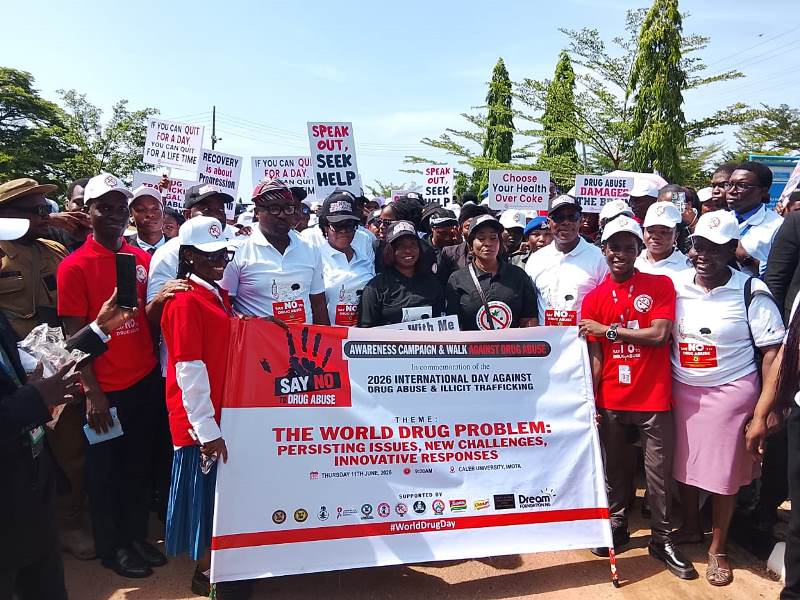
The event, themed “The World Drug Problem: Persisting Issues, New Challenges, Innovative Responses,” drew participation from students and staff of the university, officials of the National Drug Law Enforcement Agency (NDLEA), government functionaries and other stakeholders.
Lagos State First Lady, Dr. Ibijoke Sanwo-Olu, and the wife of the Deputy Governor, Mrs. Oluremi Hamzat, on Thursday intensified advocacy against substance abuse, urging young people to take the lead in combating drug abuse and illicit trafficking.
The call was made during a sensitisation walk organised at Caleb University, Imota, to commemorate the 2026 International Day Against Drug Abuse and Illicit Trafficking.
The event, themed “The World Drug Problem: Persisting Issues, New Challenges, Innovative Responses,” drew participation from students and staff of the university, officials of the National Drug Law Enforcement Agency (NDLEA), government functionaries and other stakeholders.
Among those present were the Commissioner for Tertiary Education, Tolani Sule-Akibu; Chairman of the Lagos State House of Assembly Committee on Youth and Social Development, Abiodun Orekoya; permanent secretaries and NDLEA officers.
Addressing participants, Dr. Sanwo-Olu said the theme underscores the need for collective, innovative and evidence-based responses to evolving patterns of drug abuse.
She described substance abuse as a major threat to young people and society, warning that it undermines mental and physical health, academic achievement, productivity and social relationships.
According to her, tackling the menace requires a shift from stigmatisation to rehabilitation and support for affected individuals.
“Addiction cuts across age, gender, and social status, yet victims are often stigmatized instead of supported. We must embrace compassion, encourage rehabilitation, and create opportunities for recovery,” she said.
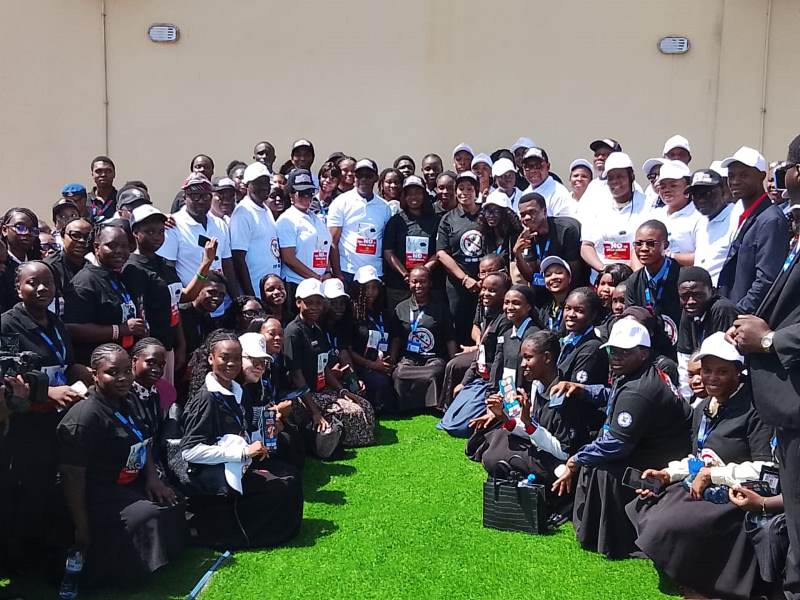
The First Lady reaffirmed her office’s commitment to combating drug abuse through partnerships with the NDLEA, relevant ministries, non-governmental organisations, community leaders, market associations and local government authorities.
She noted that her office has sustained awareness campaigns through various initiatives, including the Lagos Boy Child Initiative, aimed at guiding young people towards responsible choices.
Dr. Sanwo-Olu disclosed that Caleb University is the third tertiary institution, after Lagos State University (LASU) and the University of Lagos (UNILAG), to benefit from the anti-drug advocacy campaign.
Encouraging students to become champions of the campaign, she warned that substance abuse poses a serious threat to their future aspirations.
“To students, your choices today shape your tomorrow. Drug abuse may bring temporary excitement but destroys dreams, health, education, and career. I urge you to become campaign ambassadors, discourage substance abuse and support those struggling,” she said.
In her remarks, Mrs. Hamzat cautioned students against experimenting with drugs, stressing that substance abuse could derail their ambitions and deny them opportunities for personal growth and success.
She urged them to embrace positive values and contribute to building a safer society.
“Let us break the cycle of drug abuse and build a safer society for all,” she said.
Also speaking, the Vice Chancellor of Caleb University, Prof. Olalekan Asikhia, expressed concern that despite decades of public awareness campaigns and policy interventions, substance abuse remains a growing challenge.
He said the institution remains committed to promoting a drug-free campus environment, supporting mental wellness and equipping students with the knowledge and resilience needed to resist illicit substances.
The Deputy Commander of Drug Demand Reduction at the NDLEA Lagos Command, Ogunluyi Titilope, called on students to actively support government efforts by creating awareness, reporting drug dealers and serving as positive role models within their communities.
Delivering a lecture at the event, Executive Director of Compassionate Care Recovery, Dr. Dokun Adedeji, revealed that an estimated 14 to 15 million Nigerians use drugs, with the highest prevalence occurring among individuals aged between 25 and 39 years.
He noted that Lagos records the highest rate of drug use in the country at 33 per cent.
Adedeji identified stigma, discrimination and inadequate emotional and psychological support as major barriers to recovery for individuals battling addiction.
He advocated stronger family and community support systems, as well as purposeful living, as critical components of successful rehabilitation and long-term recovery.
Comments