



Tinubu defends Reforms, says economy back on path to stability

 Quick Read
According to Tinubu, the reforms were designed to secure what he described as Nigeria's "economic freedom" and place the country on a path of sustainable growth.
By Kazeem Ugbodaga
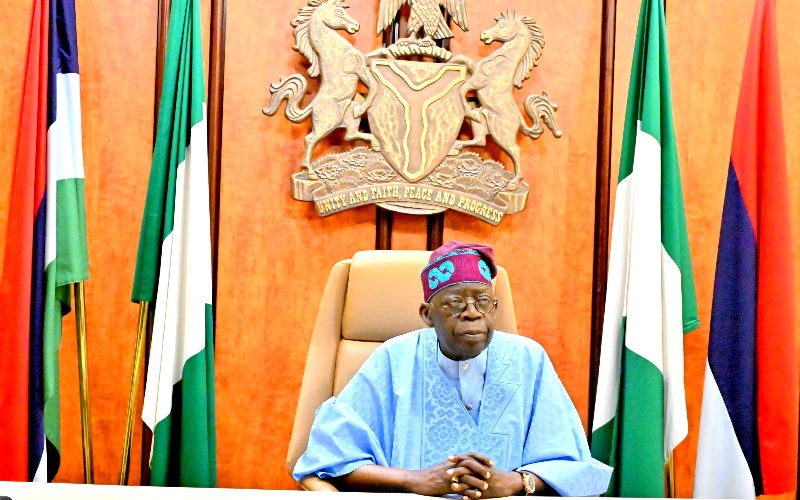
President Bola Tinubu has defended his administration’s economic reforms, saying the measures have restored stability to Nigeria’s economy and laid the foundation for long-term prosperity despite the hardship currently faced by many citizens.
Speaking during his Democracy Day address on Friday, the President said his government was compelled to undertake difficult but necessary reforms after inheriting an economy burdened by fiscal strain, weak investor confidence and mounting uncertainty.
According to Tinubu, the reforms were designed to secure what he described as Nigeria’s “economic freedom” and place the country on a path of sustainable growth.
“The reforms we are undertaking were not chosen for ease, but for necessity,” the President said, noting that public finances were under severe pressure when his administration took office in 2023.
Tinubu stated that the reforms have helped restore stability and credibility to economic management, leading to higher federation revenues and increased resources for state and local governments to invest in infrastructure, education, healthcare and security.
He also said fiscal transparency has improved, leakages have been reduced and public resources are now being channelled more effectively towards national priorities.
The President further claimed that investor confidence has rebounded, resulting in increased investments across key sectors including agriculture, energy, manufacturing, technology, mining, transportation and the creative industry.
Highlighting developments in the energy sector, Tinubu said domestic refining capacity had expanded, reducing Nigeria’s dependence on imported petroleum products and strengthening energy security.
He also outlined efforts to reform the power sector, describing the electricity industry inherited by his administration as one plagued by generation shortfalls, poor transmission infrastructure, huge losses and mounting debts.
To address the challenges, Tinubu said he signed the Electricity Act granting states greater authority over power generation, transmission and distribution. He added that the Presidential Power Sector Task Force had been mandated to tackle the country’s metering deficit and raise a N4 trillion bond to settle verified legacy debts in the sector.
The President noted that the Rural Electrification Agency, with support from the World Bank and the African Development Bank, had expanded off-grid and mini-grid electricity projects to underserved communities, universities, markets and hospitals.
In the agricultural sector, he disclosed that the National Agricultural Development Fund is deploying 10,000 tractors over five years to boost food production, while more than 1,000 small and medium-scale enterprises have been certified for export.
Tinubu also revealed that non-oil exports grew by 21 per cent in the past year, describing it as evidence of the country’s ongoing economic diversification efforts.
Despite citing the positive indicators, the President acknowledged the economic difficulties confronting many Nigerians and pledged that his administration would remain focused on reducing inflation, expanding food production, creating jobs and improving living standards.
“We are moving from uncertainty to stability. The next phase is about accelerating growth and ensuring the benefits are felt in every home, every community, and every region,” he said.
Tinubu stressed that democracy must deliver tangible benefits to citizens, declaring that “democracy must be felt in the pocket.”
The President maintained that his administration’s Renewed Hope Agenda remains focused on broadening economic opportunities, strengthening local governance and ensuring that the gains of reforms translate into improved living conditions for Nigerians.
Comments