



ACCP-UPF report identifies Ghana as blueprint for African democracy

 Quick Read
The paper makes a crucial distinction between a strong opposition and a responsible opposition, the latter being one that measures its statements, presents facts and research, and prioritises national cohesion.
A landmark research paper co-published by the African Chamber of Content Producers (ACCP) and the Universal Peace Federation (UPF) has identified the respectful, cross-party relationships among Ghana’s parliamentary leaders as a primary driver of the country’s democratic stability.
The study, which surveyed 400 citizens across seven regions of Ghana, concludes that when political leaders model cordiality across party lines, their followers see no reason for conflict, a lesson the researchers say can be replicated across Africa.
The paper, titled “Institutionalizing a Strong and Responsible Opposition for Democratic Resilience in Africa: A Ghana Case Study (2025/2026 Review)”, is already available as a preprint on ResearchGate, Academia.edu, Zenodo, and SSRN.
Its findings have been submitted to peer-reviewed international journals. They are now being positioned as a practical roadmap for achieving Aspiration 3 of the African Union’s Agenda 2063, an Africa of good governance, democracy, and the rule of law.
Rev. Dr. Murphy T. Jackson, acting Secretary General of ACCP, head of the chamber’s Liberia branch, and a co-author of the whitepaper, stated: “The peace, development, and hospitality for which Ghana is celebrated are not accidental. They are the direct outcome of a political culture where leaders, even from opposing parties, treat each other with dignity. Our research quantitatively and qualitatively confirms that leadership sets the example for followers to follow. If Ghana can institutionalise this model, so can other African nations.”
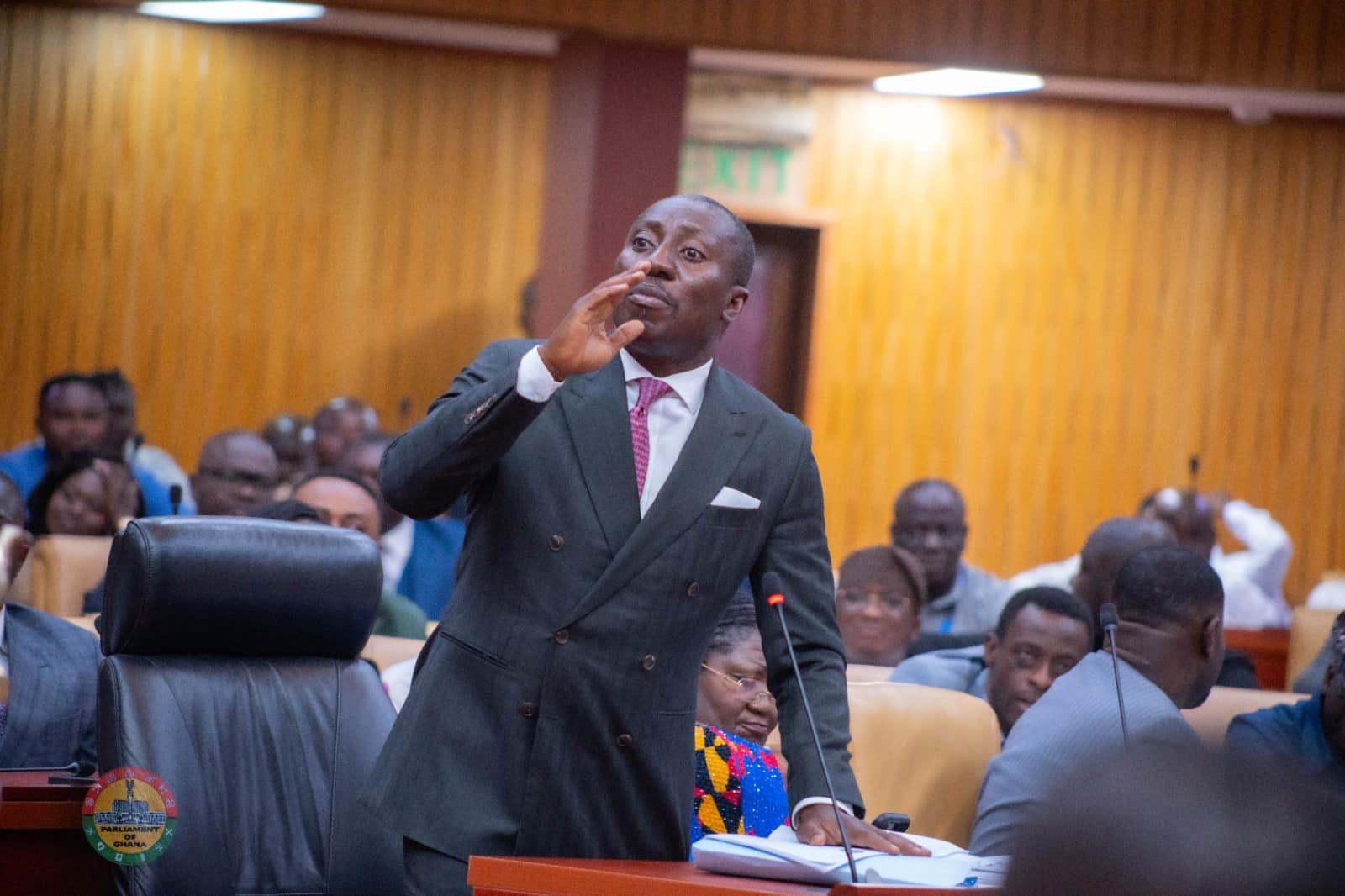
The study highlights two emblematic cases. First, the relationship between Minority Leader Hon. Alexander Afenyo-Markin and successive Majority Leaders, Hon. Cassiel Ato Forson (now Finance Minister), who publicly told him, “Kwamina, learn from me and be good,” and Hon. Mahama Ayariga, whom Afenyo-Markin praised for “diplomacy at an all-time best.” Second, the bond between blood brothers Abu Jinapor (NPP) and John Jinapor (NDC), who remain cordial despite belonging to rival parties.
David Adofo, Head of Research at ACCP and lead researcher, added: “One respondent captured the public sentiment perfectly: ‘If leaders at the top can maintain such cordiality across party lines, then why should their followers fight?’ That verdict is backed by data: 400 interviews across seven regions show that citizens view the opposition as the only legal bridge between dissenting voices and government. Weakening opposition voices correlates with coup risk; protecting opposition rights lowers incentives for unconstitutional action.”
The paper makes a crucial distinction between a strong opposition and a responsible opposition, the latter being one that measures its statements, presents facts and research, and prioritises national cohesion. The researchers recommend that African governments legally codify the Office of the Leader of the Opposition with independent funding, guarantee access to public media, and establish an AU Parliamentary Research Service to support opposition benches in vulnerable democracies.
Tegha King, Deputy Secretary General of UPF Ghana, an NGO in General Consultative Status with the United Nations Economic and Social Council, noted: “Our organisation co-conducted this research to identify Ghana’s peace conduits. One strong reason that has made it into the paper is the cordiality of parliamentary leadership. The findings are already putting Ghana on the map for the right reasons, and we are committed to pushing this model for adoption across Africa.”
ACCP President Nana Dwomoh-Doyen Benjamin concluded: “Ghana’s democratic model, particularly the relationship between the Minority Leader and successive Majority Leaders, is worth study and replication. Though other countries live similar models, Ghana’s presents a powerful, long-term, multifaceted structure that must be protected and replicated in other democracies around the world.”
The preprint is now globally accessible, and the research team invites AU member states, ECOWAS, and civil society organisations to engage with the findings.
ACCP research reveals that protecting opposition rights, ensuring independent funding, and guaranteeing media access are not threats to power; they are investments in lasting peace, rooted in the everyday wisdom of Ghanaian citizens.
Comments