



Femi Osofisan: The many sides of an accomplished playwright

 Quick Read
Beyond his literary accomplishments, Tomoloju spoke warmly about Osofisan’s role as a mentor. “I am one of those who behold Emeritus Professor Femi Osofisan as a source of inspiration,” he declared. He particularly credited Osofisan’s innovative use of music, dance, and spectacle for influencing his own creative work.
By Nehru Odeh
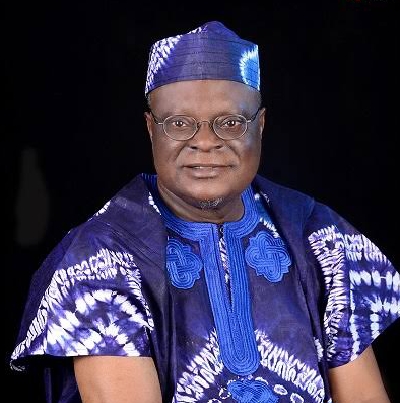
For veteran playwright, journalist, theatre director, and culture administrator Ben Tomoloju, the story of Emeritus Professor Femi Osofisan, who turned 80 recently, is not merely that of one of Africa’s greatest dramatists. It is also the story of a mentor, collaborator, literary activist, inspiration, and friend whose influence stretches across generations of writers, actors, and theatre practitioners.
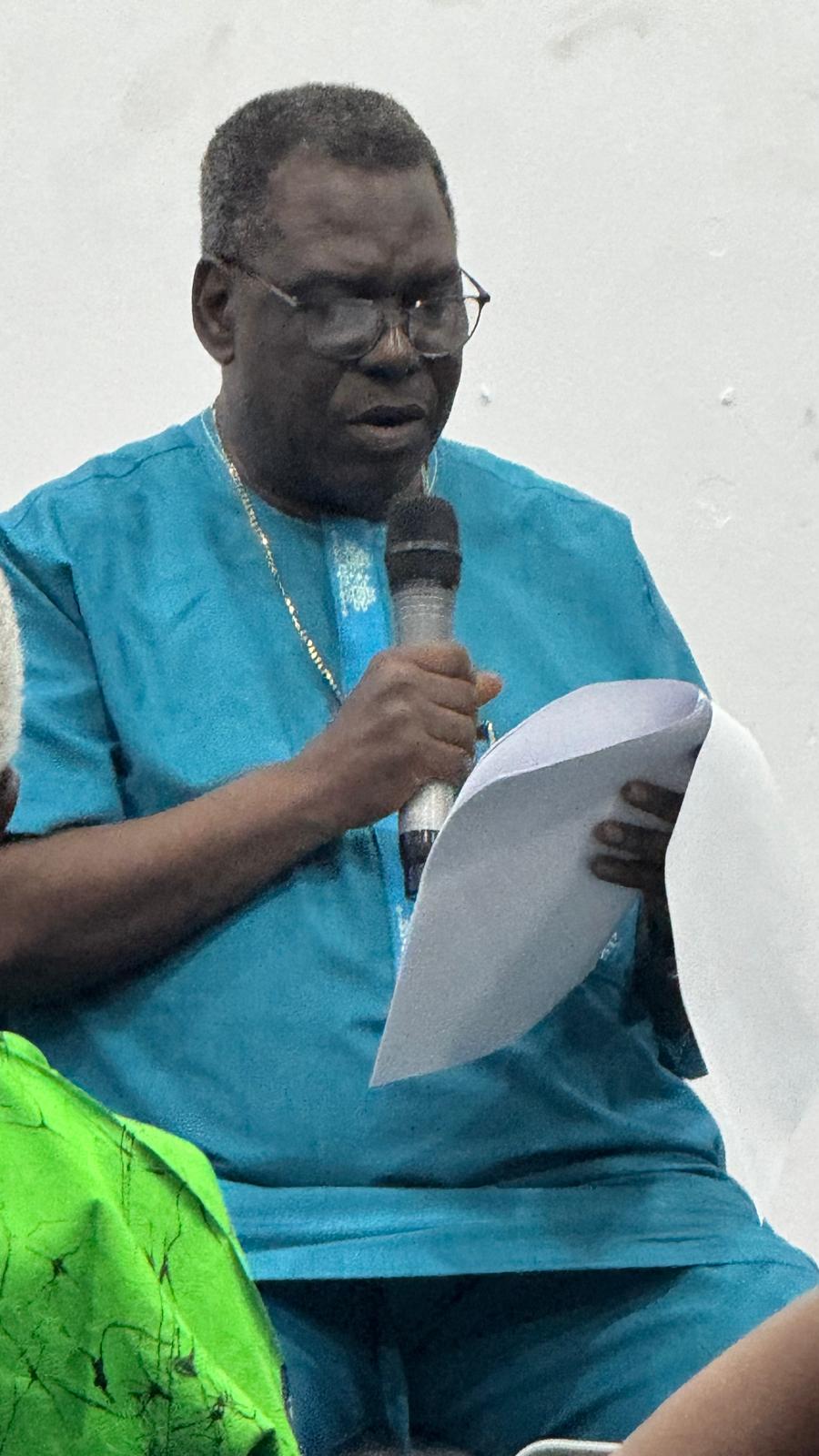
Speaking at a roundtable on “Decolonisation of African Literature in Femi Osofisan’s Works,” the lead plenary session of the eight-day “Femi Osofisan @80” celebration held at the J.K. Randle Centre for Yoruba Culture and History in Onikan, Lagos, on June 14, 2026, Tomoloju painted a vivid and deeply personal portrait of the celebrated playwright whose works have transformed African theatre and literature.
The portraiture afforded the audience rare glimpses into the many facets of the accomplished playwright, scholar, poet, essayist and columnist.
The presentation, aptly titled “The Femi Osofisan That I Know,” took the audience on a nostalgic journey spanning more than five decades, from a secondary school stage in Ado-Ekiti to major literary and cultural institutions across Nigeria.
However, it is instructive to note that Tomoloju’s relationship with Osofisan began long before they met. In 1973. As an 18-year-old student of Christ’s School, Ado-Ekiti, he played the lead role of Sanda in Osofisan’s A Restless Run of Locusts. At the time, the play had not yet been published. “We only relied on typewritten copies for our scripts,” Tomoloju recalled.
The production was directed by his then literature teacher, now Professor Niyi Osundare, who is now another literary giant. Looking back, Tomoloju marvelled at how young students unknowingly learnt from minds that would later dominate African literary discourse.
“At that formative stage,” he said, “it did not occur to us that we were tapping inspiration from those who, in years to come, would emerge as leading lights in African and global literary and performing arts scenes.”
For years, Osofisan existed in his imagination only through the power of his writing. “Knowing Osofisan was, for me, only spiritual, textual, seminal and performative,” he said.
However, that changed in 1975 when he arrived at the University of Ibadan as an undergraduate and finally met the playwright in person. The first thing that struck him was Osofisan’s humility.
“Meeting Osofisan in person, my first impression of him was that he was not one to announce himself by his carriage and individual ego,” Tomoloju said. “His reputation loomed large enough to bring such annunciation into effect.”
Yet beneath that modest exterior was a fierce intellectual and literary activist. Tomoloju vividly recalled a heated debate at Trenchard Hall during his freshman year, where Osofisan joined fellow radicals, including Biodun Jeyifo, Omafume Onoge, and G.G. Darah, to challenge what they considered the publishing industry’s discriminatory treatment of emerging writers.
“At the centre of the raging fire of the protest was Odia Ofeimun,” he remembered. According to Tomoloju, the intervention helped open doors for younger voices in Nigerian literature. “It was an intellectual liberationist move that opened the vent for new voices to be heard in the Nigerian literary firmament,” he said.
As a student of theatre and literature, Tomoloju watched Osofisan’s plays reshape Nigerian drama before his eyes. One of the defining moments came with the 1976 staging of The Chattering and the Song by the Unibadan Masques. “The play exposed us to the radical departure from existing traditions in terms of form and content,” he maintained.
Instead of reinforcing established narratives, Osofisan challenged them, reinterpreting history through the lens of social justice and resistance.
“History was reinterpreted,” Tomoloju noted, “discarding old, retrogressive prejudices and supplanting them with high levels of commitment to the advancement of society.” The play’s revolutionary spirit left a lasting impression on him and countless others who would later become practitioners in the performing arts.

Perhaps the most entertaining memory Tomoloju shared involved a post-production discussion following the staging of Who’s Afraid of Tai Solarin? at the University of Ibadan in 1977. The production had received glowing reviews, with some critics comparing Osofisan’s comic mastery to that of English playwright Ben Johnson.
Still, a prominent classicist and novelist of repute remarked that he was disappointed by certain aspects of the play. Osofisan’s response has since become the stuff of theatre folklore.
“Upon hearing that,” Tomoloju recounted, “the playwright rose, stepped forward and quipped tersely: ‘How can I disappoint you? After all, you didn’t appoint me.’” The audience erupted.
Without another word, Osofisan walked out of the theatre. “And that was the end of the show,” Tomoloju said, drawing laughter from attendees. Many years later, he said, the incident came rushing back to him when he read Osofisan’s essay, The Critic As An Assassin.
Beyond his literary accomplishments, Tomoloju spoke warmly about Osofisan’s role as a mentor. “I am one of those who behold Emeritus Professor Femi Osofisan as a source of inspiration,” he declared. He particularly credited Osofisan’s innovative use of music, dance, and spectacle for influencing his own creative work.
Tomoloju also remembered the late theatre director Jide Ogungbade, whom he described as perhaps the most “Osofisanesque” director of his generation. “Jide Ogungbade was that artistic director who was most passionately Osofisanesque in his directorial style,” he said.
The tribute highlighted how Osofisan’s influence extends beyond his own productions into the work of countless artists who adopted and adapted his methods.
Their relationship extended beyond the theatre. When Osofisan served as President of the (ANA) in the late 1980s, he entrusted Tomoloju and the writer with establishing the Lagos chapter of the association. “He was the one who gave my humble self and Sola Osofisan the mandate to establish a branch of the Association in Lagos,” Tomoloju said.
Today, Lagos ANA remains one of the strongest chapters of the organisation, a legacy Tomoloju attributes in part to Osofisan’s vision and leadership.
Their professional paths intersected repeatedly over the years. Tomoloju recalled how Osofisan encouraged and supported him during his time at The Guardian, where he helped establish the newspaper’s Arts Desk. He also served under Osofisan during preparations for the cultural programmes of the 2003 All Africa Games.
“Working at such close quarters under him gave me enough clues as to his indefatigable work spirit,” Tomoloju said. That relentless energy, he suggested, explains Osofisan’s extraordinary achievements as a playwright, scholar, administrator, and family man.
As the audience listened at the J.K Randle Centre for Yoruba History and Culture, what emerged was more than a catalogue of achievements. It was a portrait of a man whose influence has touched lives in classrooms, theatres, newsrooms, and literary circles across Nigeria and beyond.
For Tomoloju, Osofisan is not simply an iconic playwright whose works continue to shape African literature. He is a mentor who opened doors, challenged conventions, inspired creativity, and demonstrated that art can be both aesthetically compelling and socially transformative.
Ending on an emotional note, Tomoloju offered a heartfelt prayer for the octogenarian scholar. “Happy Birthday, Sir,” he said. “I pray that God in His infinite mercies will grant you many more years of all-round accomplishments in all your endeavours.”
Comments