



How we strengthened stability in Nigerian universities – CONUA

 Quick Read
The Congress of University Academics (CONUA) says its advocacy for uninterrupted academic activities and constructive engagement has strengthened stability in Nigeria’s university system since 2023.
The Congress of University Academics (CONUA) says its advocacy for uninterrupted academic activities and constructive engagement has strengthened stability in Nigeria’s university system since 2023.
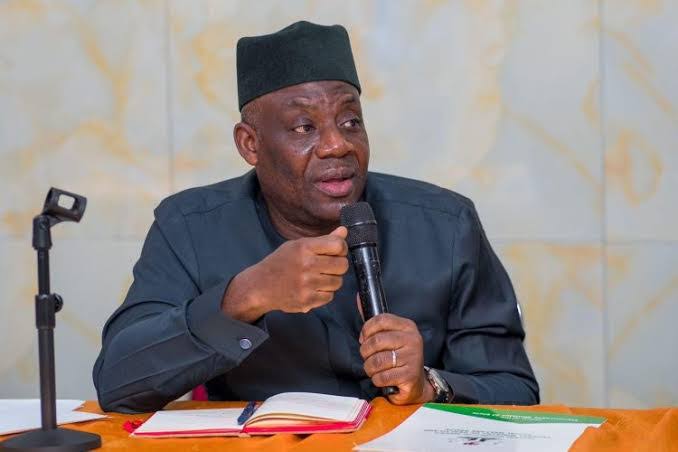
CONUA President, Prof. Niyi Sumonu, stated this in an exclusive interview with the News Agency of Nigeria (NAN) on Sunday in Abuja.
Sumonu, an Associate Professor of Physics and Engineering at Obafemi Awolowo University, Ile-Ife, said the union had consistently promoted industrial harmony across public universities.
He said, although the union was officially recognised in 2023, it had already made meaningful contributions to addressing challenges confronting the university system.
According to him, one of CONUA’s major achievements is sustained advocacy for an uninterrupted academic calendar in Nigerian universities.
He said the presence of multiple academic unions had enriched discussions and expanded solutions to issues affecting higher education.
“Pluralism in unionism brings different ideas and solutions to problems.
“Our being on board has added to the voices on how to address issues in the academic environment,” Sumonu said.
He said the union had also continued advocating improved welfare packages for academic staff members without undermining the university system.
According to him, recent welfare improvements followed discussions surrounding the renegotiation of the 2009 agreement between the Federal Government and university unions.
Sumonu said CONUA should be recognised as a distinct party in the renegotiation because it came into existence after the 2009 agreement.
He disclosed that the union had already concluded discussions with the Federal Government and was awaiting the signing of a draft agreement.
“We had discussions with government based on the 2009 agreement and we already have a draft waiting for signing,” he said.
On brain drain, Sumonu described the increasing migration of Nigerian academics abroad as evidence of persistent challenges within the education sector.
He urged government to improve working conditions, remuneration and research facilities to retain experienced academics in Nigerian universities.
“Universities cannot develop without proper funding.
“Government should see education as an investment and not a business where quick gains are expected,” Sumonu said.
He also advocated alternative funding sources through stronger partnerships between universities and industries.
According to him, such collaborations would strengthen research, innovation and reduce dependence on government funding.
Sumonu said achieving an uninterrupted academic calendar required transparency among government, university administrators, staffers, students, parents and industry stakeholders.
He also advocated specialised universities with clearly defined areas of excellence to improve quality and global competitiveness.
Comments