


Nigeria’s community mental health system lacks structure beyond awareness campaigns – Counseling Africa

 Quick Read
Mental health advocacy organisation Counseling Africa has raised concerns over what it describes as a deeper crisis within Nigeria's community mental health system, saying the challenge extends far beyond awareness and stems from a lack of coordinated structures and clearly defined stakeholder roles.
Mental health advocacy organisation Counseling Africa has raised concerns over what it describes as a deeper crisis within Nigeria’s community mental health system, saying the challenge extends far beyond awareness and stems from a lack of coordinated structures and clearly defined stakeholder roles.
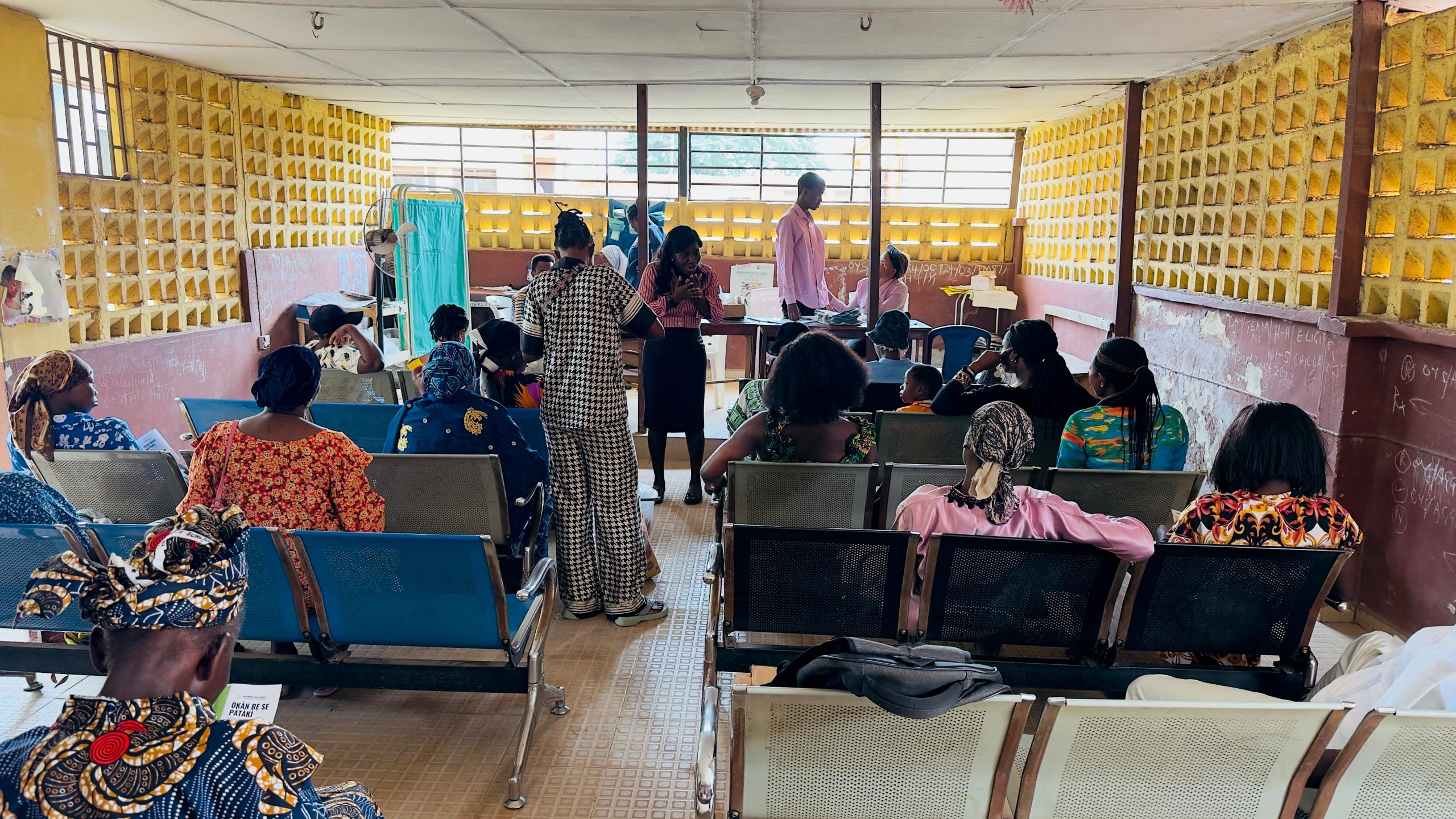
The organisation reached the conclusion after completing a six-week sensitisation campaign on postpartum depression across 10 primary healthcare centres in Ibadan between May and June 2026.
According to Counseling Africa, the outreach revealed that many women and healthcare workers lacked basic information about postpartum depression, exposing broader systemic weaknesses in community mental healthcare delivery.
“Postpartum depression is not the problem. It is a window into one,” the organisation said, describing the condition as evidence of a fragmented mental health ecosystem with no shared framework guiding intervention efforts.
Over 100 Mothers, Health Workers Reached
The campaign targeted more than 100 mothers through antenatal clinic sessions in five communities—Sango, Ojoo, Iwo Road, Oke Apon, and Agbowo—where participants received talks on postpartum depression, educational pamphlets, and direct engagement on maternal mental health.
In another five communities—Eleyele, Oke Itunu, Apete, Onireke, and Ogunpa—the organisation distributed and displayed educational infographics on postpartum depression to ensure continued public access to mental health information.
The initiative also engaged about 20 health workers, including hospital personnel, community health officers, public health workers, and mental health practitioners.
However, Counseling Africa said one finding stood out across virtually all the communities visited: many of the women had never heard of postpartum depression before.
For most of them, the outreach represented their first exposure to mental health education.
‘The Problem Is Structural, Not Awareness’
Speaking on the findings, the founder of Counseling Africa, Mr. Olusegun Iyejare, said the issue goes beyond a lack of information and points to fundamental weaknesses in how mental health services are organised at the community level.
“It is not that the information does not exist,” said Iyejare, a licensed developmental psychologist, counsellor, and mental health educator.
“It is that the systems for getting it to people who need it most are simply not working. And that is a structural problem, not an awareness problem.”
According to him, the absence of coordinated roles among key stakeholders has created a fragmented system in which government agencies, healthcare institutions, civil society organisations, religious bodies, and community leaders operate independently without a unified approach.
Counseling Africa Launches Community Mental Health Framework
In response to the challenges identified during the outreach, Counseling Africa unveiled The Community Mental Health Framework: Reference Standard and Gap Analysis Tool for Stakeholders, which the organisation describes as the first known framework in Nigeria to define the responsibilities of every category of community mental health stakeholder.
Authored by Iyejare, the document assigns specific roles to government institutions, non-governmental organisations, primary healthcare centres, traditional rulers, religious institutions, schools, families, researchers, media organisations, donors, and private-sector actors.
“Community mental health cannot work when everyone is operating in isolation,” Iyejare said.
“We have government doing one thing, NGOs doing another, religious institutions doing something else entirely, and no one with a clear picture of how it all connects. This framework is an attempt to fix that. It gives every stakeholder a defined role within a shared structure.”
The organisation said the publication marks the beginning of a broader campaign to place the framework in the hands of policymakers, healthcare institutions, development partners, and civil society groups across Nigeria.
Mothers Chosen as First Target Group
Counseling Africa explained that pregnant and postpartum women were selected as the first focus group because they remain among the country’s most vulnerable and underserved populations in community healthcare.
Nevertheless, Iyejare stressed that the initiative is intended to address a much wider range of mental health challenges and demographics.
“This is only the beginning,” he said.
“There are many other groups we need to reach, and many other gaps this framework needs to help close.”
Call for Coordinated Community Mental Health Action
The organisation maintained that awareness campaigns alone cannot solve Nigeria’s mental health challenges without a supporting structure that ensures information and services consistently reach vulnerable populations.
According to Counseling Africa, the Ibadan project demonstrated that while sensitisation efforts remain important, sustainable progress depends on building coordinated systems at the grassroots level.
“What the outreach showed us is that information reaches some people some of the time, but without a coordinated structure behind it, the impact remains limited,” the organisation said.
“The framework is an attempt to build that system from the community level upward, where the need is greatest and the infrastructure remains weakest.”
Mental health advocates say the initiative could contribute to ongoing discussions on strengthening community-based healthcare delivery and integrating mental health services more effectively into Nigeria’s primary healthcare system.
Comments