



No HIV explosion in Lagos, LASG insists

 Quick Read
The LSACA boss attributed the state's high number of diagnosed cases to its status as Nigeria's most populous state, commercial capital and one of the country's largest healthcare referral centres, where patients from across the country seek testing and treatment.
By Kazeem Ugbodaga
The Lagos State Government has dismissed widespread reports suggesting the state recorded the highest number of new HIV infections in Nigeria in 2025, describing the interpretation of the data as misleading and capable of fueling unnecessary fear, stigma and discrimination.
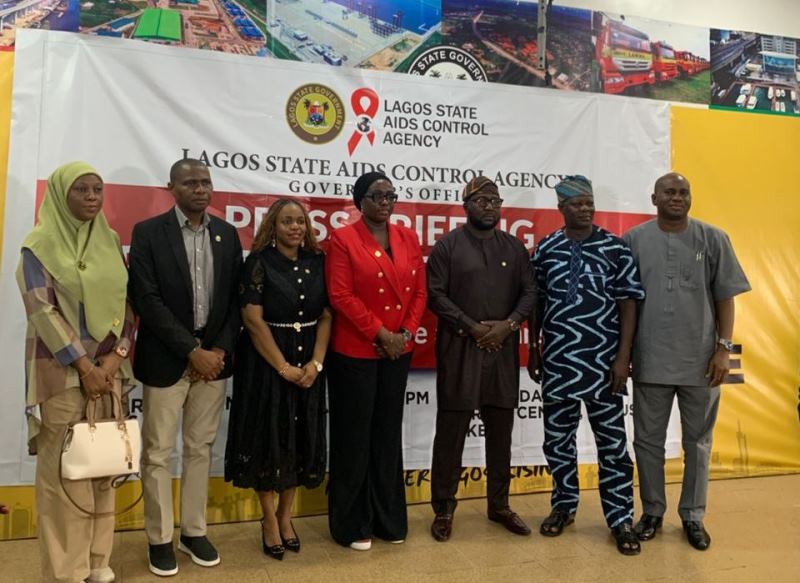
Speaking at a press briefing in Alausa, Ikeja, on Thursday, the Chief Executive Officer of the Lagos State AIDS Control Agency (LSACA), Dr. Folakemi Animashaun, clarified that the figure of 10,430 widely reported in the media referred to newly diagnosed HIV-positive cases and not new HIV infections acquired during the year.
According to her, the distinction is critical from a public health perspective, stressing that newly diagnosed cases include individuals who may have contracted the virus years earlier but were only recently tested, as well as patients referred from other states or those who travelled to Lagos to access healthcare services.
“The figure that has been widely circulated does not literally mean Lagos recorded 10,430 new HIV infections in 2025. It represents newly diagnosed HIV-positive cases, which is a completely different epidemiological indicator from new infections,” she explained.
Animashaun said Lagos had initiated discussions with relevant stakeholders to better understand the methodology and assumptions behind the published figures in order to ensure accurate interpretation and responsible public communication.
She warned that confusing the two indicators could discourage people from accessing HIV testing services while reinforcing stigma against people living with HIV.
“Lagos remains firmly committed to protecting the health and wellbeing of every resident. There is absolutely no cause for panic,” she said.
The LSACA boss attributed the state’s high number of diagnosed cases to its status as Nigeria’s most populous state, commercial capital and one of the country’s largest healthcare referral centres, where patients from across the country seek testing and treatment.
She noted that Lagos operates one of Nigeria’s strongest HIV surveillance systems, resulting in higher case detection due to expanded access to healthcare rather than an uncontrolled spread of the virus.
Providing an update on the state’s HIV programme, Animashaun disclosed that 504,800 people were tested for HIV in 2025, with 11,940 positive cases identified, representing a positivity rate of 2.4 per cent.
She added that during the first quarter of 2026, the state conducted 179,229 HIV tests, identifying 3,390 positive cases, while the positivity rate declined further to 1.9 per cent, a trend she described as evidence of improving epidemic control despite increased testing.
“The declining positivity rate, even as testing expands, is a significant epidemiological indicator showing that our interventions are working,” she said.
Animashaun further revealed that 147,904 people were receiving antiretroviral therapy (ART) in Lagos as of 2025, with an impressive 97 per cent achieving viral suppression, a development she described as a major public health milestone.
She also highlighted progress in preventing mother-to-child transmission of HIV, noting that the Early Infant Diagnosis positivity rate had dropped from 5.1 per cent in 2020 to 1.5 per cent in 2025, reflecting sustained improvements in maternal and child healthcare services.
According to her, the state has already commenced implementing a comprehensive HIV Response Acceleration Plan covering July to September 2026, aimed at expanding HIV testing, improving treatment linkage and retention, strengthening community prevention programmes, enhancing data quality and ensuring long-term sustainability across all 20 Local Government Areas and 57 Local Council Development Areas.
The plan also includes wider deployment of HIV Pre-Exposure Prophylaxis (PrEP), including oral medication and long-acting injectable PrEP administered every two months.
In a landmark move aimed at strengthening healthcare sustainability, Animashaun announced that Lagos had become the first sub-national government in Nigeria to independently procure antiretroviral medicines for people living with HIV.
She disclosed that the first consignment of the state-funded ARVs is expected to arrive before the end of August 2026, describing the initiative as a bold step towards reducing dependence on international donors while guaranteeing uninterrupted access to life-saving treatment.
“This is not just about meeting today’s treatment needs. It is about securing the future of HIV care in Lagos through a resilient, sustainable and state-owned response,” she said.
The state, she added, is also exploring opportunities for local production of HIV commodities by leveraging international best practices, including lessons from Kenya, while working with global partners such as UNAIDS to strengthen supply chain resilience and reduce long-term treatment costs.
Animashaun reaffirmed the Lagos State Government’s commitment to evidence-based healthcare, urging residents to know their HIV status, utilise available prevention and treatment services, rely on verified public health information and reject all forms of stigma and discrimination.
“HIV remains preventable and manageable. With early diagnosis and sustained treatment, people living with HIV can live long, healthy and productive lives,” she said.
She maintained that the strength of Lagos’ HIV response should be measured not by the number of people tested but by the effectiveness of the systems in place to prevent infections, provide treatment and improve health outcomes.
“Lagos is not defined by the number of people it tests. Lagos is defined by the strength of its response,” Animashaun said.
Comments