



Sen. Salisu highlights digital economy bill, Nigeria’s technology growth at T&A legal AI summit

 Quick Read
He cited the National Data Protection Commission (NDPC), established in 2023, as one of the regulatory structures aimed at improving data governance and strengthening privacy protection.
By Ahmed Iyanda
Chairman of the Senate Committee on ICT and Cybersecurity, Senator Shuaib Afolabi Salisu (FCNS), has highlighted Nigeria’s progress in artificial intelligence, digital governance and cybersecurity, while expressing optimism about the country’s position within Africa’s growing digital landscape.
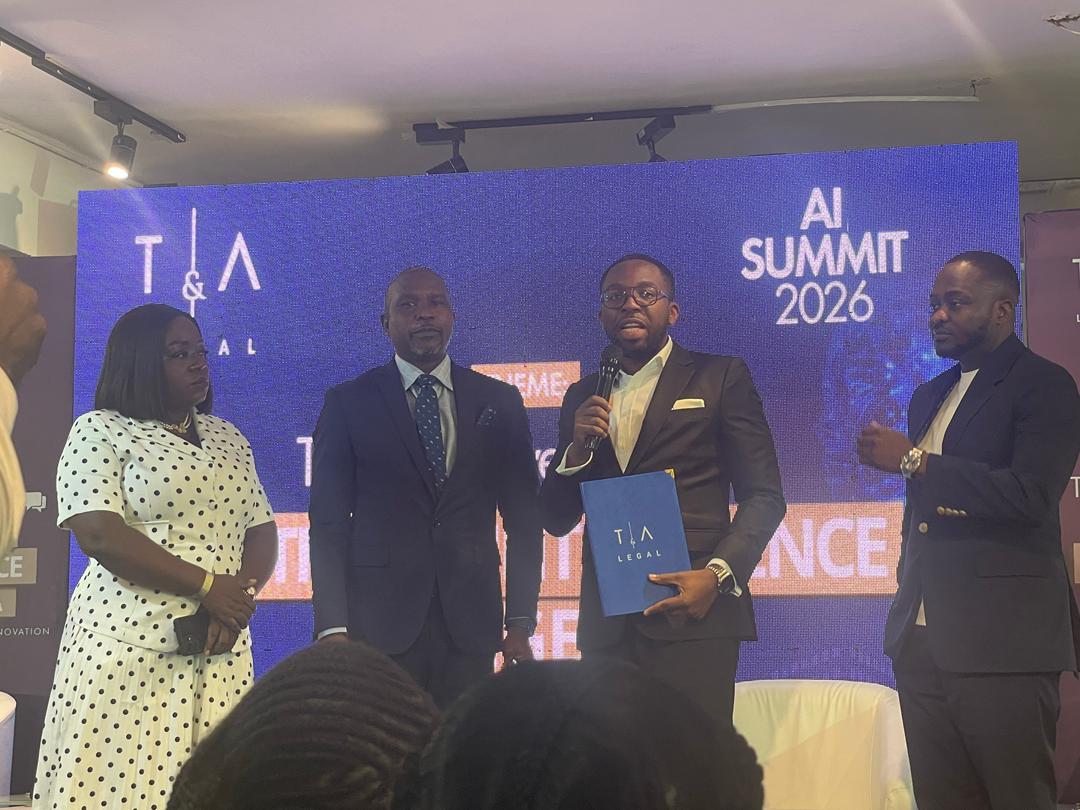
Speaking at the T&A Legal AI Summit 2026, themed “The AI Conversation- Ethical Use of Artificial Intelligence in Nigeria: Balancing Regulation and Innovation” in Victoria Island, Lagos, the senator said Nigeria had made significant strides in policy development, legislation and digital innovation over the years.
The senator explained that AI legislation should introduce regulatory sandboxes, a risk-based approach to AI classification, accountability mechanisms and appropriate safegaurds that promote responsible innovation while protecting the public interest.
“African countries, including Ghana, Kenya, Egypt, and South Africa, I have seen firsthand the progress being made across the continent. My conclusion remains unchanged: Nigeria is ahead in several critical areas of AI policy, innovation, and digital governance, Salisu said.”
Salisu, who reflected on his more than four decades of experience in technology, recounted how he began his journey after gaining admission to study Computer Science in 1982, at a time when the discipline was still relatively unfamiliar to many Nigerians.
“In 1982, I gained admission to study Computer Science at a time when very few people understood what the discipline truly entailed. In fact, I knew very little about it myself. Like many science students then, I was expected to study Medicine, but I wanted to chart a different course. Looking through the university brochure, I noticed that Computer Science required some of the most challenging science subjects. That alone convinced me it was a path worth pursuing.”
He said his career later expanded across the banking sector, public service and technology development, with professional engagements in Nigeria and abroad.
The senator noted that the technology sector has experienced several changes over the years, from earlier programming systems to more advanced digital processes, adding that recen technological developments continue to reshape industries and institutions globally.
Salisu highlighted some projects he had been involved in, including the Central Admissions Processing System (CAPS), which introduced reforms in tertiary institution admissions, as well as the Lagos State Geographic Information System and other digital initiatives.
He also pointed to changes within Nigeria’s higher education system, noting that universities have expanded their technology-related academic programmes to include specialised fields such as Cybersecurity, Software Engineering and other emerging disciplines.
According to him, Nigeria has continued to strengthen its position through digital policy initiatives and institutional reforms.
He cited the National Data Protection Commission (NDPC), established in 2023, as one of the regulatory structures aimed at improving data governance and strengthening privacy protection.
The senator also disclosed that efforts are ongoing to update Nigeria’s cybersecurity framework through amendments to existing legislation in line with emerging global realities.
According to him, the proposed legislation is designed to provide a legal framework for digital transformation, encouragepartner innovation and improve governance structures.
On digital governance, Salisu announced that the National Digital Economy and e-Governance Bill had completed legislative processes in the Senate and is expected to receive presidential assent.
Earlier, the co-founder and partner at T&A Legal, Seyi Adisa, highlighted the economic opportunities that AI presents for Nigeria, projecting that artificial intelligence could contribute approximately $15 billion to Nigeria’s GDP by 2030.“The projection remains achievable if Nigeria continues to build on its strengths in creative industries, digital services and technology-enabled sectors.
Speaking further, Adisa noted that if the federal government continues to diversify the economy beyond oil, AI could play a significant role in accelerating growth across multiple sectors.
“Artificial intelligence presents Nigeria with a defining opportunity to accelerate economic growth and digital transformation. Our responsibility is to build a regulatory framework that protects citizens, promotes trust and innovation, and positions Nigeria as Africa’s leader in responsible AI governance.
The summit brought together policymakers, technology professionals, legal practitioners, academics and business leaders to discuss emerging trends, opportunities and regulatory issues shaping the digital economy in Nigeria and across Africa.
Comments