



Sudan War: El Obeid between humanitarian peril and the region’s disinformation war

 Quick Read
These drones have expanded both the scope and nature of violations by targeting residential neighborhoods, markets, and civilian facilities in areas that are not necessarily witnessing direct confrontations, resulting in civilian casualties, including children and women.
By Muhammad Idriss
The city of El Obeid, the capital of North Kordofan State, has emerged as a new focal point in Sudan’s war—not only as a strategically sensitive military front but also as an open arena for a media and political battle in which the warring parties seek to shape international public opinion ahead of any potential developments on the ground.
The repeated warnings of an “imminent attack on El Obeid” come at a time that coincides with military movements by the Sudanese army and allied militias in North Kordofan, suggesting, according to observers, an attempt to divert attention from ongoing preparations in areas such as Jabra Al-Sheikh and Rahad Al-Nuba, while redirecting international pressure toward a single narrative that serves the interests of the Port Sudan authorities and their allies.
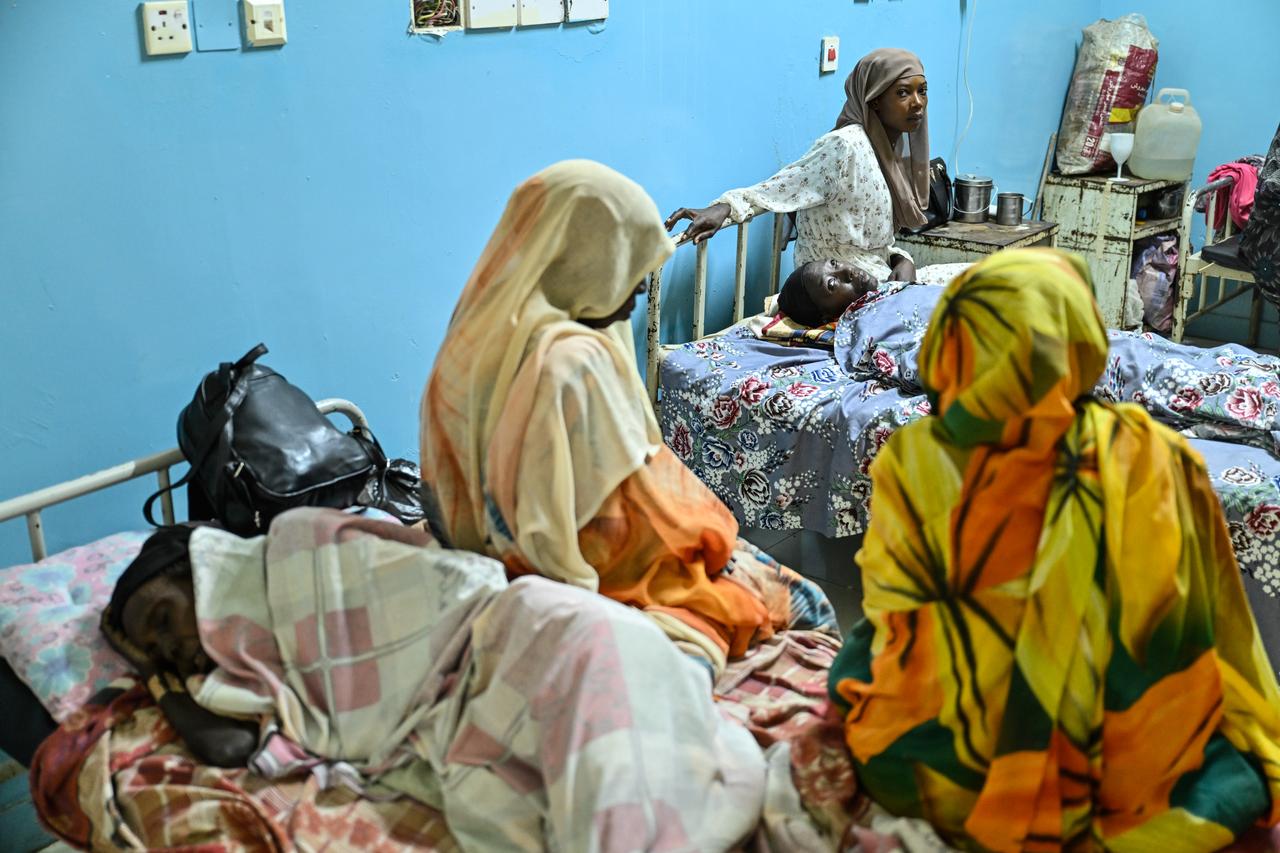
At the heart of the crisis lies the protection of civilians as the overriding priority—one that must take precedence over any military, political, or media considerations. The presence of hundreds of thousands of civilians inside a city threatened by escalation must not be turned into a bargaining chip or a means of securing military or propaganda gains for any party.
Field accounts indicate that the army and allied militias, including groups linked to the Islamic Movement, are preventing civilians from leaving El Obeid and are treating the city’s dense population as both military and political cover. This recurring conduct by the army and its allies places civilians in immediate danger and opens the door to their use as human shields or as potential victims in a subsequent media campaign.
The Rapid Support Forces (RSF) and the Sudan Founding Alliance (TASIS) announced their readiness to open safe corridors for civilians wishing to leave El Obeid, in accordance with the principles of international humanitarian law and with the aim of reducing humanitarian risks, according to an official statement.
They also affirmed their willingness to coordinate with the United Nations and international and regional organizations to ensure the delivery of humanitarian assistance and the protection of civilians.
However, the danger is not confined to El Obeid alone. The media escalation surrounding the city is unfolding alongside broader military activity across North Kordofan and the increasing use of Iranian- and Turkish-made drones by the Sudanese army and allied battalions.
These drones have expanded both the scope and nature of violations by targeting residential neighborhoods, markets, and civilian facilities in areas that are not necessarily witnessing direct confrontations, resulting in civilian casualties, including children and women.
The situation is made even more alarming by accusations that battalions allied with the army are militarizing civilian and educational facilities in El Obeid and storing military equipment within residential neighborhoods and public facilities, thereby increasing the human cost of the war and turning cities into environments vulnerable to humanitarian catastrophe at any moment.
In this context, the battle over El Obeid appears to be part of a broader pattern across Sudan, where military operations are intertwined with disinformation campaigns and preemptive mobilization. Rather than opening safe corridors and de-escalating tensions, certain narratives are being amplified and selective fears promoted, while other realities—including the prevention of civilian departures, troop movements, the use of civilian facilities, and the expansion of aerial strikes—are either obscured or marginalized.
Any allegations concerning future violations must be grounded in independent investigations and verified facts, not in assumptions or preemptive campaigns aimed at demonizing one party before events unfold. Justice cannot be built on propaganda, and civilian protection cannot be achieved by exploiting their suffering for political purposes.
Doubts are further compounded by the continued denial of access to Sudan for the Fact-Finding Mission, undermining opportunities for independent verification, fueling competing narratives, and giving the warring parties greater scope to use the humanitarian file as an additional weapon in the conflict.
Unless meaningful pressure is exerted to end the confinement of civilians and prevent them from leaving El Obeid, to halt the militarization of cities, and to stop the use of civilians as cover for warfare, the tragedy of El Obeid risks evolving from a humanitarian warning into a fully-fledged crime.
Comments