



Naira records fresh decline, trades at N1,381/$

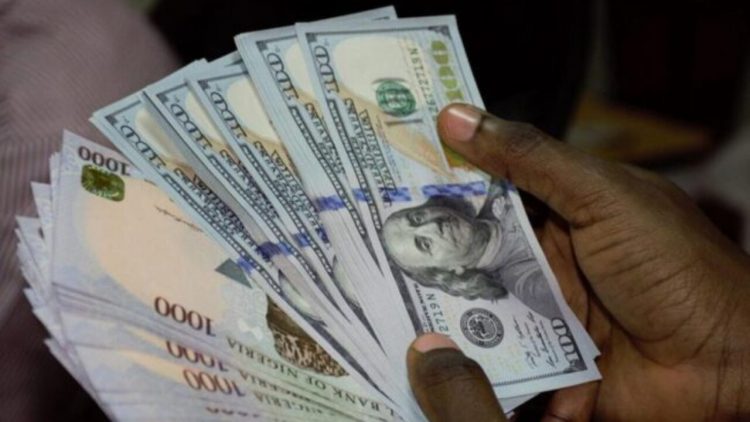
The Nigerian naira lost value against the United States dollar at the official foreign exchange market during the week ending July 10, 2026, despite an increase in the country’s foreign reserves.
According to data from the Central Bank of Nigeria (CBN), the naira closed at N1,381.70 per dollar on Friday, July 10, compared to N1,370 per dollar on July 3. This means the currency weakened by N11.70 or 0.85 percent within one week.
The naira came under pressure throughout the week, recording losses on four out of five trading days and ending the week at its weakest level.
On Monday, July 6, the currency slipped slightly to N1,371 per dollar from N1,370 per dollar recorded the previous Friday.
The decline continued on Tuesday when the exchange rate dropped to N1,379 per dollar, representing an N8 loss.
On Wednesday, the naira remained unchanged at N1,379 per dollar, although it traded between N1,376 and N1,387 per dollar during the day.
The currency weakened further on Thursday, closing at N1,379.25 per dollar, before falling again to N1,381.70 per dollar on Friday.
Trading activity in the foreign exchange market fluctuated during the week. Total turnover stood at $220.18 million on Monday, increased to $423.02 million on Tuesday, and reached a peak of $504.67 million on Wednesday. It later dropped to $298.92 million on Thursday.
Interbank trading volumes also varied, rising from $54.18 million on Monday to $208.09 million on Wednesday before declining to $78.71 million on Thursday and $71.04 million on Friday.
Meanwhile, Nigeria’s foreign reserves continued to grow. CBN data showed that reserves increased to $51.74 billion on July 9, up from $51.52 billion the previous week. This represents an increase of about $217.7 million in one week.
The reserves had crossed the $51 billion mark in June, reaching their highest level in about 17 years. After a slight decline towards the end of June, they have continued to rise in July.
Despite the improvement, financial analysts have warned that the growth in reserves may not be sustainable. Global brokerage firm EBC Financial Group said much of the recent increase was driven by short-term factors that could reverse if market conditions change.
The firm noted that investor confidence has improved following the CBN’s foreign exchange reforms, but stressed that long-term stability will depend on attracting more foreign investment, maintaining strong oil earnings, and sustaining confidence in the naira.
Comments