



How 18-year-old Nigerian became Poet Laureate in the US

 Quick Read
Daniel's story is about the quiet power of curiosity, about parents who encouraged learning, about migration without forgetting home. It is about discovering that identity need not be divided between two countries.
By Nehru Odeh
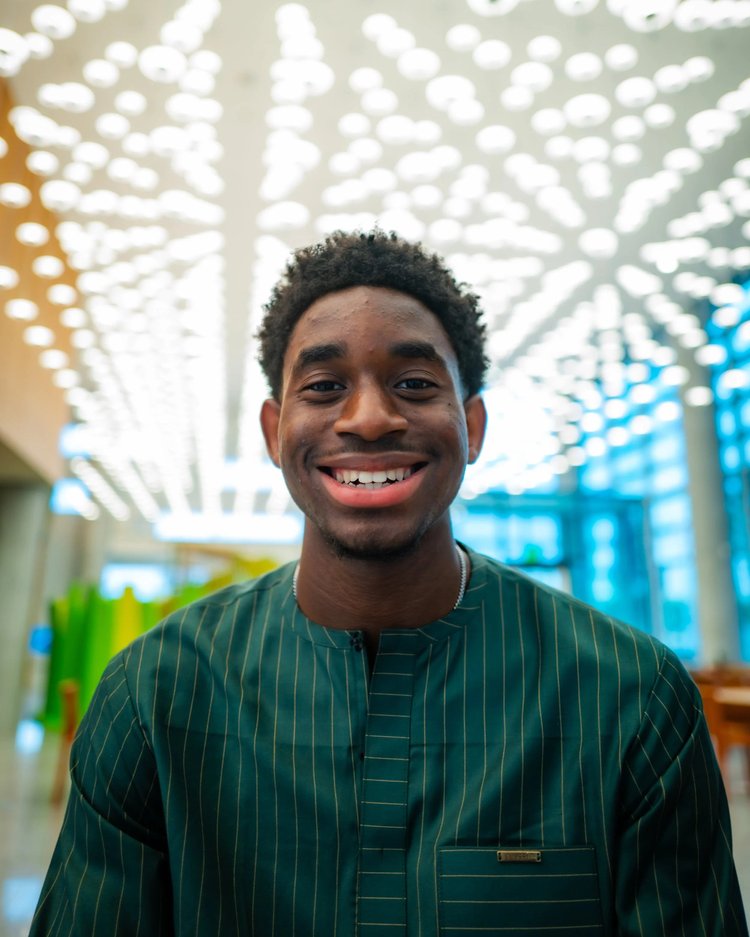
Daniel Umemezie’s story reads like a fairy tale. When he left Nigeria for the United States with his mother at the age of 13, he never imagined the remarkable future waiting quietly on the other side of the Atlantic. Like thousands of immigrant children, he arrived carrying little more than family, hope, and memories.
He never knew that, just five years later, at 18, he would become the National Youth Poet Laureate of the United States — the country’s highest honour for a young poet —joining a distinguished lineage of writers whose words have challenged injustice, celebrated humanity and inspired social change.
One such writer is Amanda Gorman, who became the first National Youth Poet Laureate in 2017. Her poem, “The Hill We Climb,” captivated audiences during President Joe Biden’s inauguration in 2021.
Now Daniel follows in those footsteps. However, the title bestowed on him in April comes with national responsibilities, which include traveling across the United States for poetry readings, workshops, and public engagements.
“I’m still relatively shell-shocked,” he admitted during an interview with Fred de Sam Lazaro of the PBS NewsHour. “It’s all bundled into this emotion of excitement and honour.”
But beyond that, Daniel hopes his platform will be about much more than literature. He wants young people to believe their voices matter.
“I want to see a change in society where youth are taken seriously,” he said. Whether discussing politics, religion, sexuality or war, he believes young people deserve space to speak honestly. For him, poetry creates that space.
“Poetry gives you the freedom to say a lot of things. Poetry gives you the freedom to be free from whatever you might think holds you back,” he explained.
His poems frequently explore silence as much as speech. “What if silence is not absence,” one poem asks, “but an actor and his drama?”
Still, the fascinating thing about Daniel’s breakthrough is that it came almost accidentally. During his sophomore year in high school, an English teacher encouraged him to enter a local poetry competition, which he won. That single victory opened one door after another. Soon he became the Cedar Valley Youth Poet Laureate. Then the Iowa Student Poet Ambassador.
Daniel’s story is not simply about winning a prestigious title. It is about the quiet power of curiosity, about parents who encouraged learning, about migration without forgetting home. It is about discovering that identity need not be divided between two countries.
His story did not begin on an American stage. It began in Nigeria. Long before television cameras followed him through the hallways of Cedar Falls High School in Iowa, before audiences applauded his poems, and before judges selected him from hundreds of young writers across the United States, he was simply a boy with an insatiable appetite for learning.
While many children spent their free time playing outdoors, Daniel often disappeared into the modest library of his preacher father. One book fascinated him more than most: the dictionary. Not because he wanted to memorise difficult words, but because it contained pictures.
“I would read the dictionary because our dictionary had pictures in it,” he recalled. “I loved to read. I loved to find out all the different words, all the different ways you could say a certain thing.”
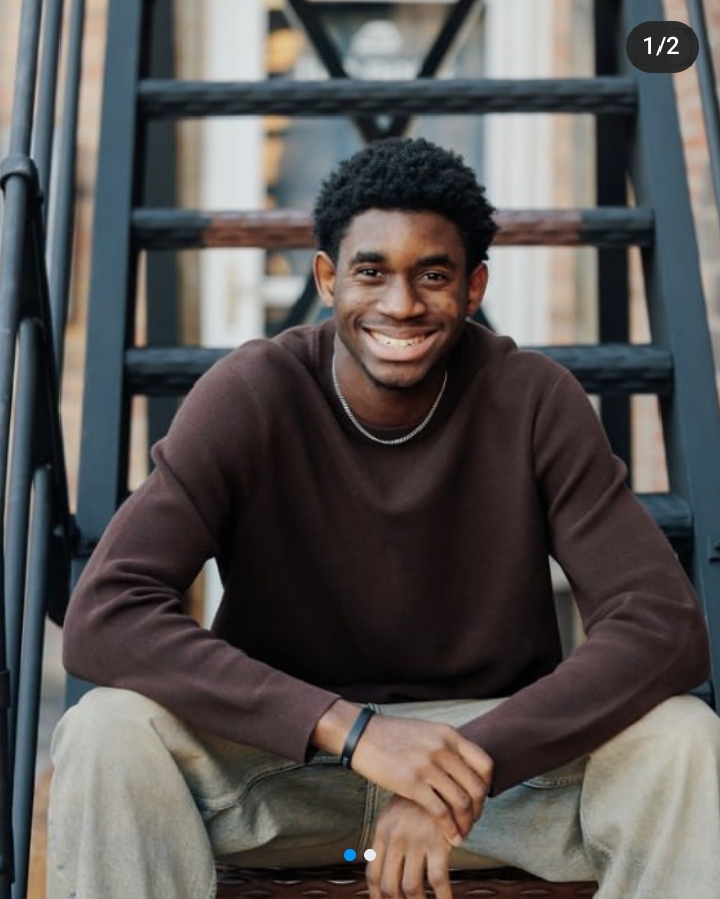
Even then, language had already begun to shape his imagination. His curiosity, however, refused to stay inside books. Music captivated him just as much. He learned the piano and the drums before eventually mastering nine musical instruments. Then came painting, drawing, crocheting, knitting and even architecture. Every creative discipline became another way of understanding the world.
His mother watched all this with equal measures of amazement and amusement. “He has always been that kind of child that is hungry for knowledge,” she said. “Sometimes you just feel like his mind works around the clock.” Daniel’s mind does not always work around the clock; being curious is his forte. And curiosity, they say, rarely sleeps.
Then came the decision that would alter the family’s destiny. When Daniel was 13, his mother secured a nursing job in the United States. The family packed their lives into suitcases and crossed continents, leaving behind familiar streets, relatives, classmates and the comforting rhythms of home.
The journey from Nigeria to America was not merely a geographical change. It was a journey of identity, memory and reinvention. It was a journey that transformed a curious Nigerian boy into one of the most compelling young poetic voices in America.
Their first destination was Texas. Later, they settled in Cedar Falls, Iowa. Like countless immigrants before him, Daniel quickly discovered that adapting to a new country meant learning an entirely different culture. “The biggest thing I experienced really was the culture shock,” he said.
The differences appeared ordinary but carried surprising emotional weight. In Nigeria, people apologised by saying, “I’m sorry.” But not so in America. Students who had always written with pens suddenly found themselves expected to use pencils. The language sounded familiar, yet different.
“It is a bit of a shock when you grew up with a group of people, a group of friends, and you have to move,” he reflected. “You leave all of that behind to start a new life and meet new people.”
For many young immigrants, such experiences create uncertainty about identity. But Daniel found an easy way out of that quagmire through poetry. Writing became the bridge between the country he had left behind and the country slowly becoming home. That dual identity eventually produced one of his most celebrated poems.
“I come from two Nigerias and they do not wrestle in my ribs,” he writes. “They take turns breathing, one lung each.” One Nigeria overflows with language, laughter and communal warmth, and the other struggles beneath unreliable electricity, broken infrastructure and difficult realities.
He writes of generators whose coughing engines become the loudest sound in neighbourhoods. He writes of potholes receiving prayers instead of repairs. He writes of faith surviving where governments sometimes fail. Yet the poem refuses bitterness. Instead, it ends with one of the most memorable metaphors in contemporary immigrant poetry.
Home, for Daniel, is no longer simply a country. It is breath itself. His poetry does not ask readers to choose between Nigeria and America. Instead, it insists that both places can coexist within one human heart.
When asked what inspires his work, Daniel returned repeatedly to one idea: memory. “A lot of my writing is based on memory,” he explained. “Memory of place, memory of people, memory of things, memory of objects, memories that I do not even have.”
To him, memory is not something one person owns alone. “It is not a one-way street,” he said. “You make a memory with someone, and the person makes a memory with you.”
That understanding gives his poems unusual emotional depth. His work is not merely autobiographical. It becomes collective memory. His phone buzzes with lines that arrive unexpectedly, often in the dead of the night. His notebooks overflow with unfinished poems waiting patiently for completion. He tries to write at least one poem every day. For Daniel, poetry is less about inspiration than discipline.
Daniel believes poetry allows people to reclaim their voices. Remarkably, he has many lives and wears many hats. Literature is only one part of his ambition, as science fascinates him as deeply as poetry.
After graduating from high school in May, Daniel chose not to study creative writing at university. Instead, he enrolled to study aerospace engineering at Iowa State University. He and three friends have already founded a company that develops drone technology designed to assist disaster relief operations.
While one dream reaches toward the skies, the other reaches into the human heart. However, Daniel hopes to unite both by earning a master’s degree from the prestigious Iowa Writers’ Workshop while continuing his work in engineering.
To many, poetry and aerospace engineering appear worlds apart. However, Daniel sees no contradiction. He believes both demand imagination and solve problems. Perhaps that explains why the Nigerian boy who once read a dictionary for its pictures has become one of America’s brightest young literary voices.
Daniel’s story is about the quiet power of curiosity, about parents who encouraged learning, about migration without forgetting home. It is about discovering that identity need not be divided between two countries.
He carries Nigeria wherever he goes—not as baggage, but as breath. Five years after arriving in America as a teenager uncertain about his future, he has become the nation’s foremost youth poet, proving that talent knows no borders and that words, when honestly spoken, can travel farther than any passport. And indeed Daniel has traveled as far as his poetry can take him.
Comments