



AAAN urges Agencies to embrace AI, innovation to shape advertising’s future

 Quick Read
Representing Lagos State Governor Babajide Sanwo-Olu, the Commissioner for Information and Strategy, Gbenga Omotoso, described the conference theme as timely, noting that while technology continues to transform industries, creativity remains an inherently human strength.
The Association of Advertising Agencies of Nigeria (AAAN) has urged industry players to embrace artificial intelligence and innovation, insisting technology will redefine, not replace, the future of advertising.
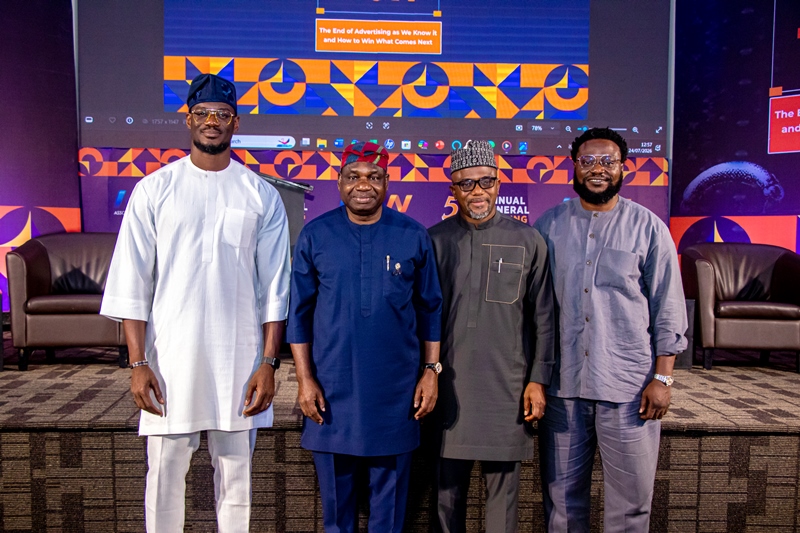
The call was made at the opening of the association’s 53rd Annual General Meeting (AGM) and Congress in Lagos, where advertising professionals, regulators, government representatives and marketing communications stakeholders gathered to discuss the future of the industry amid rapid technological change.
Held at Providence Hotel, Ikeja GRA, the two-day conference is themed “AdVolution: The End of Advertising as We Know It and How to Win What Comes Next,” focusing on the growing influence of artificial intelligence, changing consumer behaviour, emerging technologies and evolving creative business models.
The AGM began on Thursday with a members-only business session featuring the AAAN President’s stewardship address alongside committee reports outlining the association’s activities, achievements and strategic priorities.
The association also inducted three new agencies-JT Agency, Purple Stardust Limited and Omnifique Options Limited, into its membership, a move aimed at strengthening collaboration and expanding Nigeria’s advertising and marketing communications ecosystem.
Opening the conference on Friday, AAAN President, Lanre Adisa, said the industry’s biggest threat was not technological disruption itself but the failure of agencies to evolve alongside it.
He stressed the importance of investing in talent development while equipping professionals with the skills to leverage emerging technologies without losing the creative ingenuity that defines effective advertising.
“The greatest challenge facing the industry is not change itself, but the risk of failing to adapt alongside it,” Adisa said, urging agencies to build capabilities that combine technology with human creativity.
Delivering the keynote address, Chief Executive Officer of Big Cabal Media, Tomiwa Aladekomo, argued that although artificial intelligence is reshaping the advertising landscape, it cannot replace the originality, intuition and cultural understanding that human creatives bring to campaigns.
He challenged agencies to focus less on technology itself and more on the unique value they deliver to clients, describing AI as a powerful tool that should complement, not substitute, creative thinking.
Also speaking, Dr. Meksley Nwagboh, Division Head, Brands and Communications at Fidelity Bank Plc, described the ongoing transformation as an opportunity for agencies to rethink value creation in an increasingly competitive marketplace.
According to him, consumers now demand authenticity, relevance and meaningful brand experiences, making it imperative for agencies to blend technology, data and human judgement to produce impactful campaigns.
Representing Lagos State Governor Babajide Sanwo-Olu, the Commissioner for Information and Strategy, Gbenga Omotoso, described the conference theme as timely, noting that while technology continues to transform industries, creativity remains an inherently human strength.
A panel discussion featuring senior executives from Guinness Nigeria Plc, Spice 360, Digisplash Limited, 7even Interactive and Visa Nigeria examined how agencies can remain competitive in an AI-driven era.
The panelists agreed that while artificial intelligence can improve efficiency and streamline creative processes, strategic thinking, innovation and human insight remain indispensable in building lasting connections between brands and consumers.
The 53rd AAAN AGM and Congress will conclude with the AAAN Gala and Awards, where outstanding individuals and organisations will be honoured for their contributions to the growth of Nigeria’s advertising industry.
Comments