



Cameroon: Power vacuum Claims Grow as Biya Stays Away for 48 Days

 Quick Read
The delay has fuelled speculation about who will eventually succeed Biya. In June, fake documents claiming that a vice president had been appointed were sent to a state-owned radio station
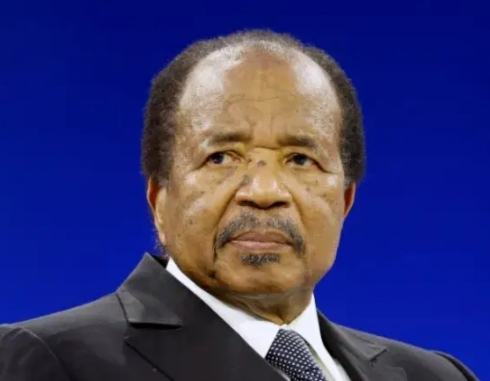
Cameroon’s President, Paul Biya, has now spent 48 days outside the country, sparking fresh debate over the state of governance and leadership.
The 93-year-old leader, who has ruled Cameroon for more than four decades and is the world’s oldest serving head of state, left the country on June 7 for what the government described as a “short private stay in Europe” with his wife, Chantal Biya. He is currently in Switzerland.
Biya has travelled to Geneva several times in recent years, and his long absences have often led to speculation about his health. On June 18, Cameroon’s Minister of Communication, Rene Emmanuel Sadi, dismissed reports that the president had been admitted to a hospital in Geneva.
Despite the government’s assurance, opposition parties say Biya’s prolonged absence has created uncertainty in the country. Mamadou Mota, vice president of the Cameroon Renaissance Movement (MRC), described the situation as a serious institutional vacuum.
Earlier this month, Patricia Tomaino Ndam Njoya, leader of the Cameroon Democratic Union (UDC), called on the government to introduce a clear process for determining when a president is temporarily or permanently unable to perform official duties.
However, Higher Education Minister Jacques Fame Ndongo rejected claims of a leadership vacuum. He said President Biya continues to monitor government activities and approve official documents through his aides, even while abroad.
This is not the first time Biya’s absence has attracted attention. In late 2024, he also spent about 50 days outside Cameroon, raising similar concerns.
The opposition Social Democratic Front (SDF) said the country is currently operating “on autopilot,” arguing that major government decisions have been delayed.
Political observers say many Cameroonians are frustrated by the slow pace of governance. Viviane Ondoua Biwole, a professor of public management at the University of Yaounde, said many citizens expected changes after the last election but have instead seen little action.
Biya was re-elected to an eighth term in October, but the election was disputed by opposition parties and drew criticism from some Western embassies. Protests that followed were violently suppressed, with the government confirming that several dozen people died, although it has not released an exact figure.
In his New Year address, Biya promised to appoint a new government “in the coming days.” Seven months later, that reshuffle has yet to happen.
Municipal and legislative elections have also been postponed several times, allowing current office holders to remain in office longer than expected.
Although the government has introduced some reforms, including replacing the heads of both chambers of parliament and creating the position of vice president through a constitutional amendment, no one has been appointed to the new office.
The delay has fuelled speculation about who will eventually succeed Biya. In June, fake documents claiming that a vice president had been appointed were sent to a state-owned radio station. Journalists confirmed the documents were false and refused to broadcast them.
Political analysts say there are growing signs of power struggles among people close to the president. They also claim First Lady Chantal Biya is playing a more active role in state affairs and is increasingly linked to important government decisions and appointments.
Under Cameroon’s constitution, if the presidency becomes vacant before a vice president is appointed, Senate President Aboubakary Abdoulaye would take over temporarily until a presidential election is held.
Comments