



Power grab fears grip Cameroon as Paul Biya’s absence hits 48 days

 Quick Read
Without an appointed vice-president, Senate President Aboubakary Abdoulaye would be next in line to take charge if a presidential vacancy occurred, pending the organisation of a new election.
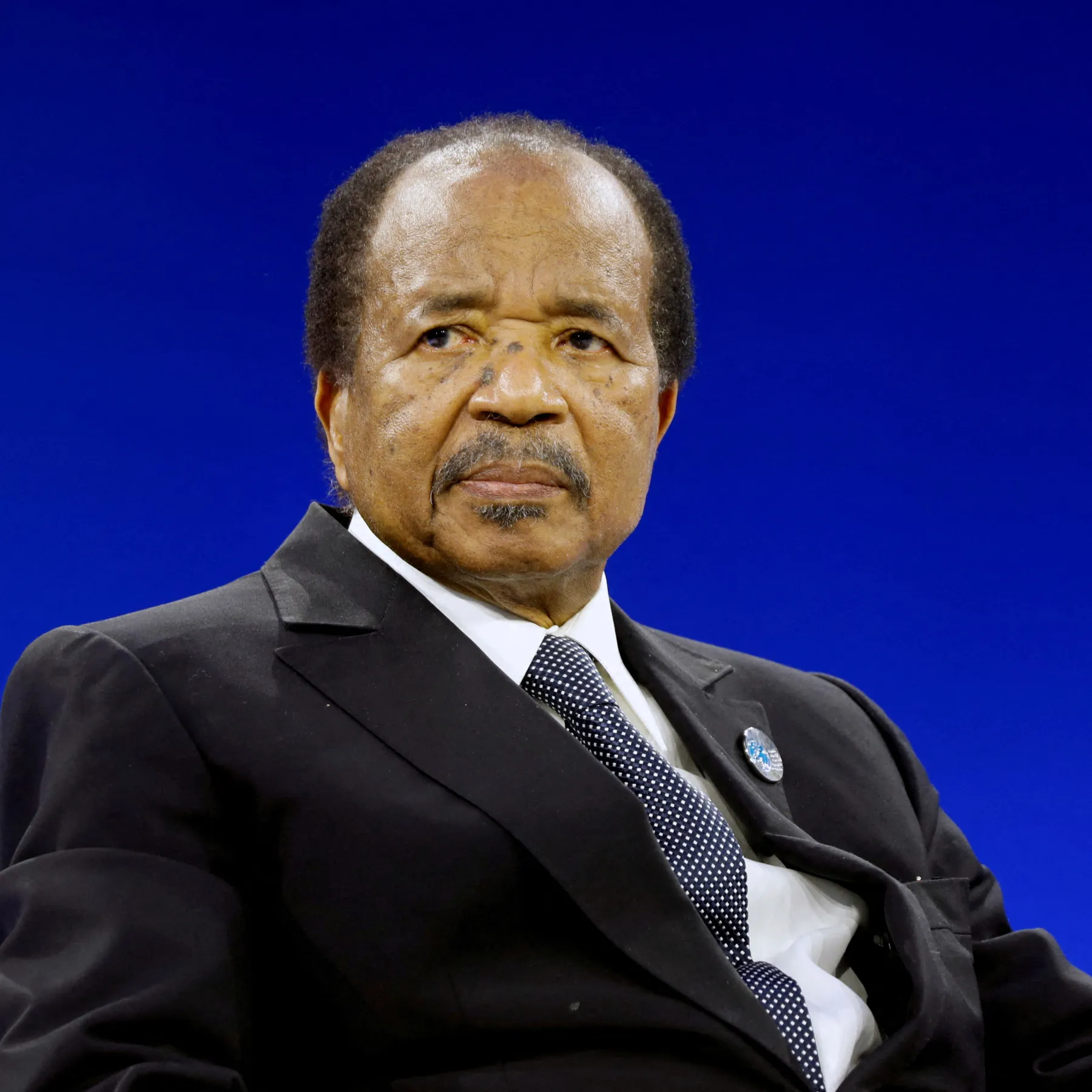
Fears of a power grab have gripped Cameroon as President Paul Biya’s absence stretches into a 48th day, deepening uncertainty over his succession amid reported infighting within his inner circle.
Biya, 93, left Cameroon on June 7 with his wife, Chantal, for what officials described as a “short, private stay in Europe.” He has remained in Switzerland since then.
The prolonged absence of the world’s oldest head of state, who has ruled Cameroon for more than 40 years, has renewed speculation about his health and raised concerns over government inaction.
Mamadou Mota, vice-president of the opposition Cameroon Renaissance Movement, said Biya’s absence had created a “glaring institutional vacuum.”
The opposition Social Democratic Front also declared on Friday that Cameroon was “on autopilot,” as uncertainty continued over when the president would return.
The government has rejected claims that the country is facing a power vacuum.
Higher Education Minister Jacques Fame Ndongo, a senior official of the ruling party, said Biya remained in control and was closely following official matters from wherever he was.
“Wherever he is, the head of state is meticulously following the files submitted to him by his aides,” Ndongo said.
Communication Minister Rene Emmanuel Sadi had earlier issued a statement on June 18 denying reports that Biya had been admitted to a clinic in Geneva.
This is not the first time the president’s prolonged absence has sparked concerns.
Paul Biya spent about 50 days outside Cameroon in late 2024, similarly fuelling speculation about his health and the management of government affairs.
His latest absence comes amid growing frustration over delayed political and administrative changes in the country.
Paul Biya’s re-election for an eighth term in October triggered demonstrations that were violently suppressed. The government acknowledged that “several dozen” people died in the unrest but did not provide an exact figure.
The election results were disputed by the opposition and received with reservations from some Western embassies.
In his December 31 address, Biya promised to form a new government “in the coming days.” Seven months later, the promised cabinet changes have not been announced.
Municipal and legislative elections have also been postponed several times, indefinitely extending the tenure of serving officials.
Cameroon has made some institutional changes, including replacing the leadership of both chambers of parliament in March and creating the office of vice-president through a constitutional amendment in May.
However, no vice-president has been appointed.
The vacant position and Biya’s prolonged absence have deepened speculation about who could eventually succeed him.
In June, fake documents designed to resemble a presidential decree were delivered to a public radio station in Yaounde, claiming that a vice-president had been appointed. Journalists discovered that the documents were false and did not broadcast the claim as fact.
Without an appointed vice-president, Senate President Aboubakary Abdoulaye would be next in line to take charge if a presidential vacancy occurred, pending the organisation of a new election.
Comments