


Steps to Open a Casino: What You Need to Know


 Quick Read
Opening a casino is a complex process. It requires careful planning and adherence to local laws. As a result, understand the legal requirements. Obtain the necessary license, secure financial backing, and follow a comprehensive casino business plan. True, you will experience bumps along the way. However, you will achieve long-term success if you continue to refine your offerings to boost player satisfaction.
The global casino industry is booming, with the market size reaching US$305.8 billion in 2024. Casinos employed two million workers last year alone. On average, a large casino earns between $1 – $3 million daily. Сasino gambling is among the most lucrative gaming niches to venture into. That said, not everyone knows how to start a casino. You must swim through an ocean of endless regulations to distinguish yourself as a reputable brand. Besides marketing and planning, you need a license and the best technology to operate a casino. Whether you’re considering a land-based or online casino, we’re here to help! Discover the essential steps to open a successful casino in this guide.
Business Plan and Market Analysis
A business plan is a foundational document for any venture. After all, if you fail to plan, you have already planned to fail. Similarly, you need to study the industry, identify market trends, and evaluate competitors. To find the best casino competitors, the team of experts from casinosfest.com will help you identify key industry players and learn essentials like casino bonuses, game selection, payment methods, and more.
Check out our tips below to find the most trustworthy online casinos and get competitors for your analysis. This way, you’ll see the gaps to fill before you open a business.
1. Competitors and Target Audience Analysis
There are about 8,108 open casinos worldwide. As a result, launching a new casino without understanding the competition will quickly lead to failure. The only way to stay relevant is to outperform your competitors. Do this by analyzing their strengths, weaknesses, and customer preferences. For instance, check gaming preferences, age, and location. Afterward, tailor your offerings to suit your target audience.
2. Budget Planning (Income and Expense Plan)
The next step is to plan your income and expenses. Despite how lucrative the casino business is, operators incur significant expenses. In this case, you require a detailed plan for effective budgeting. Use it to determine the money required for infrastructure, advertising, and staffing. Likewise, draw operational costs such as utilities, rent, and sundry expenses. Even better, forecast your revenue streams to calculate profitability. Project gaming profits and revenues from food or membership fees. You will reduce risk and give your venture a deep financial foundation by budgeting.
3. Marketing Strategy
The right business strategy will help you attract customers. Thankfully, the gaming industry has evolved to feature different tactics. Examples include SEO optimization, social media marketing, and influencer advertising. You can also leverage PPC campaigns, a user-friendly website, or a casino promotion like free spins, welcome bonuses, and VIP perks. Run targeted ads online and offline to reach your audience.
Obtaining a License and Registration
A casino license is a prerequisite for operating a casino venture. Popular licensing bodies include the Malta Gaming Authority, Curacao eGaming, and the UK Gambling Commission. As you can expect, a lot goes into obtaining a license. You must learn the laws, apply for a permit, and comply with the regulations.
1. Learning the Intricacies of the Law
All licensing bodies have a legal framework governing gaming in your chosen jurisdiction. For instance, the Swedish Gambling Authority requires online casinos to offer a welcome bonus to new players. These laws vary by region. They include tax obligations, licensing requirements, and restrictions on games. Understand the national and local laws to operate your business legally. Even better, we recommend consulting a lawyer to avoid mistakes.
2. Obtaining a License
A license is crucial in the gaming industry. It differentiates legal casinos from rogue operators. The license spells out the rule guiding fair play, player & fund protection, and dispute resolution. Choose a reputable licensing authority based on where you want to operate. Of course, expect a rigorous background check. Some licensing requirements are:
- Prepare a comprehensive bank statement and proof of financial stability.
- Detailed information about software providers and gaming systems.
- Background checks for all major stakeholders.
- Complete and submit the application form.
- Pay a licensing fee and compliance audit fees.
- Prove your casino meets technical standards, including using Random Generated Numbers (RGNs).
- Implement responsible gaming tools.
3. Measures for Compliance with the Law
After obtaining your license, implement systems that help your casino comply with local law. One such is providing responsible gambling tools like spending limits or self-exclusion. Likewise, ensure the casino meets the anti-money laundry regulations. Conduct regular audits and pay license renewal fees. This is the only way to build trust with customers and regulators.
Development and Equipping
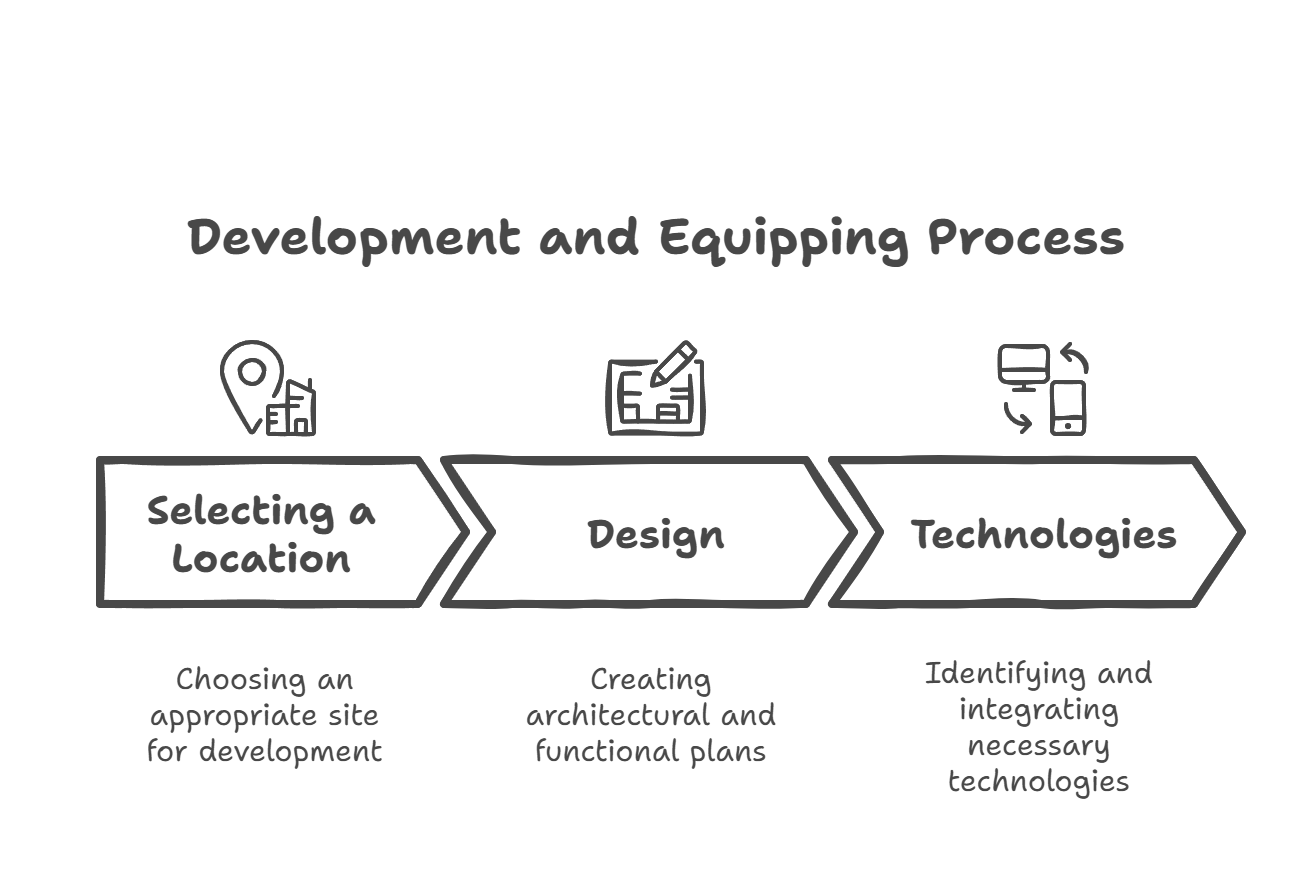
You need to pay attention to how your brand is perceived. Most notably in the areas of design, location, and technology.
1. Selecting a Location
The location of any business plays a role in its success, including casinos. For land-based casinos, choose a destination that is easily accessible. In other words, ensure it has high foot traffic. Make sure it is close to urban centers or tourist attractions. For online casinos, select a location with favourable gambling regulations.
2. Design
Ensure your casino design reflects the overall brand identity. Most importantly, let it appeal to your target audience. If you’re operating a physical casino, make the layout inviting. From the gaming areas to the entertainment spaces and dining options. Use colors, lighting, and decorations that improve the ambiance. For an online casino, incorporate user-friendly interfaces, visually engaging themes, and seamless navigation.
3. Technologies
Invest in the appropriate technology if you want to stay ahead in this competitive gaming industry. Utilize advanced gaming machines, surveillance equipment, and cashless payment methods. Likewise, adopt robust gaming software for online casinos. Use secure payment gateways, advanced encryption like SSL security, and reliable servers to handle traffic. Lastly, try extended realities or blockchain technology to boost reliability.
Further Support and Client Engagement
Build rapport with customers by offering excellent customer support. 24/7 support through live chat, email, and phone will allow players to address concerns. Train agents who understand casino operations to guarantee professional assistance. Leverage social media and an FAQ section for a timely response. Use data analytics to offer personalized customer support. Plus, encourage players to provide feedback and use it to improve your services and boost a loyal customer base.
To Sum Up
Opening a casino is a complex process. It requires careful planning and adherence to local laws. As a result, understand the legal requirements. Obtain the necessary license, secure financial backing, and follow a comprehensive casino business plan. True, you will experience bumps along the way. However, you will achieve long-term success if you continue to refine your offerings to boost player satisfaction.
Comments