


IWD: Accelerate action and the reality of the Times

 Quick Read
Women continue to demonstrate revolutionary growth in various industries, communities, and systems. They are also at the vanguard of advancement, from spearheading groundbreaking scientific research to breaking new ground in technology and promoting social justice.
By Yinka Adeosun
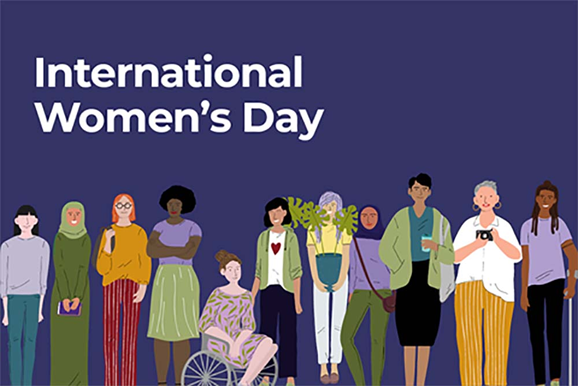
March 8 is set aside every year to celebrate womanhood. On this day, and throughout the month of March, the world recognises the contributions of women and reflects on their efforts towards gender equality while raising awareness and promoting their empowerment. The theme for this year, Accelerate Action, is both an admonition and a reminder that while strides may have been recorded in attaining this goal, there is still a long way to go.
Women continue to demonstrate revolutionary growth in various industries, communities, and systems. They are also at the vanguard of advancement, from spearheading groundbreaking scientific research to breaking new ground in technology and promoting social justice. The banking sector in Nigeria, for example, led by women, continues to experience groundbreaking shifts. With 11 female Chief Executive Officers (CEOs), Nigeria stands as a beacon of gender diversity in Africa’s financial space.
Across the globe, women now hold about 29% of executive roles. While this seems progressive and indicates a gradual positive shift from the past, women are still underrepresented compared to their male counterparts. In Nigeria, although they constitute 49% of the population, women remain grossly underrepresented in vital economic sectors. The average percentage of women at the executive level is only 20%, despite driving 70% of informal trade.
It is heartening to see Nigerian women following in the footsteps of the first female Vice-Chancellor, Prof. Grace Alele-Williams. An increasing number of Nigerian women are also demonstrating scholarly and administrative acumen in the education sector. At present, out of the 270 approved universities in Nigeria, there are only 13 female vice-chancellors—a paltry 4.8%. Several factors contribute to this low number. Women contend with responsibilities on the home front. Marriage and motherhood tasks consume the time they would otherwise dedicate to advancing their career goals and attaining desired heights.
Gender parity remains a distant dream. At the current pace, it will take over a century to achieve gender equality. Isn’t it puzzling that while women constitute about 51% of the electorate, they are least represented in the political arena? For instance, of over 15,000 candidates who contested the 2023 elections, only about 1,553 (10%) were women. Of these, only a meagre 72 emerged victorious. Imagine having only seven female deputy governors out of 36, four female senators out of 108, and 15 female lawmakers out of 369 in the House of Representatives. Others were elected to various state houses of assembly. Believe it or not, as of today, in 15 state houses of assembly across Nigeria, there is not a single female lawmaker! Largely due to religious and cultural reasons, women are rarely considered for political positions. And where they are preferred, they are often treated with some form of disrespect or disdain.
Accelerating action to close these gaps, therefore, means promoting and enabling more policies that encourage female leadership in decision-making positions. Moreover, beyond mere aspirations, policies must be implemented. This may not come easily because our patriarchal culture, which is deeply ingrained, remains dominant, even among women.
Women have, at times, remained their own worst enemies. Some women are often used to attack others when their rights are trampled upon. It is time to not just talk about these issues but act—and act fast. This is where men and women alike need to accelerate actions and liberate women who are shackled by male dominance. Children should be raised without gender biases that place females at a disadvantage.
The level of education and enlightenment among females is still regrettably low. Shutting down schools for a whole month, for instance, due to some religious practice, does not help such advocacies. Sadly, such myopic influences are louder and often overshadow rational ones. Empowering and educating women must be given adequate priority.
The celebration of womanhood is still largely an elitist agenda. Most women living in rural areas are neither aware of International Women’s Day nor understand its significance. Like most international observances, the day came and went like any other, without any significant impact among most women.
Gender equality is not just a women’s issue; it is a societal goal. Governments, businesses, communities, parents, and men all have critical roles to play in promoting inclusivity. Together, we must challenge biases, create safe and equitable environments, and champion female leadership to foster a fair world.
Women remain major stakeholders in the development of any sane society. Thus, relegating them to second-class status is a misnomer that must be robustly remedied. If the development of our society is a priority, then we must also accelerate actions to eradicate gender discrimination and make it a thing of the past. This is beyond what a single day or month can achieve.
Adeosun writes from Asaba, Delta State, Nigeria.
Comments