


Why I made “When Nigeria Happens” – Filmmaker, Ema Edosio-Deleen

 Quick Read
I really hope that a day will come when we can shoot on the streets of Lagos without somebody disturbing us. I really hope that day will come when you can step on Obalende Bridge and not have 24 boys chase you
By Paul Dada
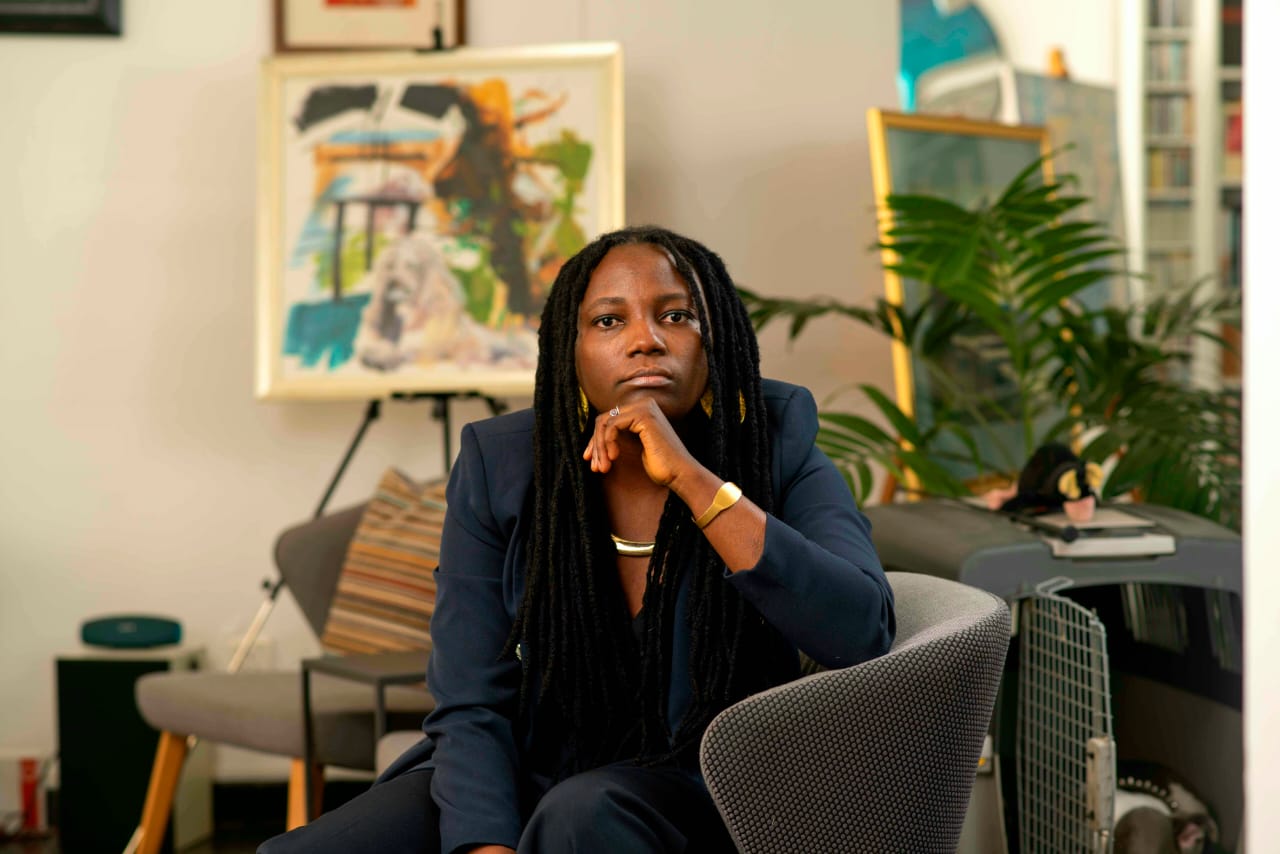
Ema Edosio-Deelen is a Nigerian filmmaker. Recently, she spoke to some journalists, including P.M.News Deputy Editor, Paul Dada, about her latest movie, “When Nigeria happens,” which addresses the struggles, trials and the tenacity of the Nigerian youth in a tough socio-economic situation.
Tell us about your background and why you went into filmmaking
I studied Computer Science at the Olabisi Onabanjo University. I fell in love with the music videos that were made at that time by the likes of P-Square, and Sonny Nneji. I graduated from the university in 2006. But in 2005, I had my IT and I went to a production company. And that was where I fell in love with filmmaking. Then I went back to school to finish my education. After then I came back into the industry.
I worked for Hip TV. I worked with Clarence Peters. I worked as a video Journalist for the BBC. And I also worked as a video journalist for other stations like Bloomberg, DW, and then I finally decided that I wanted to make films.
Before now, did you make films independently?
I made documentary films for news network. Documentary films as we know it are based on reality. So I had a taste of it.
You know how creative people go everywhere. So, while making documentaries, I would also freelance and make films for Ebonylife TV. While I was making Films for Ebonylife TV part time, I directed a series called the “Governor.” I also directed a series called “Skinny Girl in Transit” for Ndani TV.
While I was doing that I was also working as a freelance journalist. So I would go into the streets and I would see regular, everyday people. And I said I wanted to make stories about everyday people. I was blessed and privileged to make high budget, fancy films but I was very interested in the people I saw everyday and that was when I said I wanted to make my kind of films that feature that Nigerians in their homes and their everyday lives.
What was your motivation for making “When Nigeria happens”?
I made “When Nigeria happens” because I had a conversation with a security guard and he told me earned 30 thousand naira monthly to feed a family of two; and he worked on the island. And I kept wondering, “what would break a man, what is that point that would break a human being to want this?” And you would find out that it is a lot of Nigerians’ story. And it is that question that brought the idea of the film. My films are very based on what I see and what is going on around me. And I also would notice, I love Jazz. Even though I cannot dance, dance is my main thing. And there is this growing contemporary movement in Nigeria. When I say Contemporary, it’s not ballet, it’s an infusion of everything, a fusion of Afrobeat, hip-hop, ballet. It’s a fusion of everything to form something unique. So. there’s a growing movement and then I’d see these young talents come on the scene, do amazing things and after a while they’d disappear. So I started talking to a lot of people who had given up on their dreams and then the idea for the film came. And it’s exploring that intersection between survival and fighting for your dreams.
What is the thing you want to project with this film?
Hmm, the film has so many layers and it is a film about young people. And one of the things that I really emphasize is, especially in this society, talent is not enough. You really have to be prepared for your future and that’s one of the things that I explore. Another thing that I explore is how the system can break a human being. Like I say to myself, there are a lot of talented singers in the bank in Nigeria. There was a time I went for a karaoke and I saw these people in suits who had closed from work and they had amazing voices and they were singing. I celebrate the strength, I celebrate the fight of these individuals and it’s just a way to say I understand why you gave up on your dreams.

How did you capture the essence of Nigeria in this story and what message do you hope that the audience can take away from the portrayal of that? Did you try to capture other states besides Lagos?
Oh yes, I think Lagos is a character in my film. You step into Lagos, you know Lagos has its energy. If you travel out you’re like “I want to come back to Lagos,” and there’s a method to the madness. So for me I filmed the dancers on the streets of Lagos dancing. We shot in Abule-Egba. we shot in Makoko. we shot in Obalende and on Carter Bridge. We shot everywhere in Lagos. It’s 90% Lagos. We were able to capture the agberos that were giving us wahala. They came and started acting in our film too. So we were able to capture that.
The film is about the idealistic youth. You know when you’re young, you think you can do everything, education doesn’t matter. I hope that young people would take this: it’s not just about having talent. You have to go to school. You have to not do drugs. You have to really be ready for the system. And the second thing that I hope that people would see is the everyday man on the street. w I think people are a result of the system. The system has broken a lot of people. And for me I just wanted to hold a mirror up to the society to say this is our lives, why do we live like this, and start a conversation.
Give us a synopsis of the movie

Of course yes. The movie is about a very talented dancer, Fagbo. He and his rebellious friends, dancing on the streets of Lagos. They are very socially conscious and dancing with no care in the world, hoping that their video would “blow” and they would make money, But Fagbo’s mother has Alzheimer’s. He takes her to the hospital and he goes to withdraw money from the ATM. But she wanders off and he comes back but can’t find her. So he goes most of the time looking for his mother on the street of Lagos and in that searching for his mother, he comes to terms with the fact that it’s either his dreams, or he takes care of his mother. And in the end he has to give up everything just for his mom.
Are their A-list actors in the movie?
No, because it’s a dance movie. I knew I couldn’t work with anybody but talented dancers. There’s a contemporary dancer called Qudus Onikeku. He’s Africa’s biggest contemporary dancer and I went to his dance school and partnered with him. I said to him I wanted work with his dancers. And I did my auditions there and I found the most amazing young talents. I think I have a history with working with unknown faces. So I kind of have the ability to spot great talents and I saw six amazing dancers. But we had some A-listers in the film as sub leads. I had Mr Alex Usifo, who did amazing. And I had Jidekene Achufusi who did great. I had Seun Ajayi. And I also had Ego. She used to be Lagbaja’s backup singer, she’s amazing. She was the mother in the film and she over delivered. And the beautiful thing about Ego’s role was that there was no dialogue for her but she carried the emotions of this mother .
When will this film be out to the public?
Okay, we are looking at July this year. We are exploring different strategies. I’m not just only releasing the film. I also have a masterclass on how I made the film. What I also want to do with the film is that I also want to tour the film like a Johnny Drille’s room. I do a lot of private screenings now. I’m still in talks with distribution for cinemas. But in the meantime, I’m having private screening and releasing the masterclass.
What were some of the challenges you encountered while trying to put the film together?
Nigeria happened to us, where we were shooting. The strike started, the NLC strike started. And that was when we were shooting. I had a crew of 30 people and we were moving them from the Island to Obalende, to everywhere; so it was quite stressful for us. Another thing is like for all filmmakers, funding was a major issue for us. We did not have a massive budget. We had to work with budget limitations. Those were the two major problems that we encountered.
I really hope that a day will come when we can shoot on the streets of Lagos without somebody disturbing us. I really hope that day will come when you can step on Obalende Bridge and not have 24 boys chase you. In fact there is a fun story. When we were on Carter Bridge, we said we’d shoot on Sunday that they would not be there. We got there on Sunday day by 7 am. As we were shooting, we just saw like 20 boys coming. All of us hopped on the bus like. It was so funny. We ran away. We had such little time to start negotiating with the touts because that was our final day. And we had to get an important shot in Abule-Egba. So we just got everybody on the bus and moved.
Are you still looking forward to another one after this?
Oh yes, I’m about to make my 4th film “Azaman.” And it’s about yahoo fraudsters.
Comments