



INTERVIEW: Why we’re fighting illegal Reclamation in Lagos – Alebiosu

 Quick Read
We've put standards in place, what we expect. It's no longer the Wild West. Some of the functions that we had lost as a ministry, we've practically regained all of them.
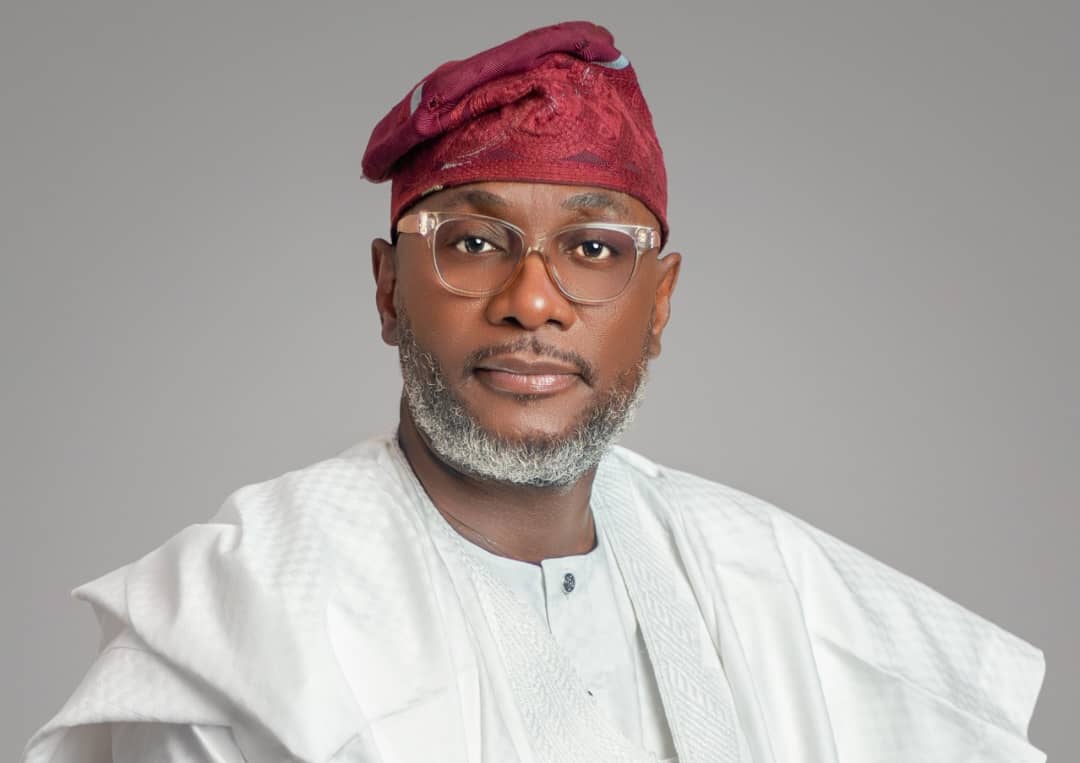
In an interview with Kazeem Ugbodaga, Lagos State Commissioner for Waterfront Infrastructure Development, Hon. Ekundayo Bush Alebiosun, shares insights on repositioning the ministry in alignment with Governor Babajide Sanwo-Olu’s T.H.E.M.E.S Plus Agenda, addressing challenges, and outlining plans for a transformative stakeholders’ summit.
Since your resumption as commissioner, what have you done to reposition your ministry in line with Governor Babajide Sanwo-Olu’s T.H.E.M.E.S Plus Agenda?
When we got here, it was hot, let me put it that way, so we had to do a total rearrangement. And of course, we came with the experience that we had at the National Assembly. This won’t be the first time I have found myself in this kind of position. Ordinarily, when you’re appointed to do a job, it’s not meant to be fun; it’s meant to turn things around. Every time one is appointed, you must turn things around. I remember, one time after leaving the House of Reps, some people said, oh, of course, they were from the opposition in my constituency, they said the representative after me did better than me. And obviously, I think they were expecting a certain response, or they wanted a response, but I decided not to give them the joy of that response they actually wanted from me. So, I asked them if my successor did better than I did. They said, yes. I said, Is he meant to be a challenge? Everybody, including my father, is praying that I do better than he. I’m praying that my children will do better than I. So if I did better than the people who had previously represented our constituency in the past, and you are now saying this, he did better than I, then that means there’s progress. If I had ended up still doing better than he did, then it means that they should yank him off and return somebody who did better. Similarly, using that narrative, I would say that there was a need for a turnaround to establish ourselves, to show progress in the same vein, in the same way, and that is what I am doing.
The first thing we had to do when I came on board was to clean the house first. I was wondering why certain things were taking so long, and I realized that we didn’t have a Survey Unit, so I insisted on creating it, and instantly, it was like bringing a fast-paced midfielder into a team that was struggling. And things began to change instantly. We merged Special Projects and Engineering and Building Services (EBS). I got to understand everybody; we had to bring in a lot of cultural and emotional intelligence. I let them realize what I expect of them, accorded them enough respect, identified their strengths, and each individual’s strengths and weaknesses. We didn’t put a striker in the role of a defender, so the moment we did the right things, we started seeing things change for good.
We’ve never had a stakeholders’ summit before, but I can confirm to you now that we are going to hold a summit very soon. We have approval for it; we just want to get a particular date so that Mr. Governor will be very much available for it because it is not the Ministry of Waterfront’s event, it is Lagos State’s event; it is a state event being championed by the ministry.
Considering the mandate of your ministry, are there any challenges or issues?
We had a few challenges. I would say that, like I said in one of our interviews before now, the Ministry of Waterfront is like an eagle, but it has been turned into a kiwi. The strength of an eagle is its ability in its sight and its flight, the height at which it soars. But we felt it had been turned into a kiwi, and a kiwi is a bird that cannot fly but runs on the ground.
But with all that has happened so far, I would say we now have our feathers back as an eagle. Of course, we’ve been able to put up a battle against illegal reclamation.
First, a lot has been done at the back end regarding administrative things. Coming on board, we had files that were pending as far back as 2015, and all of these have been cleared at the moment. I don’t think there’s any contractor that we met on the ground that is yet to be settled. I didn’t want to embark on a new project when we hadn’t cleared our outstanding or existing liabilities, but now all of them have been sorted. Reclamation works that seemed to be in limbo, we’ve cleared them; there was a particular one that was terminated. We came to the roundtable with the contractor, resolved the issues that they didn’t put in place that had caused the termination. We now have a new agreement with them. We realized on our part that we need to do more monitoring. We felt in the past we had let them do what they needed to do as regards reclamation and then come back to report to us, but in this case, I say you’re not going to report to us, we’re going to be monitoring these things together.
We’ve put standards in place, what we expect. It’s no longer the Wild West. Some of the functions that we had lost as a ministry, we’ve practically regained all of them. We recently went to answer the State House of Assembly on a petition against us. One thing I have insisted upon was that I would not go one inch outside of what the law that guides the ministry.
You earlier mentioned a stakeholders’ summit. What do you intend to achieve with it, and what is the agenda of the summit?
Well, for the summit, we’re talking to people who understand Lagos very well. We are considering bringing experts to come and talk with us; they have a lot of data, they have an in-depth understanding of our waters, probably even better than we do. They have data; they have reports and many things like that, so some of the things that they have discovered would be important for them not just to come and speak about it, but for all stakeholders to hear and understand the dangers they’re going into. Of course, as we know, there is no illegal reclamation going on in any community that the community is not aware of it. Where did they come from?
You can’t wake up in the morning and see water, and then you wake up the following day and suddenly see reclamation works on the ground. We are also engaging the communities and letting them know that what they are condoning will put their lives in danger. When you look at Okun Ajah, for example, we went to Akodo Ise to engage with the stakeholders. During our engagement, we asked the traditional ruler (Baale), who said he went to school there, where is your school? The school was already almost a kilometer into the water. The importance of addressing coastal erosion is one of the things that will come up at the summit. Sometimes, when you do not see or experience something firsthand, there is always that tendency not to understand it in depth, and when you do not understand it in depth, you will probably not apply it within a particular time what you ought to do. So, we are looking at bringing all stakeholders together, known and unknown stakeholders, people who participate in the area of dredging. We’re identifying all the issues that put our lagoons under pressure. We know people who dump waste: chemical waste, all sorts of bio-waste. We have people who are on top of our waters, who regularly pollute it by toileting on them.
There were cases where tilapia fish were dissected in the Makoko area, and they saw fresh human faeces inside it. This is because the fish were feeding on the faeces. Some will throw it away, some will clean the faeces because they can’t afford to discard it to buy a new one. So there are so many things. What do you think will happen when they consume things like that? And some people are not even aware of the cleaning techniques of fish. That is why some fish, when you eat it, it will taste bitter; it means it hasn’t been cleaned very well. So, imagine if it had faeces in it. There are people with such experiences. We are putting everything on the ground. It is going to be an open door where we discuss everything, we address it, take it up, and we push it beyond that.
At the summit, all the stakeholders will be present. We will show them the danger of illegal dredging, agree on what we would need to agree to, come up with a communiqué, and that’s what we would run with. It will help us even in the area of defining our policies and things like that. I’ll cite you an example: when we talk about dredging, dredging is sucking or pumping of some things, pumping of sand, of course. They dredge for two reasons, either to reclaim or to stockpile. Assuming we want to build this building, we go there and tell them, we need two tippers, we need ten tippers, we need numbers of so, so, so tons of sand. Along the line, we got to realize that the lagoon was not treated as expected to be treated. We see a lot of people reclaiming anyhow.
How is the ministry tackling the issue of illegal reclamation?
So, recently, what we did was, we got approval from Mr. Governor so it can be a policy of the government to make sure that anybody caught in the act of illegal reclamation, first of all, would be arrested. Secondly, they would forfeit half of what they have reclaimed to the state government, and the other half, they would pay penalties in the value of the half, based on open market value of it. For example, if they illegally reclaim 100 hectares, 50 hectares is going to go to Lagos State automatically, and the other 50 hectares, the value will be looked at. The market value is 100 billion; open market value, and the fair market value, which is what government usually deals with, is say 50 billion. What the culprit will pay is the price of open market value. It might sound draconian or might sound wicked, but it’s been put in place to protect all of us. You might think I live in Sango, there’s no water, I live in Agege, I live in Ikeja, there’s no water running through there, but we are all feeling the pain because the illegal dredging happening out there, and if it continues, it will disturb and affect all of us. When you reclaim illegally, you disturb aquatic life. When you dredge illegally, you disturb aquatic areas. Why would fish be expensive due to the price of the dollar? The same fish we pick out of our waters. It’s not the price of the dollar that’s caused that. It’s illegal reclamation being carried out, causing continuous disturbance and destroying our aquatic areas. Fishermen will come back and tell you what it’s supposed to have sold to you for 10, for 5,000 Naira is now selling for some ridiculous amount of money. With this action, even though you don’t live by the waterside, you would still feel the impact. Every time they narrow the lagoon, what do we think happens? At a point, salt water will mix with fresh water, and of course, you know what that means.”
Comments