



Tinubu pushes OECS Visa Waivers as Nigeria, Saint Lucia cement diplomatic ties

 Quick Read
He electrified the audience with a groundbreaking offer: visa waivers for OECS diplomatic and official passport holders. “I respectfully urge a reciprocal gesture to enable smoother movement of officials and foster closer institutional cooperation,” he declared, signaling Nigeria’s openness to seamless official exchanges.
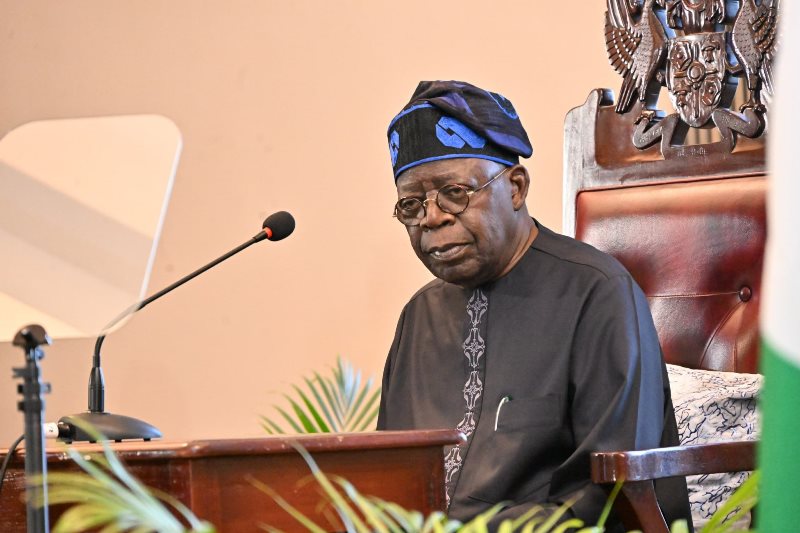
In a landmark address, President Bola Tinubu announced the establishment of diplomatic relations between Nigeria and Saint Lucia, igniting a new era of African-Caribbean unity.
Speaking at a joint session of Saint Lucia’s Senate and House of Assembly in the William Jefferson Clinton Ballroom, Sandals Grande, Gros Islet, Tinubu hailed the move as a “symbolic bridge that will provide a gateway in fostering closer ties between us.”
Joined by leaders from Grenada, Antigua and Barbuda, St Kitts and Nevis, Dominica, Montserrat, Saint Martin, and Saint Vincent, Tinubu proposed a Joint Commission or Political Consultation Agreement to streamline cooperation with the Organisation of Eastern Caribbean States (OECS).
He electrified the audience with a groundbreaking offer: visa waivers for OECS diplomatic and official passport holders. “I respectfully urge a reciprocal gesture to enable smoother movement of officials and foster closer institutional cooperation,” he declared, signaling Nigeria’s openness to seamless official exchanges.
Tinubu’s address pulsed with the spirit of Pan-Africanism, emphasizing shared history and resilience forged through the transatlantic slave trade and colonial struggles.
“As one who feels a profound kinship with our shared African heritage, I am fully aware of the historical currents that have bound us together, currents shaped by the transatlantic slave trade and colonial subjugation, but out of which emerged a shared cultural identity, an indomitable resilience and a legacy of aspiration,” he said.
He reaffirmed Nigeria’s commitment to OECS, stating, “This occasion serves as a testament to the enduring ideals of Pan-Africanism and the unyielding desire for unity and collaboration among peoples of African descent.”
Economically, Tinubu positioned Nigeria as Africa’s largest market, inviting OECS nations to tap into trade, investment, and joint ventures in agriculture, manufacturing, and services.
“Together, we can leverage our respective strengths to attract investment, create jobs, and foster joint ventures that benefit both our peoples,” he urged, highlighting Nigeria’s vast resources and market potential.
Education and capacity-building were central to his vision. Tinubu offered full scholarships to OECS students to deepen cultural ties and proposed maritime university collaborations alongside extending Nigeria’s Technical Aid Corps (TAC) programme.
“I strongly advocate for educational exchange programmes between Nigerian and OECS maritime universities. Such partnerships will build technical capacity and foster mutual understanding and long-term academic collaboration,” he said, adding that joint scientific research on health challenges could further strengthen ties.
Addressing the existential threat of climate change, Tinubu called for collaborative research on adaptation, sustainable agriculture, and disaster preparedness.
“By sharing research findings on climate impacts, adaptation strategies, and disaster risk management—including a rise in sea level and outbreak of hurricanes—we can deepen our understanding and enhance our collective resilience,” he emphasized.
Tinubu’s Afrocentric foreign policy shone through as he celebrated Nigeria’s role in global Black solidarity.
“Nigeria, as the most populous nation on the African continent and the foremost Black nation globally, has long stood at the vanguard of advocacy for the dignity and advancement of Black people worldwide,” he said, citing Nigeria’s leadership in the African Union and its recognition of the Caribbean as its sixth region.
He underscored Nigeria’s cultural prowess, from Nollywood to music and literature, as a vibrant link to the diaspora.
Quoting Marcus Garvey—“Get organised and you will compel the world to respect you”—and an African proverb, “If you want to go fast, go alone. If you want to go far, go together,” Tinubu rallied the audience of over 300, including OECS Heads of Government and Nigerian expatriates, for unity.
“Let us journey together, united in purpose and fortified by our common heritage,” he concluded, setting the stage for a transformative partnership between Nigeria and the OECS.
Comments