



Lagos Assembly advances landmark Railway, Energy Bills to reshape State infrastructure

 Quick Read
Leading the debate on the Railway Corporation Bill, Majority Leader Hon. Noheem Adams, who also sponsored the private-member bill, described the legislation as a historic milestone in the state’s infrastructure development.
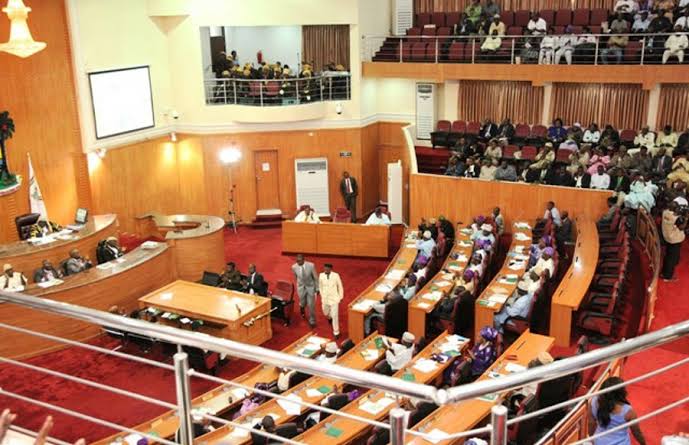
In a bold move aimed at transforming Lagos State’s transportation and energy sectors, the Lagos State House of Assembly on Tuesday advanced two landmark pieces of legislation-the Lagos State Railway Corporation Bill and the Ibile Energy Corporation Bill, as both scaled second reading during plenary.
Leading the debate on the Railway Corporation Bill, Majority Leader Hon. Noheem Adams, who also sponsored the private-member bill, described the legislation as a historic milestone in the state’s infrastructure development.
“This bill will make history in the development of transportation in Lagos,” Adams declared, adding that it positions Lagos to become the first state in Nigeria to establish a state-owned Railway Corporation.
Citing the Fifth Alteration No. 65 to the 1999 Constitution (as amended), which transferred railway matters from the Exclusive Legislative List to the Concurrent List, Hon. Adams explained that the constitutional amendment empowers states to now legislate on railway development.
Outlining the bill’s structure, he stated that Section 2 of the proposed law mandates the provision of effective and reliable railway services across the state. Section 4 proposes the establishment of a Governing Board to oversee the Corporation’s operations, while Sections 5 to 14 delineate the board’s powers, duties, and responsibilities.
“This bill sets the foundation for a railway system aligned with global best practices,” Adams said.
“With South Africa boasting over 20,000 kilometres of rail lines and Nigeria at just under 4,000 km, Lagos, as Africa’s second-largest city economy after Cairo, must lead in delivering innovative rail transport solutions.”
On his part, Speaker of the House, Rt. Hon. Mudashiru Obasa, commended the sponsor for his vision, describing the bill as timely and forward-looking.
“The global trend is toward deregulation and privatization of public corporations,” Obasa noted.
“Governments around the world are embracing partnerships to enhance operational efficiency. We must consider aligning with this approach to attract investment and boost performance.”
Following deliberation, the House committed the Railway Corporation Bill to the Committee on Transportation with a directive to report back within two weeks.
Similarly, the Ibile Energy Corporation Bill was committed to the Committee on Energy with the same two-week timeline, as the House signaled its commitment to strengthening energy governance and infrastructure in the state.
If passed, both bills are expected to usher in a new era of sustainable infrastructure development, positioning Lagos as a national leader in state-driven railway and energy innovation.
Comments