


How Razaq Olushola Ajala is building a legacy of educational transformation in Odi-Olowo/Ojuwoye

 Quick Read
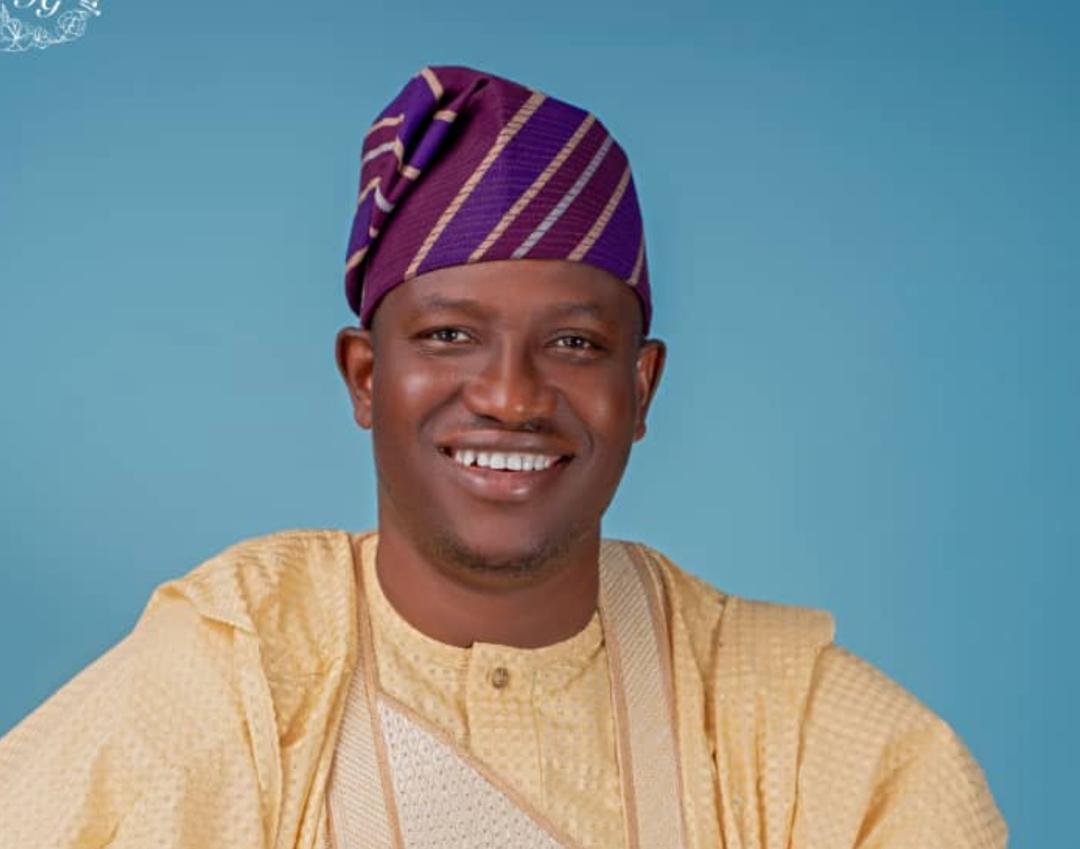
In a nation where access to quality education is often seen as a privilege rather than a right, the Chairman of Odi-Olowo/Ojuwoye Local Council Development Area (LCDA), Honourable Razaq Olushola Ajala, is proving that bold, visionary leadership at the grassroots can redefine possibilities.
By Gbolahan Williams
In a nation where access to quality education is often seen as a privilege rather than a right, the Chairman of Odi-Olowo/Ojuwoye Local Council Development Area (LCDA), Honourable Razaq Olushola Ajala, is proving that bold, visionary leadership at the grassroots can redefine possibilities.
Ajala has placed education at the core of his administration’s agenda, driven by a deeply personal conviction that “the children of nobody can become somebody.”
“Our investment in education is to make sure that the children of nobody can become somebody,” Ajala stated. “Because failure to do that may turn some of them—those who cannot afford private tuition—into bandits, terrorists, and what have you.”
Ajala’s educational intervention began with a transparent and merit-based scholarship initiative. Every year, the LCDA procures 250 General Certificate of Education (GCE) forms for brilliant but financially disadvantaged students. The selection process, supervised and conducted by the Nigerian Union of Teachers, prioritizes merit over political connections.
“You don’t need to know the chairman or any government official to benefit,” Ajala affirmed.
Eighty percent of the slots are strictly based on performance, while the remaining 20 percent are allocated through community stakeholders to ensure inclusiveness.
In addition to this, the LCDA has consistently awarded bursaries to undergraduate students. According to the chairman, over 700 undergraduates have benefitted from the scheme in the most recent cycle.
“This is something we’ve sustained year after year, and we are committed to continuing it,” he said.
Free ICT Training for a Digital Future
Recognising the importance of digital literacy in today’s world, the council established two state-of-the-art ICT centres in Monat and Mushin. These centres provide professional training—worth as much as ₦800,000 per participant—completely free of charge.
“Most private schools now offer 3D-based knowledge. For students in public schools to be globally competitive, we must invest in ICT infrastructure,” Ajala explained.
So far, over 5,000 students and graduates have undergone training, with more than 3,000 successfully graduating with market-ready digital skills.
Beyond educational programmes, Ajala’s administration has made significant investments in school infrastructure. According to him, every primary school in the LCDA has received one form of intervention or another—ranging from classroom blocks and toilet facilities to fencing and libraries.
“We conducted a needs assessment with school leadership to ensure that every intervention directly addresses pressing needs,” he said.
Though secondary schools fall outside the statutory jurisdiction of the LCDA, Ajala’s administration has also extended support to them. This includes capacity-building programmes, the provision of boreholes, generators, and financial support for inter-house sports events.
Another significant achievement under Ajala’s leadership is the introduction of free student transportation. The LCDA purchased two 56-seater buses to ease the financial burden on families and ensure students get to school safely and on time.
“Our study showed that an average family spends ₦500 daily on transportation alone. We decided to step in with a sustainable solution,” the chairman said.
The buses also serve educational excursions and other school-related events during holidays.
To keep students engaged during long school breaks and reduce the risk of youth restiveness, the council runs free ICT programmes during vacations.
“An idle mind is the devil’s workshop,” Ajala noted. “Some of these courses cost over ₦400,000 in private institutions, but we offer them for free.”
At the heart of Ajala’s mission is a vision to ensure no child is left behind, regardless of their socioeconomic background.
“We must be deliberate in ensuring that all our young people—regardless of who their parents are—have access to quality education,” he emphasized.
“So that the children of our gatemen do not end up becoming the gatemen of our children.”
A Legacy in the Making
Honourable Razaq Olushola Ajala’s leadership in Odi-Olowo/Ojuwoye LCDA is a compelling example of how local governments can drive lasting change in education. From scholarships and bursaries to digital literacy and infrastructure development, his administration is not just building classrooms—it is building a future.
As these efforts take root, the harvest is already showing promise: a generation of children now better equipped to compete, thrive, and take their rightful place in the world.
Gbolahan Williams, an ICT Specialist, wrote in from Ilupeju, Lagos.
Comments