


Is this what we do when we aren’t sleeping? A first listen to Tomzy’s Insomniactive

Emmanuel Daraloye
There’s a certain charm in titling a project Insomniactive, a coinage that suggests sleeplessness not as a burden, but as a badge of relentless ambition and excitement. Tomzy, a rising voice in the Afrobeats scene, uses this concept to frame a project that mirrors the emotional and mental state of young men navigating grind culture, nocturnal hustle, party life, and fleeting romance. And for a moment, particularly in the first track, you believe him.
I stumbled on Insomniactive one random evening when a friend queued it up on the aux. What first caught me wasn’t the name or the hype (there wasn’t much), but the vibe, a sound rooted in Afrobeats, confidently Nigerian, unapologetically local in tone despite being made by an artist who’s been in the UK for three years. There was something admirable about that. In a world where global sounds often dilute local flavour, here was Tomzy, holding on to his roots. At least sonically.
The project, titled Insomniactive, suggests a life of sleeplessness and constant motion, perfectly capturing the spirit of hustle that young Nigerians, both at home and abroad, can relate to. Thematically, the album spans ambition, love, partying, and self-assertion. And in the first track, Don’t Cry, it delivers.
There, Tomzy threads together perseverance, sacrifice, and emotional vulnerability with surprising lyrical dexterity. Lines like “no kalku late, always kalku fast” blend street wisdom with a clever play on language. There’s imagery. There’s a metaphor. There’s even a beautiful figurative link between one’s source (symbolized by “mama”) and the divine. It’s evident Tomzy can be a poet and a philosopher if he chooses. But the song falls into the same trap that haunts much of the project: repetition. The phrase “so me tell my moma, no no no don’t you cry” circles back so frequently that it overshadows the core message, inadvertently turning what could’ve been a hustler’s anthem into something more sentimental and scattered.
Then comes Body So Bad, where the project shifts sharply from hustle to hedonism. It’s a flirtatious, feel-good track soaked in club-night energy. The verses are playful, laced with lines like “Ma koba mi oh, the way you put that big bunda all over me” (be gentle with the way you put your ass on me”, offering up dance-floor imagery with an unmistakably Naija inflection. The hook, “Ti n ba nowo shoma jubadi” (would you dance if I spend?), is catchy, rhythmic, and repeatedly deployed. But here too, repetition takes the front seat, while songwriting takes the back. What we get is less of a story and more of a chant—a song made for vibes, not reflection. The emotional depth that we saw in Don’t Cry is completely absent.
In the third track, Tonto Mix, Tomzy doubles down on bravado. There’s more money, more ego, and a bit more lyrical daring. Lines like “I just touch down Naija, 080” and “Shebi owo lo pari e” drip with local slang and returnee swagger. The flirtations are familiar, but the tone shifts from seductive to boastful. It’s clear Tomzy is enjoying himself here, screaming to every Nigerian that he is a UK returnee with some pounds to spend—but the lyrical structure continues to fall into the same pattern: short verses, recycled hooks, and surface-level expression. The energy is undeniable, but the writing rarely slows down long enough to say something new.
Then comes the fourth and final track—a pivot back to purpose. Tomzy re-centers on gratitude and hustle, almost as if waking up from the high of the previous two songs. “Talo shola? Oluwa ni shola; shaebi, Oluwa ni showo” (who creates wealth? God does!) is simple but poignant, reestablishing the spiritual thread introduced in Don’t Cry. It’s a fitting close. He’s shown us the grind, the party, the women, the money, and now, the source. It could have been a powerful conclusion, but the brevity of the verses once again limits its emotional weight. There’s reflection here, but it doesn’t fully land.
What becomes clear by the end of Insomniactive is that Tomzy knows the themes he wants to explore. He has the raw materials—a clear narrative arc, a cohesive sonic identity, and a cultural lens that feels grounded. But to make the leap from promising to powerful, he’ll need to resist leaning too heavily on vibes and repetition and dig deeper into the storytelling and songwriting that made Don’t Cry such a strong opening.
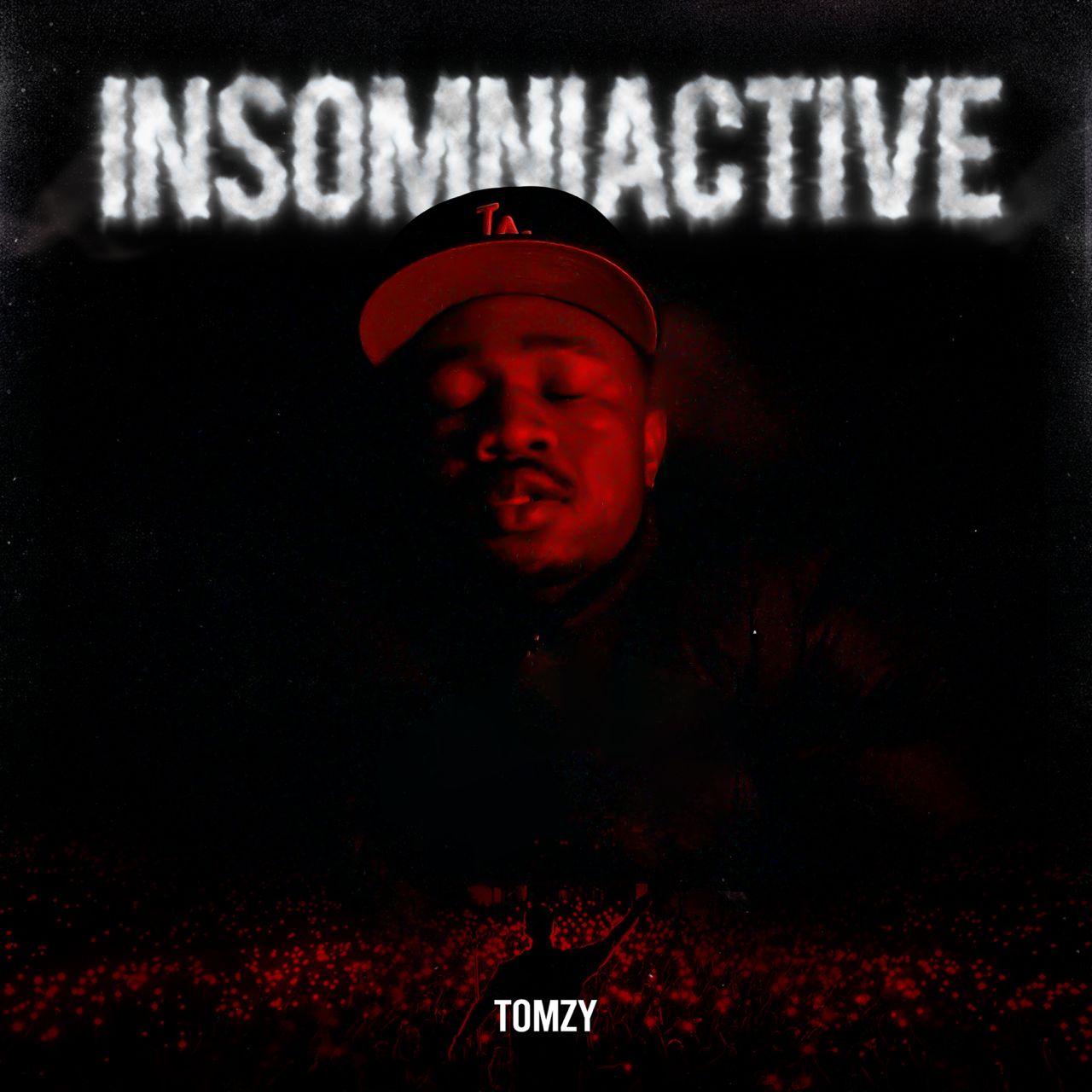
The album cover itself captures Tomzy’s posture as an artist: a cartoon version of him, shirt unbuttoned, middle finger up, eyes defiant. It’s bold, but not subtle. Much like the music, it asserts more than it explores.
Production-wise, the beats slap. No complaints about the vibe. But the mix often lets the instrumentals overpower the vocals, burying Tomzy’s presence and making it hard for any lyrical weight to land. With better engineering, the music could carry more impact, less noise, and more nuance.
Insomniactive is a spirited debut. Energetic. Relatable. But if Tomzy wants to carve a lane in the increasingly crowded Afrobeats space, he’ll need to reach deeper, into himself, into his stories, and into the heart of what makes sleeplessness not just active but meaningful.
Comments