


“I was taken to be Silenced”: Congolese banker alleges state-backed abduction, surveillance

 Quick Read
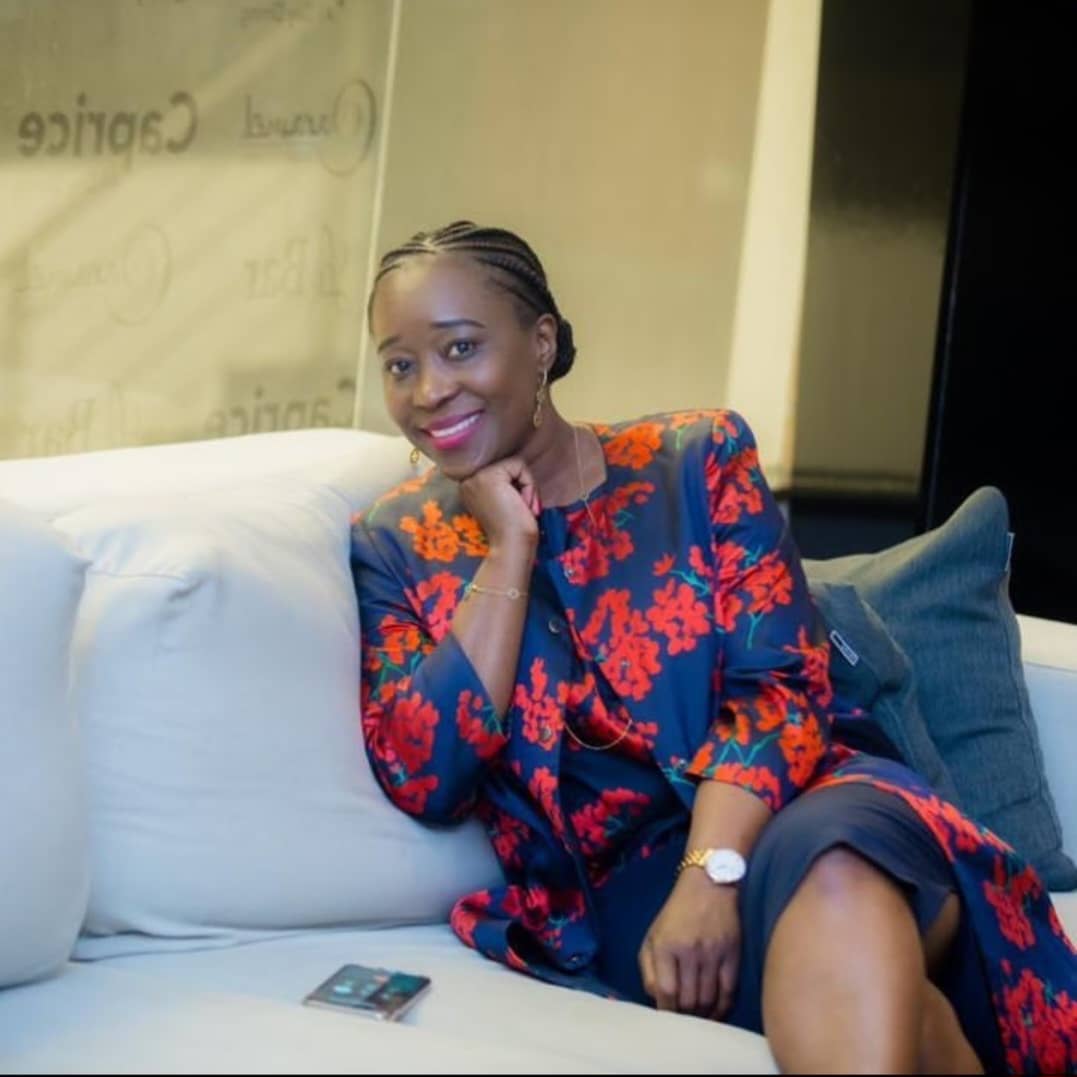
Before her disappearance, Gisèle Nebale was no stranger to the Congolese elite. Her banking career placed her at the centre of Kinshasa’s financial networks. But it was her personal relationship with a senior government official that, she believes, led to her detention.
On what was supposed to be a milestone in her career, Gisèle Nebale Busima walked into her office in Gombe, the administrative and diplomatic hub of Kinshasa, unaware that her freedom was about to be taken from her.
The former head of private banking at FBNBank DRC SA, where she served for six years, was preparing to sign a deal to finance the construction of grain silos across multiple provinces. The project, months in the making, was expected to boost food security in the Democratic Republic of Congo.
But instead of finalising contracts, she was taken away by four men. One identified himself as Colonel Ralph Muzimba. There was no warrant, no official charge, and no explanation.
“He said, ‘General Ndaywel wants to see you.’ Then they drove me away,” Nebale recalled. “That was the beginning of a nightmare I could never have imagined.”
She was held incommunicado for 45 days inside a building she later recognised as the Castello Hotel — an abandoned facility reportedly taken over by Congolese military intelligence and used as an unofficial detention centre.
No charges were ever filed. No lawyer allowed. No contact with family or the outside world. Despite being a dual Congolese-American citizen, no communication was made with the U.S. embassy.
Power, Politics, and a Broken Alliance
Before her disappearance, Gisèle Nebale was no stranger to the Congolese elite. Her banking career placed her at the centre of Kinshasa’s financial networks. But it was her personal relationship with a senior government official that, she believes, led to her detention.
Between 2017 and 2021, she was romantically involved with Patrick Muyaya Katembwe, then a national MP, today Minister of Communication and official spokesperson for the government of President Félix Tshisekedi.
According to Nebale, the relationship was not only personal but also strategic. She says she helped fund his 2018 campaign and was promised access to future government contracts. “It was never written, but it was understood. I helped, and in return, I would be included in development projects.”
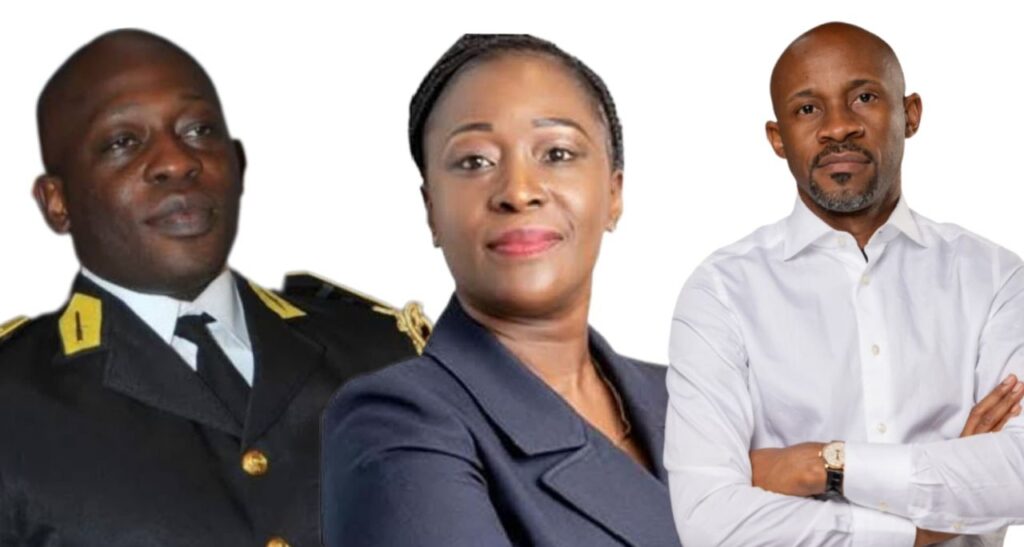
But after Muyaya’s appointment as minister, the relationship soured. She was excluded from a government royalties project she claims to have initiated, and communication between them broke down.
“He called me his ‘second wife’. But when I was no longer useful, I became a problem,” she said.
A Digital Trap: Surveillance and Defamation
In early 2024, Nebale says she began noticing signs of surveillance. Friends reported strange messages. Her phone behaved unusually. Personal photos and conversations were leaked.
“I suspected my phone was compromised. Later, I learned Pegasus had been used to spy on me.”
Pegasus is military-grade spyware developed by Israeli company NSO Group, often used by governments to target journalists, opposition leaders, and activists. According to Nebale, her phone was hacked to monitor her movements and access sensitive information.
She accuses her former partner, now a senior official, of directing state security services to target her. “They wanted to control me. They wanted to know everything I was doing. I was no longer their ally — I had become a threat.”
Nebale alleges that hackers from Nigeria and Kenya were hired to collect data on her and even impersonated her online, extorting money from her contacts. More than $4,000 was allegedly stolen in her name.
Inside Castello: 45 Days Without Rights
On September 30, 2024, she was detained and taken to the Castello Hotel, a former hotel now reportedly controlled by the military and national intelligence. She was held there until November 22.
“There were no official documents. I was told to stay in my room and not speak. I was watched day and night.”
Nebale describes the conditions as harsh. She says she fell ill and was denied access to medical treatment for days. No food, no light, no calls.
She was interrogated. Questions centred on her connections to Congolese generals, politicians like Corneille Nangaa and former President Joseph Kabila, and even foreign advisers.
“They accused me of being a Rwandan spy. Of having ties to opposition groups. It was absurd.”
She says the general overseeing her detention, whom she names as General Ndaywel, told her he was “waiting for orders from above.”
According to her, those orders came from Muyaya.
“He wanted to destroy me,” she said. “I was too independent, too connected, too visible. And I knew too much.”
The Second Attack: Public Discrediting
After her release, Nebale left the country for the United States, where she is now living with relatives. But the pressure did not stop.
Anonymous blogs and articles began appearing online, questioning her mental health, her credibility, and her past relationships. She believes this campaign is part of a coordinated effort to destroy her reputation and silence her permanently.
“I was told to lie. To say I was ill or on a spiritual retreat. But I refused. That’s when the attacks became public.”
She has filed complaints with the U.S. State Department, launched legal proceedings through her lawyers in Brussels, and contacted human rights organisations including Amnesty International or Clinton Foundation.
But the attacks, she says, have gone beyond the borders of Congo.
A Web of Lobbying and Private Pressure
In 2025, the Congolese government signed at least two lobbying contracts in the United States: one with Ballard Partners, valued at $1.2 million annually, and another with Scribe Strategies, valued at $840,000 per year.
These firms were hired to promote the country’s image in Washington. But Nebale claims they were used to track, intimidate, and attempt to silence her.
She alleges that Joseph Szlavik, head of Scribe Strategies, contacted her in Washington in July 2025 through a journalist. She says he tried to meet her under false pretenses and later organised surveillance of her movements.
“They’re using these lobbying firms like private intelligence tools,” she said. “This is not about the image of Congo. It’s about protecting one man and targeting his critics.”
According to Nebale, individuals associated with these firms searched her trash, took personal documents, and contacted people in her circle with threats.
“These are public funds. And they’re being used not for diplomacy, but for repression.”
The Congolese presidency announced the suspension of the contracts in April 2025. But Nebale says the activities continued unofficially.
A Case with Broader Implications
So far, no Congolese authority has publicly commented on her allegations. Patrick Muyaya has not responded to requests for comment.
But the story is gaining attention in diplomatic circles.
“This is deeply troubling,” said a European diplomat who requested anonymity. “It raises serious questions about how state power is used, and against whom.”
Legal experts say the case touches on international law, especially given Nebale’s dual citizenship and the cross-border nature of the alleged surveillance.
Her lawyers are preparing a formal complaint to be submitted to United Nations mechanisms in Geneva.
“I’m speaking out because I survived,” Nebale says. “But many others didn’t. If we don’t expose these abuses, they’ll keep happening.”
She ends with a quiet warning.
“If anything happens to me,” she said, “know that it was never about justice. It was about revenge, dressed up in the language of state security.”
Comments