


Air Canada Flight Attendants strike grounds flights, 130,000 passengers stranded

 Quick Read
Air Canada, in turn, offered a 38% increase in total compensation over four years, including a 25% raise in the first year, but CUPE deemed it insufficient to counter inflation and industry standards.
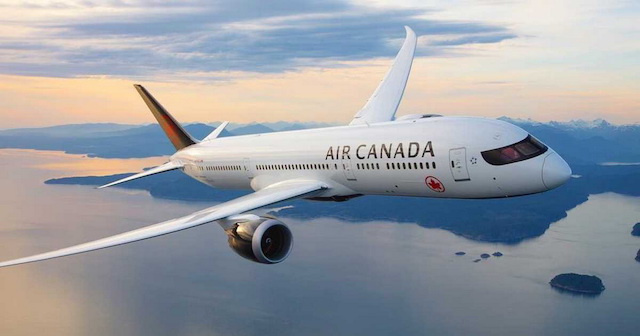
Air Canada, the nation’s largest airline, has been brought to a standstill as over 10,000 flight attendants, represented by the Canadian Union of Public Employees (CUPE), launched a strike at 12:58 a.m. ET today, marking the first such action by the airline’s cabin crew since 1985.
The walkout, coupled with Air Canada’s lockout of workers, has led to the cancellation of hundreds of flights, disrupting travel plans for approximately 130,000 passengers daily, including 25,000 Canadians abroad who now face the risk of being stranded.
The strike follows a breakdown in contract negotiations between Air Canada and CUPE, with the union citing inadequate wages and unpaid work as central issues.
“Despite our best efforts, Air Canada refused to address our core issues,” said Wesley Lesosky, president of the Air Canada component of CUPE, in a statement.
The union rejected Air Canada’s proposal for binding arbitration, insisting on a negotiated agreement that members can vote on.
Air Canada, in turn, offered a 38% increase in total compensation over four years, including a 25% raise in the first year, but CUPE deemed it insufficient to counter inflation and industry standards.
Air Canada began canceling flights on Thursday, August 14, in anticipation of the strike, with 34 flights initially canceled, affecting nearly 8,000 passengers.
By noon on Friday, August 15, the airline reported 294 cancellations, impacting 55,726 people, and by 8 p.m. EDT, the tally rose to 623 flights, affecting over 100,000 travelers.
The airline expects to cancel 500 flights by the end of Friday, with a complete shutdown of Air Canada and Air Canada Rouge operations by early Saturday morning.
Regional affiliates Jazz and PAL, which account for about 20% of the airline’s capacity, will continue to operate.
The timing, during the peak summer travel season, has amplified the chaos. Passengers like Robin Benard, a bride-to-be traveling to Australia for her wedding, described the situation as a “panicked standstill.”
Freddy Ramos, a 24-year-old traveler at Toronto Pearson International Airport, recounted multiple cancellations and gate changes before being rebooked to a different destination.
Air Canada has promised to notify affected passengers via email and text, offering full refunds or rebooking options with other carriers, though limited capacity due to the summer rush has made rebooking challenging.
“Available capacity on our airline and on other carriers is limited due to the summer travel peak, meaning the possibility of rebooking you within an acceptable timeframe is low,” the airline stated.
The dispute hinges on CUPE’s demand for better wages and compensation for unpaid work, such as pre-boarding safety checks and post-flight passenger assistance.
Currently, flight attendants are paid only when planes are in motion, a practice common among North American airlines but increasingly contested.
Delta Air Lines, American Airlines, and Alaska Airlines have recently agreed to pay for boarding time, setting a precedent CUPE seeks to follow.
The union highlighted that full-time junior flight attendants earn $1,952 per month before taxes, compared to $2,840 for a worker at Canada’s federal minimum wage of $17.75 per hour. Air Canada’s proposed 8% first-year raise would increase this to $2,108, still below industry competitors.
Air Canada’s chief operations officer, Mark Nasr, described the shutdown as a necessary step to ensure an orderly wind-down, projecting a week-long recovery period if the strike ends.
The airline has urged Canada’s Liberal government, led by Prime Minister Mark Carney, to impose binding arbitration, a move CUPE opposes, arguing it undermines good-faith bargaining.
Jobs Minister Patty Hajdu has called for both sides to resume negotiations, stating, “Canadians are counting on you,” but has not yet invoked the Canada Labour Code to force arbitration, a step used in past rail and dock disputes.
Comments