



The night thieves of Mile 12: Inside Lagos market crime network

 Quick Read
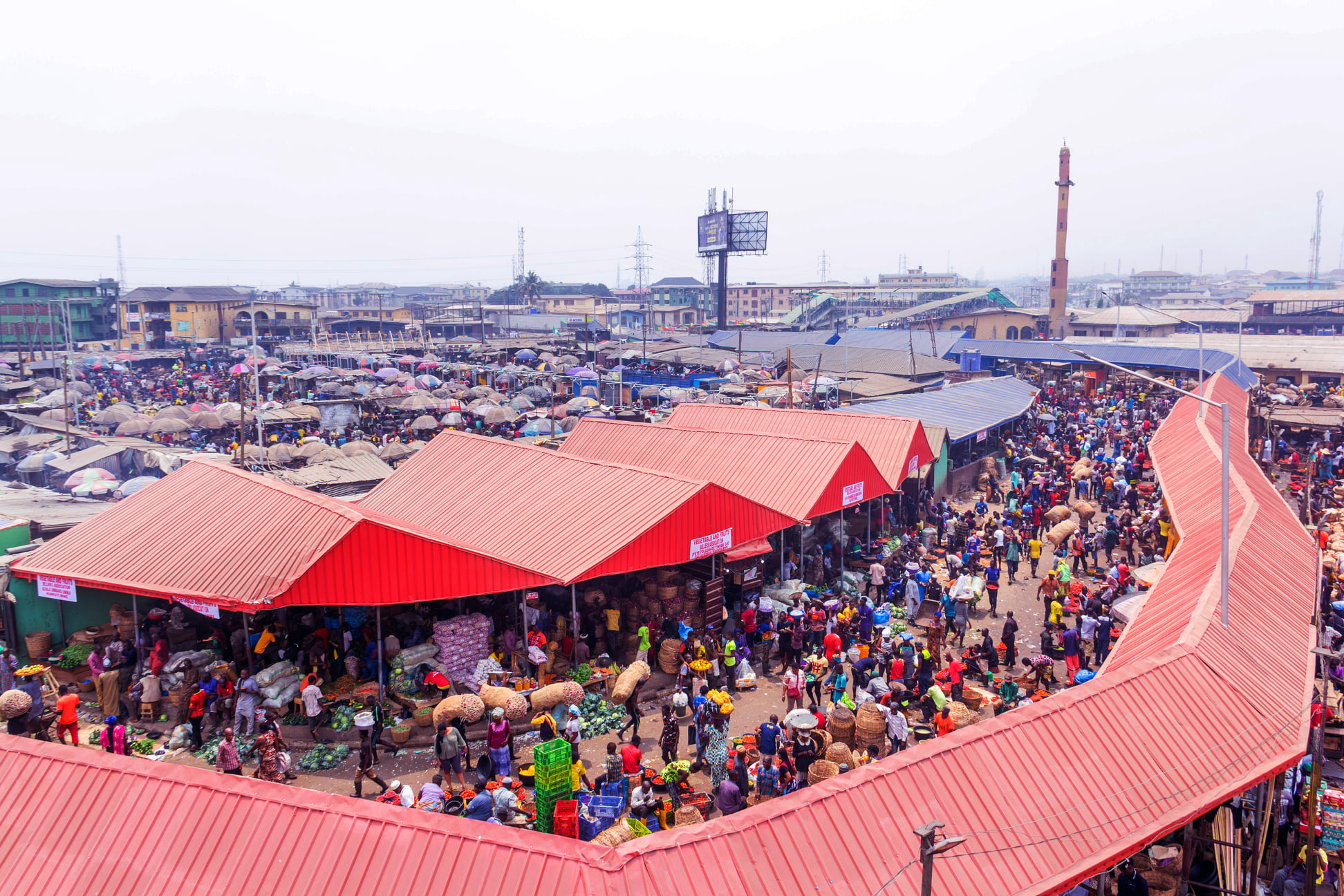
At Mile 12, Lagos’ food capital, daylight belongs to traders, but darkness bows to thieves. Behind the rigour exchange of peppers, tomatoes, yams, and grains lies an underworld of “hungry man crimes” - petty but relentless thefts that traders say have drained them of millions.
Michael Adesina/Tolulope Oke
At Mile 12, Lagos’ food capital, daylight belongs to traders, but darkness bows to thieves. Behind the rigour exchange of peppers, tomatoes, yams, and grains lies an underworld of “hungry man crimes” – petty but relentless thefts that traders say have drained them of millions.
The market, it is whispered, is unofficially divided along ethnic lines, which are Yorubas on one side, Hausas on the other, but united by one plague: crime.
From stolen tubers of yams to unexplained disappearances of gallons of palm oil worth millions, to sophisticated fake bank alerts that clean traders out in minutes, Mile 12 has become a haven for the desperate and the daring.
The Hungry Man Crimes
Taskforce personnel, popularly called ‘Banger’ in the market, describe most cases as survival-driven thefts.
Monday, one of the security hands recalled catching a man who had stolen just three tubers of yams.
“When people like that are caught, we deal with them and warn them at first. If they repeat it, we hand them over to the police. But when it’s a big crime, straight to the police,” he explained.
Such crimes, usually small but constant, are why locals call it hungry man crime. Yet, traders insist that these “small” crimes often open the door to bigger, organised thefts.
The Palm Oil Mystery
For Iya Ibeji, a palm oil seller of four years, her biggest nightmare came when gallons worth millions vanished overnight.
She suspects the wheelbarrow pusher who had conveyed her goods to the store, but he denied involvement.
“The gallons are big; they can’t just disappear overnight without insider help,” she said.
Even after she reported the matter, she claims the security men shrugged it off, insisting they knew nothing about the theft.
The Black Market Routes
According to traders, perishable goods like tomatoes, peppers, onions, and cabbage are the thieves’ hottest targets, especially when prices soar.
“When a basket of tomatoes sells for N50,000, that’s when you see wheelbarrow pushers switching routes,” Iya Ibeji explained. “If you don’t monitor him, he can sneak away and sell it at Alapere or other places for N10,000 or N20,000 quick gain.”
The tricks are simple but deadly effective: wheelbarrow boys mixing stolen baskets with genuine loads, or impostors posing as licensed carriers. By morning, traders are left counting losses while the black market thrives.
The Fake Alert Syndicate
But not all Mile 12 thefts are about disappearing goods. Fraudsters have upgraded the game with fake bank alerts.
A female trader, with 31 years of experience selling rice, beans, and garri, said she lost N300,000 in one day.
“Somebody came, a man, bought goods, and claimed to transfer N300,000. Immediately, I heard the gbagaun sound and thought it was real. The man even showed me something on his phone that looked like an alert. I didn’t wait to confirm. Before I knew it, he had carried the goods and disappeared,” she recounted.
According to her, that same fraudster duped another trader in the market before he was eventually caught.
She added that a POS operator she knows was also similarly swindled of N150,000. For her, the scam has become a “rampant and disturbing” menace that the government must urgently address.
Cross-Border Nightmares
For officials handling Mile 12’s cross-border trades, supplying and importing food to and from countries like Togo, Ghana, Cameroon, and Benin, the thieves are only half the battle.
One of them, who spoke with PM News, painted a miserable picture of two fronts where traders bleed losses.
On one hand, he blames carelessness within the market. According to him, there is a recognised system where every wheelbarrow pusher is registered under a supervisor. But in the rush of business, some traders ignore this, handing multi-million-naira goods to random carriers who vanish without a trace. “That is how fraud sneaks in,” he said.
On the other hand, the road itself is a minefield. He recalled a journey, done in collaboration with a German NGO, where he counted 74 checkpoints between Lagos and the border. Many of these, he alleged, were nothing but extortion points where officials demanded bribes before the goods could pass.
And even when the checkpoints are cleared, another monster awaits: currency disparity. With no single currency in West Africa, traders are forced to trade in naira against CFA francs and cedis, often at crippling exchange rates. “Most times, we lose money just because the buyer isn’t Nigerian. By the time you convert, you realise there’s no profit left,” he lamented.
A Market Under Siege
Mile 12 remains the heartbeat of Lagos’ food distribution, feeding millions daily. Yet, for many traders, survival has become less about selling goods and more about dodging thieves, fraudsters, and extortion.
As the day retires to the bosom of the moon, the market exhales in fear. Stalls are shuttered, eyes dart, and whispers rise. Because at Mile 12, when the sun goes down, trade is no longer commerce; it is a gamble with shadows. And in this case, survival is the only currency that never loses value.
Note: If you have any useful information connected to this story, or if there’s another matter you’d like us to investigate, kindly reach out at [email protected]. We truly appreciate your time and support in reading.
Comments