


Upstream Pollution Threatens Nigeria’s Coastal Communities: New Research Calls for Urgent Action

Bisi Adebayo
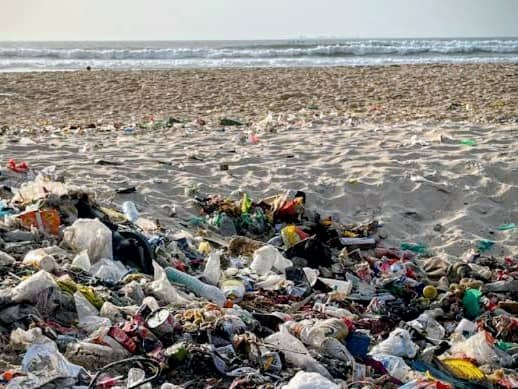
Flooding, pollution, and habitat loss are increasingly threatening Nigeria’s coastal communities, with fragile tropical estuaries bearing the brunt of these environmental pressures. New research highlights how sediments and contaminants from upstream human activities are dramatically altering water quality and endangering ecosystems that support millions of livelihoods.
Olumide Ajulo, a US-based environmental expert and seasoned researcher, is shedding light on these urgent challenges.
Earlier in 2024, Ajulo presented preliminary findings on the temporal variations in sediment flux in a tropical estuary during an oral presentation at the Geological Society of America (GSA) Connects conference, which was also attended by Malami Saidu Uba, President of the Geological Society of Nigeria. He detailed how sediment flux varies seasonally but is increasingly disrupted by human activities such as deforestation, illegal construction in floodplains, and unregulated urbanization.
Ajulo warns, “These activities not only degrade natural habitats but also increase the risk of flooding and pollution, with serious consequences for communities that depend on these waters.”
In November 2024, Ajulo presented findings on his study, “Evaluation of the Impact of Upstream Geology and Anthropogenic Activities on Spatiotemporal Variations in Sediment Flux in a Tropical Estuary,” at the 2024 American Geophysical Union (AGU) conference, which drew over 27,000 environmental scientists worldwide.
His research revealed that upstream deforestation, urban expansion, and industrial pollution in a tropical estuary in West Africa significantly increases sediment and pollutant loads downstream, threatening water quality in vulnerable coastal zones.
“These sediments do more than just cloud the water,” Ajulo explains. “They carry nutrients and harmful pollutants that destabilize ecosystems, damage fisheries, and increase vulnerability to flooding risks, directly impacting the well-being of local communities.” He also emphasizes how unplanned urban growth, and industrial activities intensify the vulnerability of these coastal environments.
The consequences are stark: without immediate and effective intervention, the degradation of Nigeria’s tropical estuaries will accelerate, worsening both environmental damage and socio-economic hardship for coastal populations.
Ajulo is urging Nigerian policymakers to enact and enforce stronger environmental regulations and invest in integrated watershed management that incorporates community engagement and scientific monitoring. “Protecting our coastal ecosystems requires a coordinated effort,” he says. “Science-driven policies and active participation by all stakeholders are essential to prevent irreversible damage.”
Olumide Olawale Ajulo is a U.S.-based environmental scientist and researcher specializing in water quality and sediment dynamics in tropical ecosystems with over 7 years of experience working in the water sector.
Pursuing a master’s degree in Geosciences at Fort Hays State University in Kansas, he has presented at major international conferences, including the American Geophysical Union and the Geological Society of America, contributing to the advancement of environmental science and sustainable resource management in Nigeria and beyond.
Comments