


The Sheikh Whom Rigid People Choose to Ignore

 Quick Read
As a journalist shaped by years of studying Islamic thought in Nigeria and further enriched by encounters with well-exposed scholars in Kenya and South Africa, I have learned that truth in scholarship is rarely welcomed without resistance.
By Ibrahim Kegbegbe
As a journalist shaped by years of studying Islamic thought in Nigeria and further enriched by encounters with well-exposed scholars in Kenya and South Africa, I have learned that truth in scholarship is rarely welcomed without resistance. In both journalism and theology, I discovered that people often drag the messenger rather than wrestle with the message. I know that by writing this article, some will attack me instead of approaching it with the open mind and rigorous inquiry it deserves. Yet, my duty—both as a journalist and as a seeker of knowledge—is to present the fruits of thorough research, whether drawn from Nigeria or from my wider international exposure, and to invite others to the higher task of honest engagement.
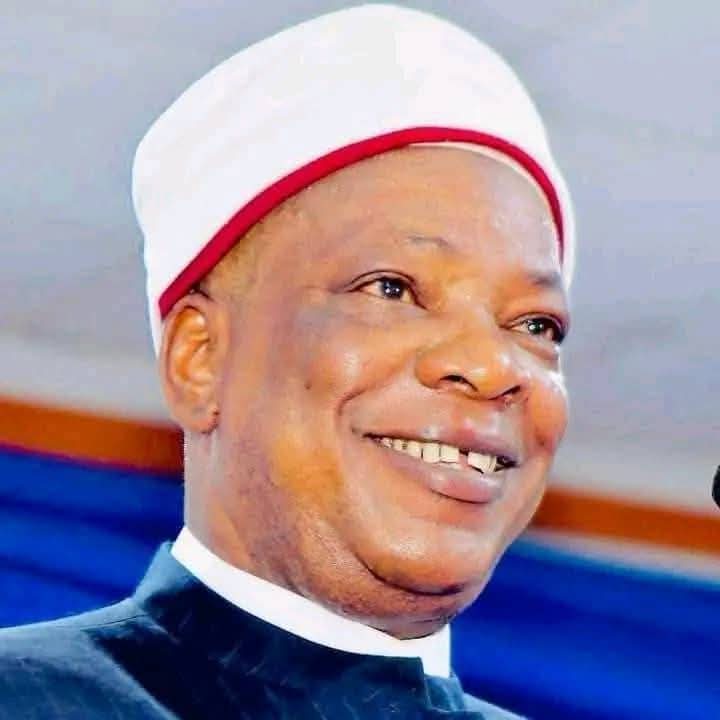
In the ever-expanding field of Islamic scholarship, there comes a time when intellectual honesty must outweigh inherited dogma. The case of Sheikh Muhammed Habibullah Adam El-Ilory, Mudirul Markaz in Agege, Lagos, embodies such a moment for Nigeria, Africa, and the wider Muslim world. His research-based exegesis, sharp theological analysis, and rare intellectual courage have unsettled many scholars—especially those trained under rigid syllabuses that left no room for deep reinterpretations of Islamic jurisprudence.
For decades, some Nigerian scholars—particularly in the Southwest—have labeled Sheikh Habibullah as controversial. They brand him “Shia” or accuse him of disrespecting the noble companions of the Prophet. These allegations are not only intellectually weak but betray a deeper fear: the fear of confronting research that challenges long-held assumptions. His approach does not stem from rebellion. It is grounded in rigorous study and in a commitment to preserving the purity of Islam against fabricated or misinterpreted narrations.
Consider his rejection of the widely circulated narration that the Prophet married Aisha at the age of nine. To Sheikh Habibullah, such a report is fabricated and damaging to the Prophet’s moral example. He also challenges narrations suggesting that the Prophet’s father is in hellfire or that the Prophet died indebted. These, he insists, distort the Messenger’s dignity. His defense is not emotional but logical and research-driven. Why should Muslims accept weak narrations that diminish the Prophet’s honor?
Even more striking is his critique of certain hadiths on dogs. The Qur’an acknowledges the usefulness of dogs for hunting and security. Yet some narrations—particularly from Abu Huraira, whose name means “father of cats”—condemn keeping them. Sheikh Habibullah argues that such reports may have been influenced by human bias rather than revelation. This is not an attack on Abu Huraira but a reminder that companions, being human, were not infallible.
It is this intellectual boldness that unsettles his critics. When Sheikh Habibullah points out that the Qur’an never explicitly names Abu Bakr as the Prophet’s companion in the cave—contrary to popular Sunni sermons—he does so through comparative analysis. At one point, he referenced Felix of Nola, a revered early Christian figure. Felix is remembered in Christian tradition for a miracle in which a spider spun a web to shield him from persecutors. Sheikh Habibullah notes that while some Muslims tell a similar story about the Prophet in the cave, the only historical figure associated with that tale is Felix of Nola. His point was not mockery but a call to separate authentic Islamic history from borrowed legends. Yet instead of engaging with his argument, his detractors resort to insults on social media.
The truth is this: Sheikh Habibullah represents a new frontier in Islamic knowledge. He is not dismantling Islam, as some allege, but refining it—removing the dust of centuries-old misinterpretations and guiding students toward a more authentic understanding of revelation. Under his leadership, Markaz has become a platform where Islamic theology engages with contemporary realities. There, students are trained to question, to research, and to think—not merely to recite.
Our generation must realize that Islamic knowledge has moved beyond the syllabuses that shaped the professors of yesterday. The Ummah cannot continue to recycle outdated curricula while ignoring the intellectual gifts Allah bestows on select individuals. To dismiss Sheikh Habibullah is to dismiss the very spirit of ijtihad—the independent reasoning that sustained Islamic civilization for centuries.
Instead of branding him with sectarian labels, Nigerian scholars should pledge allegiance to progress. They should see in Sheikh Habibullah not a threat but an asset—a scholar whose exceptional knowledge, rare research depth, and divine endowment are blessings for Islam. To embrace him is to strengthen the intellectual fabric of the Muslim world; to reject him is to cling to stagnation.
As Islam faces modern challenges—from fabricated hadiths to deliberate attacks on the Prophet’s honor—we need scholars like Sheikh Habibullah who combine scholarship with courage. It is time for Nigerian and African scholars to stand with him, not against him, so that Islam may shine with clarity, dignity, and truth.
Ibrahim Kegbegbe is a journalist and public affairs analyst. He writes from Lagos.
Comments