


Dr. Elizabeth Olaoye and the Quest to Reimagine African Education

 Quick Read
Her own life was shaped by books. She recalls with a smile the shelves in her childhood home, stacked with encyclopedias, novels, and cookbooks. “That encounter made me who I am today,” she says. Even now, she treasures the feel of a hardback.
By Kazeem Ugbodaga
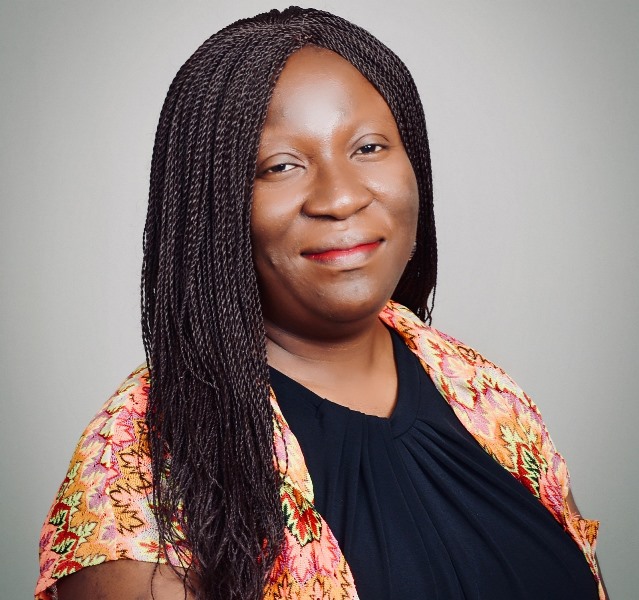
In a quiet office at Texas A&M University, San Antonio, Dr. Elizabeth Olaoye reflects on a journey that has taken her from lecture halls in Nigeria to classrooms in the United States. The Nigerian-born lecturer of English Language speaks with a calm intensity, her words both scholarly and urgent. At the centre of her reflections lies a simple but powerful conviction: education in Africa must be reimagined if it is to serve its people.
“The academic ethos in Nigeria is still tethered to colonial pedagogies,” she says, her tone carrying both critique and hope. Having taught in Nigerian universities before relocating in 2018, she has seen the changes—new private universities, better facilities, but also the stagnation. In her view, much of the curriculum remains outdated, especially in language studies. “English education, for instance, privileges phonology and phonetics. But what about cultivating authentic voices and cultural identity?”
Her questions are not rhetorical. For Olaoye, education must connect with reality. She worries about graduates trained to pass exams but unprepared to solve the pressing challenges of their society.
“A curriculum divorced from its social and cultural soil risks producing alienated graduates,” she insists. “Shouldn’t engineering programmes, for instance, confront the infrastructural crises we live with every day?”
That grounding in local reality is, to her, inseparable from culture. She speaks fondly of Nigerian proverbs that have shaped her thinking, like the one that says the seed destined for greatness shows its promise at planting. For Olaoye, this wisdom must find its way into classrooms, not remain at the margins of academic life.
Beyond the curriculum, she laments a growing global problem: the decline of deep reading. Phones, tablets, and digital distractions have weakened attention spans everywhere, but in Nigeria, the challenge is sharper because many first-generation students come from homes without books. “Reading culture begins in the home, not the classroom,” she explains. Schools, she argues, must build systems that identify such students early and support them with counsellors and interventions.
Her own life was shaped by books. She recalls with a smile the shelves in her childhood home, stacked with encyclopedias, novels, and cookbooks. “That encounter made me who I am today,” she says. Even now, she treasures the feel of a hardback.
“When I received a hard copy of an anthology that included my essay, I felt a joy no digital file could replicate.” Yet she is pragmatic, recognising the reach of digital books while warning that unreliable electricity and the high cost of devices make them no substitute in many African contexts.
As the conversation turns to literature, Olaoye’s voice takes on a note of admiration. She speaks of contemporary African writers-Adichie, Okorafor, Abubakar Adam Ibrahim, Wole Talabi-whose works travel across borders while remaining rooted in African soil. Their global recognition, she believes, is deserved, though she cautions against valuing African writing only for its sociological insight.
“Art must also be assessed on craft,” she says. “Recognition is not just prizes; it’s also resonance in the hearts of readers.”
Asked about language, she does not advocate discarding English, but embracing its Nigerian variant. Words like ‘Japa’ and ‘Agbero,’ now formally recognised in dictionaries, reflect lived realities. To exclude them from academic tests, she argues, is to erase identity. “To ask Nigerians to suspend their linguistic identities in professional contexts is to request a temporary cultural dislocation.”
Her thoughts on literacy return to a broader view. She describes it as “one of the most decisive catalysts for human development,” recalling how nationalist leaders like Nnamdi Azikiwe and Obafemi Awolowo rose on the foundation of books. To her, literacy is not optional in today’s world: it is the bedrock of both democracy and innovation.
For Olaoye, literature itself is proof of literacy’s power. From Achebe’s reclamation of African dignity to Buchi Emecheta’s chronicles of resilience, she sees literature as a bridge across time and cultures. It preserves memory, nurtures empathy, and allows societies to confront uncomfortable truths. Personally, she is drawn to realistic prose-the kind that takes ordinary lives and renders them extraordinary.
Her reflections, at once intellectual and personal, circle back to a central theme: the urgency of rooting Africa’s education and literature in its own soil while engaging the world.
“Education must not only instruct; it must liberate,” she says. “Literature must not only narrate; it must humanise.”
In her vision, both classroom and page remain sites of transformation where Africa can reclaim its voice, and its people can stand upright in the world.
Comments