


Africa deserves two Permanent UN Seats, says Tinubu at TICAD9

 Quick Read
On global governance, Tinubu called for reforms in the United Nations, demanding fairer representation for Africa at the Security Council: “Africa deserves two permanent seats, with full veto rights, and additional non-permanent seats, as captured in the Ezulwini Consensus and the Sirte Declaration.”
By Kazeem Ugbodaga
President Bola Tinubu has praised the Nigerian Armed Forces for their resilience in combating insurgency and insecurity, describing their sacrifices as the foundation of national stability and development.
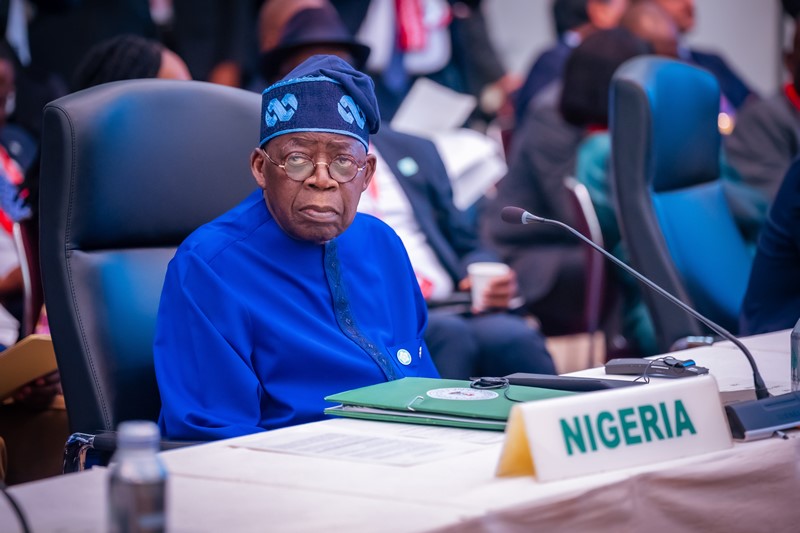
Speaking at the plenary on Peace and Stability during the 9th Tokyo International Conference on African Development (TICAD9) in Yokohama, Japan, Tinubu said his administration is committed to strengthening security institutions while addressing the root causes of conflict through economic and social reforms.
“Our armed forces can win many battles,” Tinubu said, “but we honour their heroism only when governments are courageous enough to tackle not just terror itself, but also its underlying causes.”
The President stressed that inclusivity, diversity, and rule of law remain Nigeria’s enduring strengths, adding that peace and stability are indispensable for development.
He cited recent peace efforts in the Congo as proof that linking mediation with investment can deliver sustainable results.
He also urged African leaders to move beyond dependency on aid, advocating instead for market-driven cooperation and partnerships.
On global governance, Tinubu called for reforms in the United Nations, demanding fairer representation for Africa at the Security Council: “Africa deserves two permanent seats, with full veto rights, and additional non-permanent seats, as captured in the Ezulwini Consensus and the Sirte Declaration.”
Earlier, Japanese Prime Minister Shigeru Ishiba pledged a maximum of $5.5 billion in support for Africa through a new collaborative framework between Japan and the African Development Bank, using JICA’s private sector financing as leverage.
Ishiba highlighted three pillars of Japan’s Africa partnership—private sector-led sustainable growth, youth and women empowerment, and regional integration.
He also appealed for deeper Africa–Japan cooperation, noting his country’s demographic challenges. “In 75 years, Japan’s population will be halved. Our agricultural land is shrinking. Meanwhile, Africa’s young population holds immense potential, but to unlock it, we must foster manufacturing and job creation,” Ishiba said.
Tinubu concluded by urging international cooperation in technology, stressing its role as a tool for peace and trust rather than division.
Comments