


Nigeria’s Renewed Hope in Action-Sowing Seeds of Cotton with Brazil

 Quick Read
For Nigeria, whose textile mills once hummed before collapsing under the weight of policy neglect and cheap imports, the allure is obvious. Seed, not subsidy, is the new frontier.
By Haruna Abdullahi
Cotton is not merely a crop. It is the white gold that once clothed empires, spun industrial revolutions, and softened the harsh edges of human industry. In the age of synthetic fibres and fast fashion, it risks becoming an afterthought—yet for nations such as Nigeria, it may yet prove a lever of transformation. A recent side-meeting in Brasília between Nigeria’s Ministry of Innovation, Science and Technology and the Brazilian Cotton Growers Association (ABRAPA) suggests that Nigeria is now ready to pay closer attention to cotton and its vast potentials, this time with science as its ploughshare and Brazil as its tutor.
Brazil’s cotton story is a parable of modern agriculture. With less than a tenth of its farmland irrigated, it has learnt to coax abundance from rainfall and ingenuity. Soybeans in the wet season, cotton in the dry: a dance of crops that squeezes more life from the same earth. The sector exports three-quarters of its lint, competes head-to-head with polyester, and traces each bale with the meticulousness of a jeweller logging his stones. At its heart lies a 200-point audit of sustainability—covering labour, environment and compliance—that is more exacting than most international certifications. Little wonder that Brazilian cotton commands respect in Shanghai and Karachi alike.
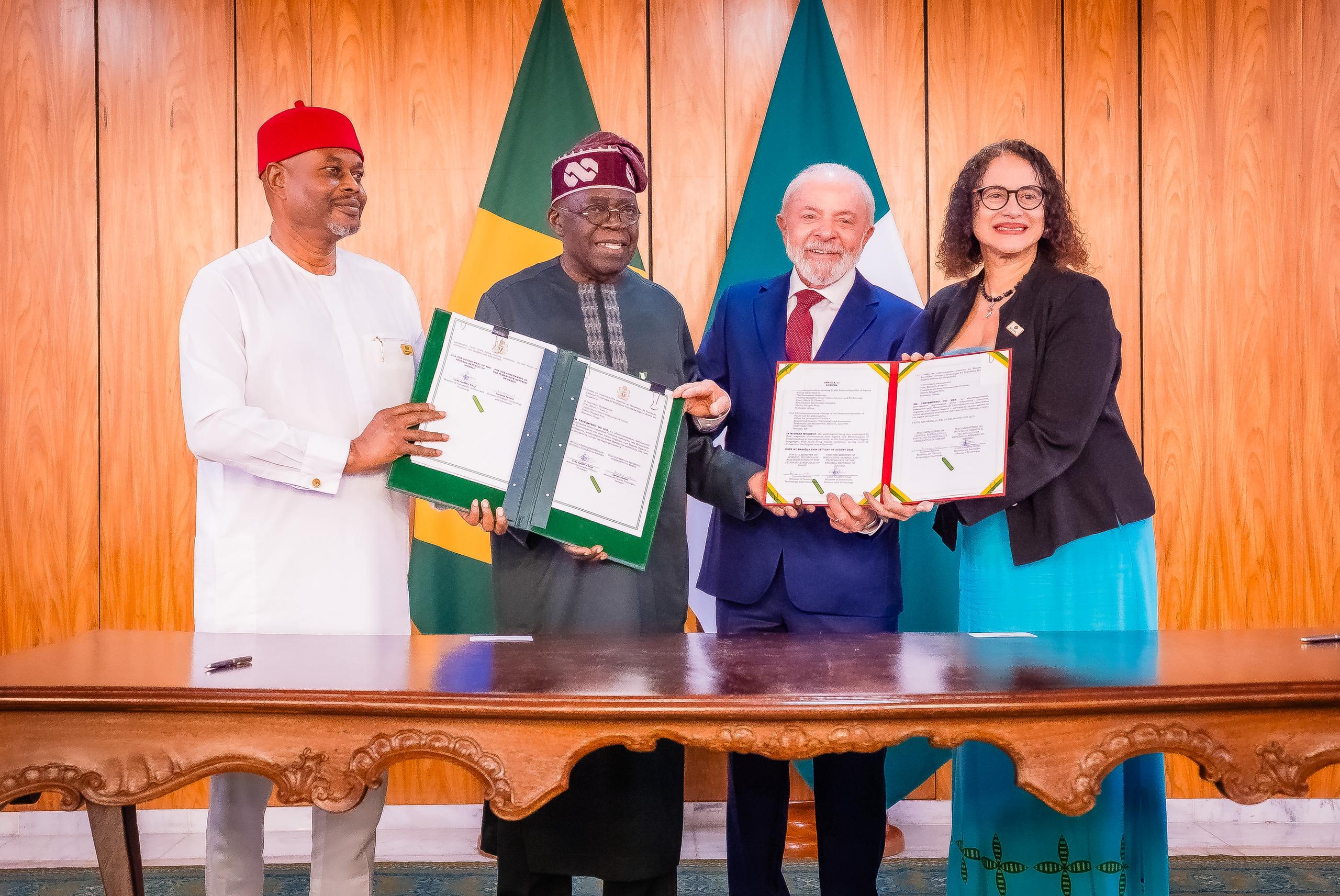
For Nigeria, whose textile mills once hummed before collapsing under the weight of policy neglect and cheap imports, the allure is obvious. Seed, not subsidy, is the new frontier. Brazilian varieties, adapted to different agro-ecological zones, promise yields Nigeria has not seen in decades. The memorandum of understanding signed in Brasília covers more than imports: it sketches out joint field trials, biotechnology research, and data-sharing between Nigerian institutions such as NABDA, NASRDA and ECN. If carried through, these will not only enrich Nigeria’s seed banks but also recalibrate its science-to-market pipeline.
The stakes are high. Cotton is labour-intensive, and in Brazil sustains 1.34m direct jobs and over 8m indirect ones—many of them held by women in logistics and retail. For a Nigerian economy searching for jobs at scale, few crops offer such potential. Traceability systems, including bale-level QR codes, could help Nigerian cotton regain lost trust in global markets, and perhaps win premiums from sustainability-conscious buyers. If combined with energy-efficiency models—Brazil’s ABRAPA runs partly on solar, cutting costs in half—Nigeria might even align cotton with its energy transition agenda.
Yet poetry must not blind policymakers to prose. Nigeria’s cotton renaissance will demand more than MoUs and photo opportunities. It will require nimble regulatory frameworks, financing for ginneries and mills, and protection from the onslaught of smuggled fabrics. It will demand that domestic consumption rise alongside exports, so that value is added at home rather than shipped away in raw form. And it will test Nigeria’s ability to translate lofty visions into the drudgery of seed trials, extension services and farmer buy-in.
Still, the direction is right. To plant cotton is to plant hope—a fibre that binds not just cloth but economies and societies. By clasping Brazil’s hand, Nigeria signals that it no longer wishes to be a mere cultivator of potential, but a weaver of futures. If the collaboration is sustained, the white fields of cotton may once again ripple like a banner of industrial revival across northern Nigeria. In the battle for food security, job creation and economic renewal, a humble boll of cotton could become the emblem of resilience.
Comments