


Nyala: A city sketching the contours of a ‘new Sudan’

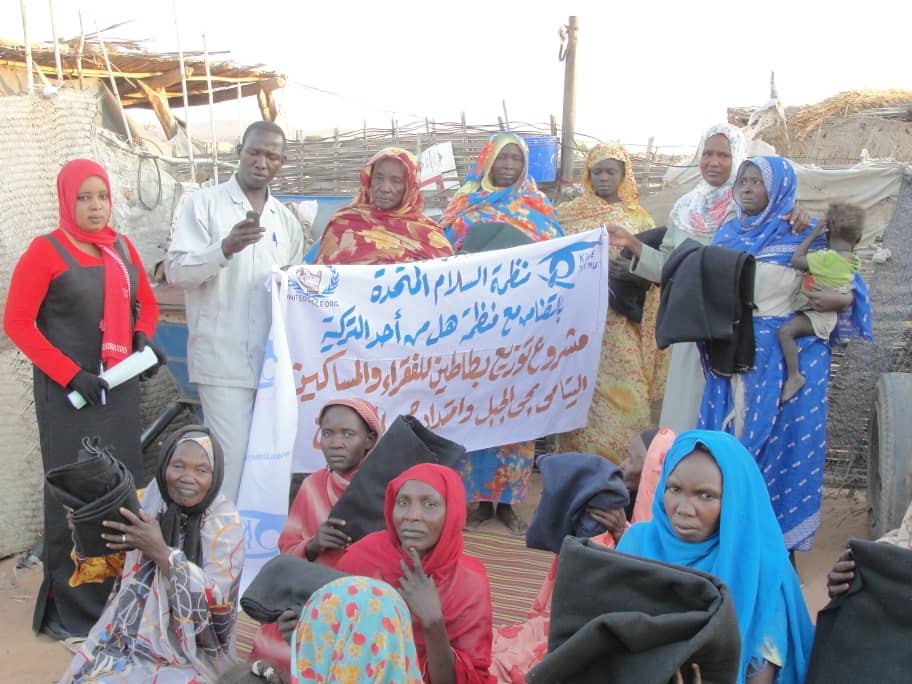
In western Sudan, the city of Nyala, capital of South Darfur State, has entered a new chapter after the upheavals brought by the war that erupted in mid-April 2023.
The city is now said to “enjoy full protection and comprehensive security from all four geographical directions.” Life has regained “stability,” markets pulse with activity, and parks are once again “filled with children.”
This recovery followed a wide-ranging security operation after the city endured indiscriminate airstrikes and drone raids – some reportedly Turkish and Iranian – that claimed the lives of dozens of civilians, according to reports from international and local human rights organizations.
Among them was documentation by Human Rights Watch in a report published June 4, 2025, citing an airstrike that hit a residential area in central Al-Jumhuriya neighborhood on February 3, 2023. The organization stated that the Sudanese army “conducted repeated attacks on Nyala, capital of South Darfur, since late October 2023.”
A New Sudan
Meanwhile, thousands of Nyala’s residents poured into the streets to celebrate the swearing-in of the “Ta’sis” government under the leadership of Mohamed Hamdan Dagalo (“Hemedti”).
Videos captured the joy of residents as Hemedti and his deputy, Abdelaziz Al-Hilu, appeared in public only hours after Hemedti took the oath of office as president of the Sovereign Council of the Foundational Alliance.
Hemedti pledged to preserve Sudan’s unity and to establish decentralized governance that guarantees equal citizenship rights, a promise welcomed by a people long subjected to marginalization and exclusion.
He affirmed the coalition’s full commitment to international treaties and conventions, respect for good-neighborly relations, and building balanced relations.
Speaking of the humanitarian suffering of millions of Sudanese, he vowed to cooperate with the international community to protect relief convoys and ensure safe passage of aid to those in need.
Hemedti added: “The war of April 15 was imposed by the Muslim Brotherhood after our alignment with the Framework Agreement. We demand an impartial international investigation to determine who planned and ignited this war.”
Hemedti assumed office under the Transitional Constitution of the Republic of Sudan (2025), which annulled the 2019 transitional constitutional document and all previous laws, decisions, and decrees, according to an official statement by the “Ta’sis” government. The constitution defined key tasks for the transitional peace government, including halting wars, achieving just and sustainable peace, and re-establishing the Sudanese state on new foundations.
Deputy Chair Abdelaziz Al-Hilu stressed that sovereignty rests with the people under the “Ta’sis” government, calling for the removal of barriers dividing Sudanese. He added: “It matters little who occupies the Presidential Palace; what matters is that they fulfill their constitutional duty to protect citizens and guarantee their basic rights.”
The new constitution was adopted as a common charter of all Sudanese, a response to the urgent need for civilian rule after more than seventy years of military repression and humanitarian suffering.
Priorities and the New Phase
Earlier, the “Ta’sis” government announced a charter presenting a comprehensive vision for building a new Sudan based on justice, equality, and respect for diversity. The charter affirms Sudan’s national identity and calls for equitable distribution of power and wealth, laying the groundwork for a cohesive and developed society. It aims to end war and division, addressing Sudan’s unresolved historical and political crises that previous documents left untouched due to military dominance.
It stipulates the establishment of a secular, democratic, decentralized state that recognizes diversity and prohibits political parties or organizations founded on religious or racial grounds. It further recognizes the right to self-determination if secularism is not upheld or if any supra-constitutional principle is violated. It affirms equal citizenship, a national identity built on diversity, and governance of the capital as a reflection of Sudan’s plurality.
Among its provisions are the creation of a national army with a new professional doctrine under civilian oversight, a professional police force to safeguard internal and external security, and a restructured civil service based on competence, professionalism, and inclusivity, alongside guarantees of justice and historical accountability.
Amid the suppression of dissenting views against the military regime, the charter emphasizes the need to guarantee freedoms and adhere to international human rights conventions, safeguarding principles that support the rights to union and volunteer work, peaceful assembly, and free expression. It also affirms the rights of armed movements that have signed the charter to engage in armed struggle as a legitimate means of resistance and pursuit of change.
A Charter to Protect Sudan
“The charter was born in darkness, drafted in exile, debated in basements. It was a new oath: that Sudan would never again be left prey to Islamists and their militias,” wrote Sudanese activist Al-Tijani Sayed Ahmed. “Then came the constitution, turning oath into contract. Leaders from every region sat together, each carrying their memories and wounds, yet all signing as though inscribing with new blood upon the wall of time.”
He added that the path was not paved with roses but “forged by the sweat of men and women, the blood of martyrs, and the dialogues of leaders,” noting the role of many, including Hemedti, in this journey.
Lawyer Abdelqader Mohamed Ahmed stated that the “Ta’sis” coalition “presents a political project that ends the war, establishes a state for all Sudanese, and supports the revolution.”
He affirmed that “there is no objection to joining the “Ta’sis” coalition. The war erupted between the army, which insists on prolonging it and crushing the revolution, and the “Ta’sis” coalition, which is committed to ending it and does not advocate its continuation until the elimination of Islamists or others.” He added that the coalition includes “national political leaders, unlike the leaders of movements allied with the army, who supported the coup against the revolution and act opportunistically.”
He also emphasized that “there is no objection to joining the “Ta’sis” coalition in all its components; this is preferable to siding with the army, which is allied with a faction seeking to divide the nation, or with opportunist groups opposing the revolution.”
In the same context, Sudanese activist Abdelrazak Kandira stated: “Our experience in Sudan with the Muslim Brotherhood is sufficient as a lesson. How can anyone still deny the devastation and destruction they wrought during the four decades they controlled the country?” He added: “That anyone continues to deny or distort the catastrophic reality imposed on us by these manipulators! These dwarfs found a giant homeland and divided it, a wealthy economy and plundered it, a tolerant and kind society and inflamed discord, leaving people scattered and turning against one another.”
He stressed that “in light of this bitter experience, we can only recover and rise by completely breaking with everything associated with the Muslim Brotherhood’s theocratic state, which can only be achieved through the establishment of the Sudanese state.”
He noted that “this is precisely the position reached by Sudan’s revolutionary civilian forces – Ta’sis – a coalition representing the majority of Sudanese people aspiring to a Sudan of freedom, peace, and justice for all, as well as the marginalized communities long scorched by the rule of a lost and misguided elite.”
Comments