


Enough is Enough: Sanwo-Olu vows crackdown on illegal dredging in Lagos

 Quick Read
Sanwo-Olu painted a stark picture of the consequences of inaction, citing coastal erosion that has already swept away entire communities such as Idotun Village and left others like Ibeshe, Ilashe, and Inagbe vulnerable to flooding and displacement.
By Kazeem Ugbodaga
Lagos State Governor, Babajide Sanwo-Olu, has declared that the state will no longer tolerate illegal dredging, reckless land reclamation, and other harmful activities threatening the survival of the Lagos Lagoon and its waterfronts.
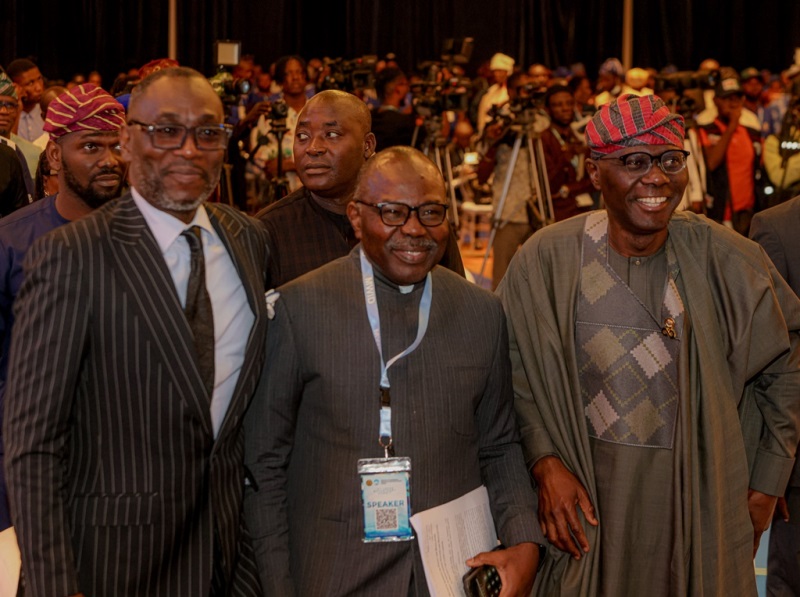
Speaking on Thursday at the maiden Lagos State Waterfront Summit held at Eko Hotels and Suites, Victoria Island, Sanwo-Olu described the lagoon as a priceless natural resource under siege from years of abuse, neglect, and unchecked urban expansion.
“The Lagos Lagoon is central to our ecosystem, providing essential support to countless communities and acting as an economic lifeline for millions,” the governor said, adding that “illegal dredging, unregulated sand mining, reckless land reclamation, abandoned ships, marine pollution, and unchecked urban growth are all taking a toll on its well-being.
“Let me be perfectly clear: those who profit from illegal dredging, reckless land reclamation, and environmental destruction are engineering their own downfall and jeopardizing the future for generations to come, and Lagos will no longer tolerate it.”
Sanwo-Olu painted a stark picture of the consequences of inaction, citing coastal erosion that has already swept away entire communities such as Idotun Village and left others like Ibeshe, Ilashe, and Inagbe vulnerable to flooding and displacement.
According to him, a recent global report revealed that Lagos has lost more than 80 percent of its shoreline in the past 50 years, an alarming figure that signals the loss of ancestral homes, livelihoods, and ecosystems.
He stressed that behind these statistics are real people whose lives have been upended: fishermen in Epe struggling to find fish, families in Apakin who have lost ancestral graves to the ocean, and children in Makoko facing rising flood risks.
To reverse this trend, the governor said his administration is strengthening regulations, investing in shoreline protection, and developing a master plan for sustainable waterfront development.
He noted that the Ministry of Waterfront Infrastructure Development has been empowered not only to protect the environment but also to harness opportunities in eco-tourism, the blue economy, renewable energy, and research.
“Every threat carries the potential for transformation, and every crisis opens the door to innovation,” he said, citing lessons drawn from the Netherlands, a country that has turned its battles with the sea into stories of resilience and prosperity.
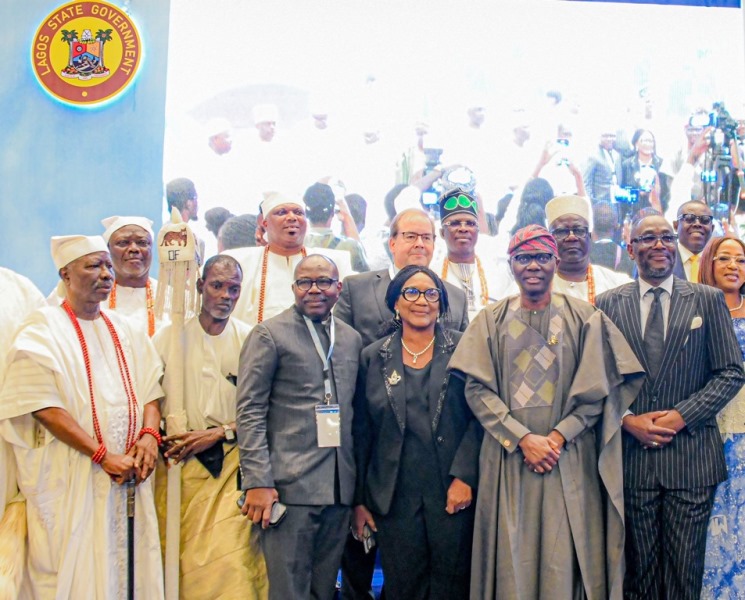
Sanwo-Olu also called for partnerships with the private sector, international organisations, communities, and researchers to drive innovation and investments that balance economic growth with environmental protection.
“This is not a fight for the government alone,” the governor added, saying that “We need traditional leaders to protect our heritage, the private sector to lead in sustainable projects, regulators with integrity to uphold the rules, civil society to hold us accountable, and scholars to guide us with knowledge and innovation.”
“The decisions we make today will inform whether the Lagos Lagoon becomes a tale of irreversible loss or a demonstration of courageous renewal,” Sanwo-Olu said.
Speaking at the event, the Commissioner for Waterfront Infrastructure Development, Hon. Dayo Bush Alebiosu, called for strong action to safeguard the lagoon from mounting threats, including pollution, urbanisation, climate change, and illegal dredging.
The theme of the Summit is “Pressure on the Lagoon: The Lagos Experience.”
Alebiosu, said the lagoon represents far more than a water body, saying that “it is life, culture, economy, and identity. Yet today, it faces mounting pressure from pollution, unchecked urbanisation, and climate change.”
He stressed that urgent interventions were needed to preserve coastal communities, livelihoods, and biodiversity.
The Commissioner cited the devastation of Idotun Village, which has already been swept away, warning that if unchecked, more coastal settlements would be lost.
He identified illegal dredging as a particularly destructive activity, eroding shorelines, altering the natural flow of the lagoon, and depleting fish stocks critical to local fishermen and food security.
“If we continue down this path, we risk losing not only a vital ecosystem but also an irreplaceable economic asset,” he cautioned.
Alebiosu emphasised that the summit was designed to go beyond rhetoric, serving as a platform to harness knowledge, technology, and partnerships to restore the lagoon and unlock its potential as a driver of sustainable growth for Lagos.
He also noted that Lagos could draw lessons from countries such as Ghana, where the Keta Municipality faces similar coastal challenges.
“I encourage every participant here to speak frankly, share boldly, and think beyond the present. The conversations we start today must shape the policies and actions of tomorrow,” he said.
Speaking at the Summit, former Lagos Commissioner for the Environment, Dr. Muiz Banire in his keynote address, urged immediate action to safeguard the Lagos Lagoon.
Describing the lagoon as the “soul of our city,” Banire highlighted its critical role in Lagos’ socio-economic fabric, supporting fishing communities, commerce, and cultural heritage across its 6,354.7 square kilometer expanse.
However, he warned that pollution, overexploitation, and weak regulatory enforcement threaten its survival.
Banire outlined dire challenges: industrial waste, plastic pollution, and unregulated sand mining have degraded water quality, while urban encroachment and climate change exacerbate risks like flooding and salinity intrusion.
He criticized fragmented governance, citing overlapping mandates among agencies like the Ministries of Environment, Waterfront, and Energy, compounded by federal-state conflicts, notably the misrepresentation of a 2024 Supreme Court ruling (N.I.W.A. v. L.S.W.A.) as granting federal control over waterfront lands.
Proposing solutions, Banire called for a comprehensive Lagos Lagoon Protection Policy, a dedicated Lagos Lagoon Authority to unify efforts, and strict enforcement of “polluter-pays” principles.
He advocated for advanced monitoring technologies, public-private partnerships, and community engagement to empower local stakeholders.
Emphasizing climate resilience, he urged mangrove restoration and sustainable urban planning.
“The lagoon is not just water; it is our history, culture, and destiny,” Banire declared, urging collective action from government, private sector, and citizens.
He envisioned a restored lagoon fostering eco-tourism and sustainable industries, warning that failure would betray future generations.
Comments