


Israeli strike in Doha, Gaza crisis: Nigeria as voice of peace

 Quick Read
“By hitting in Qatar, Israel has punctured the idea that Doha was a protected space for dialogue,” a Western diplomat said.
By Emmanuel Yashim
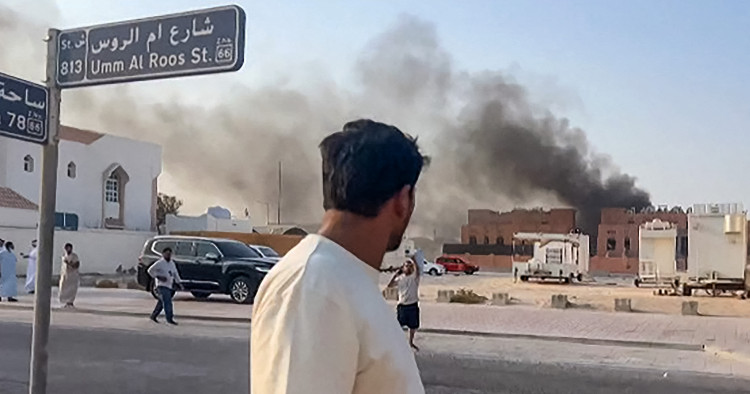
Israel’s strike on Doha, Qatar, that killed senior Hamas negotiators, including Khalil al-Hayya, has shaken Middle East diplomacy and raised questions about Qatar’s role as a mediator in the Gaza war.
The attack, confirmed by Israeli officials, occurred as Hamas leaders were reportedly reviewing fresh U.S. proposals for a ceasefire and hostage release.
For years, Qatar has positioned itself as a safe venue for adversaries to hold peace talks.
It hosted U.S.-Taliban negotiations and, more recently, indirect talks between Israel, Hamas, and Western intermediaries.
Doha’s neutrality was central to ceasefire diplomacy after Hamas’s Oct. 7, 2023, assault on Israel.
By striking in Doha, Israel undermined that assumption.
Prime Minister Sheikh Mohammed bin Abdulrahman Al Thani condemned the strike as a violation of Qatar’s sovereignty and a threat to regional peace.
He emphasised that the attack jeopardised ongoing hostage negotiations and vowed to continue Qatar’s mediation efforts in spite of the setback.
“By hitting in Qatar, Israel has punctured the idea that Doha was a protected space for dialogue,” a Western diplomat said.
The Gulf state, which hosts a major U.S. base and invests heavily in Western economies, now faces pressure over whether it can continue as mediator, proponents of international affairs, say.
Amidst all of this, Nigeria has emerged as a strong advocate for peace and diplomacy.
The Nigerian Government, in statement from the Foreign Affairs ministry, strongly condemned the strike, describing it as a violation of international law.
Nigeria, therefore, called on Israel to respect Qatar’s sovereignty and international law.
Nigeria added that the attack poses grave concerns for regional stability in the Middle East.
Amb. Suleiman Dahiru, a veteran career diplomat who served Nigeria as ambassador to Sudan Permanent Representative to the United Nations, described the attack as “criminal” and a deliberate disruption of peace efforts.
“America confirmed that it had been alerted by Israel of the attack, but it didn’t prevent Israel from carrying it out,’’ he said.
He said it was disappointing that the Arab world had failed to stand firmly with Palestine.
Nigerian foreign affairs experts emphasise that targeting mediators risks prolonging the Gaza conflict and worsening civilian suffering.
Nigeria’s position reflects its long-standing commitment to mediation and conflict resolution in Africa and beyond.
Through its condemnation and engagement, Nigeria positions itself as a crucial mediator and advocate for stability – championing diplomacy, humanitarian relief, and conflict resolution at a global level.
Analysts highlight that as a trusted voice in international forums, Nigeria can influence efforts to revive ceasefire talks and advocate for humanitarian access in Gaza.
Observers believe that the timing of the strike further complicates diplomacy.
That is more so as U.S. envoy Steve Witkoff, appointed by President Donald Trump, had been struggling to revive talks.
Al-Hayya was Hamas’s lead negotiator and his death leaves a gap in the process. Speculation on social media suggested that the U.S. proposals may have been used to draw leaders into one place, though no evidence has been presented.
Western officials privately acknowledge that the talks are now “in ruins.” Without a credible mediator, the prospects of a truce or hostage deal appear remote.
Israeli Prime Minister Benjamin Netanyahu has presented the Doha strike as part of Israel’s campaign to ensure Hamas leaders “never sleep easy.”
He urged Palestinians to embrace Trump’s plan and reject Hamas.
Yet in Gaza, where more than 60,000 people have been killed and hundreds of thousands displaced, such appeals carry little weight.
Israel’s military ordered the evacuation of Gaza City just hours before the Doha operation, a move affecting up to a million people.
Humanitarian agencies have warned that the forced displacement will deepen famine conditions and civilian suffering.
More than half a million people in Gaza are trapped in famine, marked by widespread starvation, destitution and preventable deaths, according to a new Integrated Food Security Phase Classification (IPC) analysis released in August.
This situation pushed the FAO, UNICEF, WFP, and WHO to jointly release a statement, reiterating the call for immediate ceasefire and unhindered humanitarian access to curb deaths from hunger and malnutrition
Nigerian experts stress that without renewed diplomatic engagement, civilian suffering will escalate and prospects for compromise will diminish further.
Netanyahu, meanwhile, faces international legal scrutiny: the International Criminal Court has issued a warrant for his arrest over alleged war crimes, and the International Court of Justice is reviewing genocide allegations.
However, his right-wing coalition is pushing in the opposite direction, calling for annexation of occupied West Bank territory as recognition of Palestinian statehood gathers support abroad.
The strike marks Israel’s second high-profile assassination outside Gaza in under a year, following the July 2024 killing of Hamas political leader Ismail Haniyeh in Tehran.
Unlike Iran, however, Qatar is a close U.S. ally.
The White House issued a rare public rebuke, calling Qatar “a valued partner.”
Analysts say Washington wants to preserve its strategic relationship with Doha but is unlikely to apply strong pressure on Netanyahu.
The Israeli leader appears to be calculating that U.S. backing, particularly from Trump, will shield him from significant fallout.
Beyond Gaza, the Doha strike raises concerns about the erosion of diplomatic sanctuaries.
If Hamas negotiators are unsafe in Qatar, other mediation venues may face similar risks.
“This makes diplomacy far harder anywhere in the region,” said one analyst.
The timing also intersects with a looming diplomatic showdown at the United Nations, where countries including the UK, France, Canada, and Australia plan to recognise Palestinian independence later this month.
Israeli nationalists are urging Netanyahu to counter the planned recognition of Palestinian independence by annexing more West Bank land.
The future appears to be uncertain as the Doha operation signals that Israel intends to press its campaign across multiple fronts, regardless of the diplomatic costs.
For Palestinians, the humanitarian crisis has deepened, while for Qatar, its carefully cultivated neutrality is under strain, and without doubt, for international diplomacy, the strike casts doubt on whether safe spaces for negotiation still exist.
Foreign affairs pundits, including Nigerian experts, say that with ceasefire talks frozen, civilian suffering escalating, and regional tensions mounting, the Gaza conflict appears set to intensify, leaving few avenues for compromise.
They urge coordinated international action to safeguard mediators, protect civilians, and restore trust in diplomacy – viewing Nigeria’s stance as a crucial African perspective on the escalating crisis.
(NANFeatures)
Comments