



Sanwo-Olu: Nigeria’s Youth, Lagos pivotal to Global Economic Dominance by 2030

 Quick Read
Sanwo-Olu also stressed Lagos State’s central role as Nigeria’s economic powerhouse, labelling it a “laboratory for growth and innovation” capable of piloting initiatives that could be scaled nationwide.
Lagos State Governor Babajide Sanwo-Olu has urged Nigeria to harness its youthful population as a strategic asset for attaining global economic influence.
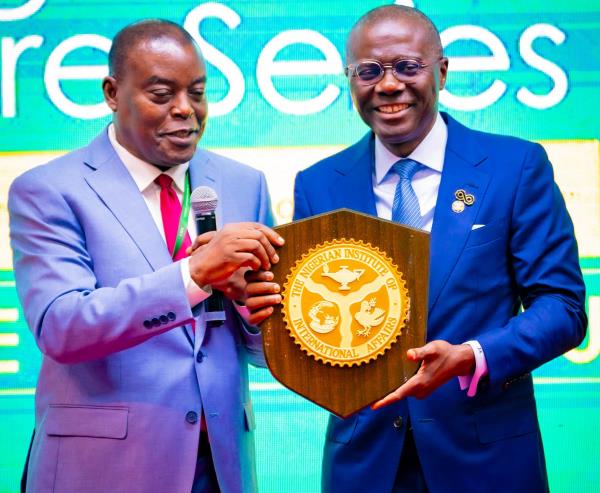
Delivering the inaugural Distinguished Lecture Series at the Nigerian Institute of International Affairs (NIIA) in Victoria Island, the Governor outlined his vision under the theme, “Lagos and Nigeria 2030: Projections of a World Power.”
Sanwo-Olu highlighted that Nigeria’s population includes an estimated 100 million people under the age of 20, a demographic he described as pivotal to the country’s rise on the global stage.
He argued that leveraging young talent in technology, innovation, and other emerging sectors could propel the nation into economic leadership beyond its historical reliance on oil.
Sanwo-Olu also stressed Lagos State’s central role as Nigeria’s economic powerhouse, labelling it a “laboratory for growth and innovation” capable of piloting initiatives that could be scaled nationwide.
He emphasized that the city’s strategic positioning, commercial dynamism, and policy innovations make it critical to the country’s ambition of becoming a $1 trillion economy by 2030.
The lecture drew academics, policymakers, industry leaders, and traditional rulers, who commended Sanwo-Olu for linking youth empowerment, economic reforms, and visionary governance.
Following the lecture, he accepted the NIIA’s request to endow a Foreign Policy School, aimed at advancing research and policy development in international diplomacy.
Chairperson Dr. Dere Awosika described the event as “historic,” noting that Sanwo-Olu’s blend of political and professional expertise offers a roadmap for national development.
NIIA Director-General, Prof. Eghosa Osaghae, affirmed Lagos’ evolution into Africa’s leading economic capital, surpassing Johannesburg in commerce, enterprise, and soft power influence.
The lecture underscored the importance of youth-driven growth, strategic urban leadership, and sustained reforms as critical pillars for Nigeria’s emergence as a global economic player by 2030.
Comments